Kusama priceKSM

KSM/USD price calculator
Kusama market Info
Live Kusama price today in USD
The cryptocurrency market on December 9, 2025, is characterized by a mixed sentiment, with Bitcoin navigating a period of consolidation while several altcoins experience significant volatility. The broader market is currently gripped by an 'extreme fear' sentiment, as indicated by the Crypto Fear and Greed Index standing at 19. The global crypto market capitalization saw a slight dip, currently hovering around $3.1 trillion.
Bitcoin and Ethereum: Navigating Uncertainty
Bitcoin (BTC), the leading cryptocurrency, is trading around $90,136.33, experiencing a 24-hour dip of approximately 1.61%. Despite this, analysts are looking ahead, with some suggesting a potential path for BTC to reach $124,000 and even $141,000 by the end of December. However, Matrixport analysts maintain a cautious outlook, expecting volatility to persist and warning that year-end deleveraging and holiday liquidity could exert pressure on the market. Historically, December has presented challenges for Bitcoin, making its performance this year a point of keen observation.
Ethereum (ETH) shows relative stability, holding steady at approximately $3,100, with a modest 24-hour decrease of 0.70%. The network's robust Proof-of-Stake model continues to link its price to the overall security budget of the ecosystem, providing a fundamental valuation floor. While spot Ethereum ETFs recorded net inflows of $35.49 million today, they did experience weekly outflows of $65.4 million for the period ending December 6.
Altcoin Dynamics: Surges and Corrections
Today's market saw notable movements among altcoins. Terra (LUNA) emerged as a significant gainer, surging by 28.17% in the last 24 hours. This rally appears largely driven by speculative interest ahead of Do Kwon's December 11 sentencing and the anticipation of a v2.18 network upgrade backed by Binance. Treasure (MAGIC) also performed strongly, recording a 10.57% increase, alongside Radiant Capital (RDNT) which rose by 12.93%. DoubleZero (2Z) posted a nearly 10% jump, making it another top performer. Zcash (ZEC) also saw a considerable gain of 14.76%.
Conversely, some altcoins faced corrections. Voxies (VOXEL), Stafi (FIS), and Moonbeam (GLMR) experienced sharp declines. Monero (XMR) was among the biggest losers, with a nearly 5% dip over the past 24 hours. Dogecoin (DOGE) maintained its position around the $0.14 mark.
ETF Activity and Institutional Interest
Spot Bitcoin ETFs witnessed net outflows of $60.48 million on December 8, primarily led by Grayscale's GBTC, while BlackRock's IBIT was the sole fund to register inflows. In contrast, spot Ethereum ETFs saw positive momentum with $35.49 million in net inflows today. Ripple's XRP also garnered significant institutional attention, with its spot ETFs attracting $38.04 million in inflows today and achieving a $1 billion Assets Under Management (AUM) milestone. Spot Solana ETFs added $1.18 million in inflows.
Regulatory Landscape and Global Developments
Significant regulatory news emerged from the United States today, as the Commodity Futures Trading Commission (CFTC) approved a pilot program. This initiative allows Bitcoin, Ethereum, and USDC to be utilized as collateral within regulated US derivatives markets, marking a crucial step towards integrating digital assets into mainstream financial systems.
In Asia, Japan is exploring a major overhaul of its crypto taxation policy. The proposed change aims to reduce the effective tax rate on crypto gains to a flat 20%, mirroring the rate for stocks. This could unlock a substantial new market and pave the way for local crypto Exchange-Traded Funds (ETFs). Meanwhile, Hong Kong-based crypto exchange HashKey Holdings is pursuing an Initial Public Offering (IPO) with an ambitious target valuation of $2.47 billion, signaling growing confidence in the region's digital asset market.
Exchange Listings and Industry Events
Coinbase, a major cryptocurrency exchange, announced the listing of two new tokens for spot trading: Plume (PLUME) and Jupiter (JUPITER). PLUME experienced a 7% surge following the announcement, while JUPITER saw a decline. The India Blockchain Week 2025 concluded successfully, reinforcing the nation's position as a global Web3 innovation hub despite existing regulatory and taxation challenges. Furthermore, Abu Dhabi is hosting Bitcoin MENA 2025, bringing together key industry figures, with the Global Blockchain Show Abu Dhabi also on the horizon.
The market remains an intricate web of price movements, regulatory shifts, and technological advancements, all contributing to a dynamic and closely watched landscape as the year draws to a close.
Do you think the price of Kusama will rise or fall today?
Now that you know the price of Kusama today, here's what else you can explore:
How to buy Kusama (KSM)?How to sell Kusama (KSM)?What is Kusama (KSM)What would have happened if you had bought Kusama (KSM)?What is the Kusama (KSM) price prediction for this year, 2030, and 2050?Where can I download Kusama (KSM) historical price data?What are the prices of similar cryptocurrencies today?Want to get cryptocurrencies instantly?
Buy cryptocurrencies directly with a credit card.Trade various cryptocurrencies on the spot platform for arbitrage.Kusama price prediction
When is a good time to buy KSM? Should I buy or sell KSM now?
About Kusama (KSM)
What Is Kusama?
Kusama is a decentralized protocol that facilitates the seamless transfer of data and assets across various blockchains. Established in 2019 by Dr. Gavin Wood, the co-founder of Ethereum, Kusama operates as a pre-production environment for its sister network, Polkadot. This innovative platform, often referred to as a "canary network", serves as a sandbox where developers can experiment, test, and fine-tune their Polkadot projects in a real-market scenario before officially launching them.
Kusama shares many similarities with Polkadot, including its architecture and core features. However, it maintains a distinct identity by offering a more flexible and accommodating environment, characterized by less stringent governance parameters. This unique approach allows Kusama to foster a vibrant ecosystem of early-stage, experimental projects, thereby playing a pivotal role in building a fair and decentralized internet. Moreover, Kusama's open governance and sharded blockchain structure enhance scalability and interconnectivity, enabling a harmonious integration of multiple blockchains into a unified network of parachains.
Resources
Official Documents: https://www.polkadot.network/blog/tag/kusama/
Official Website: https://kusama.network/
How Does Kusama Work?
At the heart of Kusama's operation lies a dual blockchain structure comprising a main network, known as the relay chain, and user-generated networks referred to as parachains. The relay chain is responsible for securing the network and facilitating interoperability between the parachains, which can be customized for various applications. This structure significantly improves the network's scalability, allowing for a large number of projects to be hosted without compromising speed or efficiency.
Kusama employs a nominated proof-of-stake (NPoS) consensus mechanism, which is a variant of the proof-of-stake system. In this setup, KSM coin holders can either become validators, who verify data on the parachain blocks and vote on network changes, or nominators, who select validators and delegate their staked tokens and votes to them. This consensus mechanism not only ensures network security but also fosters a decentralized and permissionless governance model, where community members can actively participate in the decision-making process.
Furthermore, Kusama's infrastructure supports both private and public blockchains, thereby offering a vast array of potential applications ranging from oracles to social networks. Developers can leverage Kusama's Substrate framework to build their blockchains swiftly and link them to the main network, fostering innovation and collaboration within the community.
What Is KSM Token?
The KSM token, Kusama's native cryptocurrency, plays a vital role in maintaining the network's functionality. Holders of KSM are incentivized to stake their tokens to earn rewards, participate in governance processes, and vote on network upgrades. The staking process has become a popular method for generating passive income, with an annualized return rate fluctuating based on market factors. Notably, Kusama has an inflation rate of 10% per year, and there is no capped supply for KSM, which might be a consideration for potential investors.
Kusama's Impact on Finance
While Kusama and Polkadot share many similarities, including their foundational architecture and the team behind their development, they cater to different segments of the blockchain project spectrum. Polkadot adopts a more cautious and methodical approach, prioritizing network stability and security, making it suitable for larger, well-established projects. In contrast, Kusama embraces a faster-paced, experimental ethos, welcoming smaller, riskier projects looking to innovate and break new ground in the blockchain space.
Kusama's flexible governance parameters allow for quicker network upgrades compared to Polkadot, which undergoes a more extended voting process for any changes. Moreover, Kusama has garnered popularity in the blockchain industry due to its developer-friendly approach and its potential to host a diverse range of cutting-edge projects, making it a hotbed for innovation and experimentation in the decentralized space.
What Determines Kusama's Price?
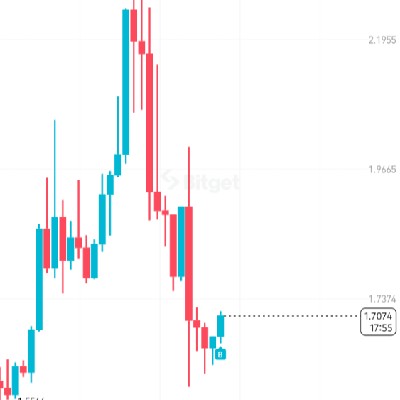
In the ever-changing landscape of cryptocurrencies, the Kusama price today is shaped by a myriad of factors, keenly observed by potential investors through resources like a live Kusama price chart. Kusama, a sibling network to Polkadot, acts as a ground where developers can test and foster early-stage projects. This vibrant ecosystem notably sways the Kusama KSM price.
The KSM current price undergoes frequent fluctuations, reflecting the network's experimental nature that welcomes a plethora of innovative blockchain projects. Both investors and developers maintain a watchful eye on the Kusama price history, using it as a compass to navigate the volatile waters and anticipate the Kusama price forecast. Comprehensive Kusama price analyses become their trusted ally in making informed decisions.
The Kusama token price also receives considerable influence from its active community and the stellar team steering its course, helmed by the renowned Dr. Gavin Wood. Enthusiasts, closely tracking the KSM crypto price, are on the edge of their seats, eager to witness the network's continual evolution and innovation. With the rising popularity of Polkadot's mainnet, the Kusama KSM price in USD often marks periods of explosive growth. Those who are tuned into the latest Kusama KSM news appreciate KSM's potential as a tool for generating passive income through staking, an attribute directly impacting the KSM token market cap.
Delving deeper, it becomes vital to acknowledge the network's distinctive tokenomics when discussing the real-time Kusama price. The KSM token price is influenced by its proof-of-stake consensus mechanism, encouraging users to stake their KSM tokens for rewards, subsequently shaping the discourse around Kusama crypto price predictions. Moreover, the evolving Kusama price narrative is also influenced by an annual inflation rate of 10%, a detail potentially discouraging for investors seeking tokens with a capped supply.
As we stand on the cusp of a promising future, enthusiasts and investors scrutinize the Kusama (KSM) price graph, recognizing Kusama's promise given its rapid developments and receptiveness to experimental projects. In the bustling world of blockchain and cryptocurrency, Kusama carves out a niche, heralding a future ripe with potential and growth.
Bitget Insights


KSM/USD price calculator
KSM resources
Tags:

What can you do with cryptos like Kusama (KSM)?
Deposit easily and withdraw quicklyBuy to grow, sell to profitTrade spot for arbitrageTrade futures for high risk and high returnEarn passive income with stable interest ratesTransfer assets with your Web3 walletWhat is Kusama and how does Kusama work?
Global Kusama prices
Buy more






FAQ
Is Kusama (KSM) a good investment?
What is the use case of KSM?
What factors influence KSM price?
What makes KSM unique?
What gives Kusama value?
Can I stake KSM?
What factors influence the price of Kusama (KSM)?
What is the current price of Kusama (KSM)?
Is Kusama (KSM) a good investment right now?
How does Kusama (KSM) compare to Polkadot (DOT) in terms of price?
What is the price prediction for Kusama (KSM) in the next year?
How can I buy Kusama (KSM)?
What is the all-time high price for Kusama (KSM)?
What are the upcoming events that could affect Kusama (KSM) price?
What are the risks associated with investing in Kusama (KSM)?
Where can I track the historical price of Kusama (KSM)?
What is the current price of Kusama?
What is the 24 hour trading volume of Kusama?
What is the all-time high of Kusama?
Can I buy Kusama on Bitget?
Can I get a steady income from investing in Kusama?
Where can I buy Kusama with the lowest fee?
Related cryptocurrency prices
Prices of newly listed coins on Bitget
Hot promotions
Where can I buy Kusama (KSM)?


Video section — quick verification, quick trading