
Fed's Leadership Ambiguity and Divergent Policy Views Fuel Market Fluctuations Ahead of December Meeting
- U.S. Federal Reserve faces speculation over Chair Powell's future amid mixed signals and internal divisions on rate cuts. - Market expectations for a December rate cut surged to 84.7% as officials like John Williams shifted toward easing, while dissenters like Stephen Miran face criticism. - Trump's reported plan to nominate Kevin Hassett as next Fed chair risks politicizing monetary policy, with Treasury yields dipping below 4% on speculation. - OPEC+ supply pauses and political pressures complicate the
Speculation Grows Over Federal Reserve Leadership and Policy Direction
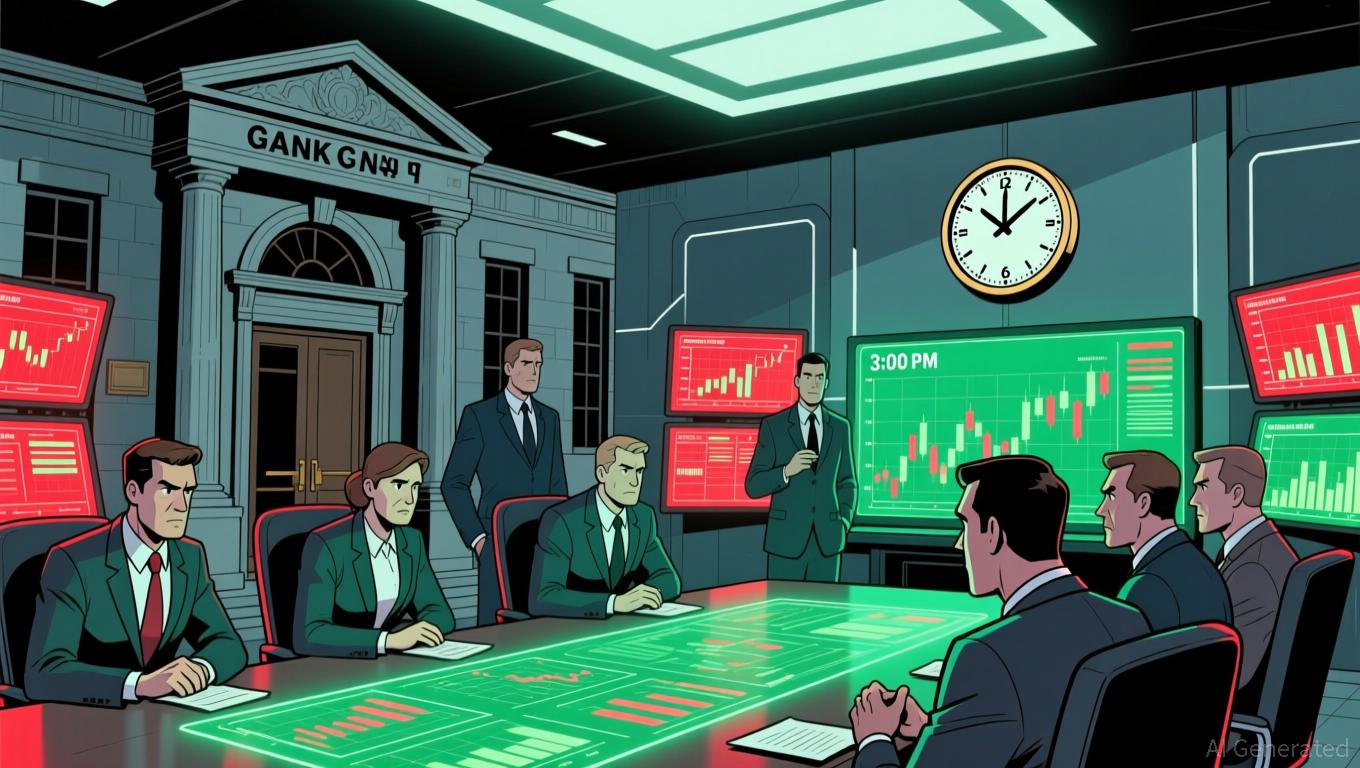
Uncertainty is mounting around the future leadership of the U.S. Federal Reserve, with widespread rumors circulating about Chair Jerome Powell’s position, though no official statements have been made. Recent events—including mixed messages from Fed officials and evolving market expectations—have only deepened the ambiguity. Powell’s latest remarks, in which he expressed caution about reducing interest rates, have intensified speculation, especially as investors look ahead to a pivotal December meeting that could determine the central bank’s next policy steps.
Earlier, the Fed’s decision to lower rates by 0.25 percentage points was met with internal disagreement, as two policymakers voted against the move. Powell emphasized that another rate reduction in December is far from certain, adding to the uncertainty about the Fed’s future course amid inconsistent economic indicators. In a notable shift, economists at JPMorgan Chase now anticipate a rate cut in December, having previously expected a delay until January. This change in outlook follows recent comments from officials such as New York Fed President John Williams, who has signaled support for easing monetary policy in the near term.
Market sentiment has shifted rapidly in response. The CME Group’s FedWatch tool now indicates an 84.7% chance of a 25-basis-point cut at the December 10 meeting—a significant jump from under 30% just a week earlier. This surge in expectations mirrors broader investor sentiment, even as dissent continues within the Fed. Governor Stephen Miran’s advocacy for more aggressive cuts has sparked criticism, with some, including Senator Elizabeth Warren and economist Justin Wolfers, accusing him of serving political interests rather than economic ones. Miran’s opposition is largely viewed as symbolic and not reflective of a wider policy change.
The situation is further complicated by reports that President Donald Trump is preparing to announce his choice for the next Fed chair. Kevin Hassett, the White House Economic Adviser, is widely considered a leading candidate, though he has publicly denied the speculation. Trump’s preference for a chair who favors rate cuts has already impacted markets, with Treasury yields falling below 4% amid talk of Hassett’s possible nomination. Analysts warn that Hassett’s close alignment with Trump’s policy goals could challenge the Fed’s independence and make it harder to unify the rate-setting committee.
Broader economic and political factors continue to influence the Fed’s policy outlook. OPEC+’s recent decision to halt increases in oil supply, along with ongoing volatility in global energy markets, adds complexity to the central bank’s decision-making as inflation and energy prices remain sensitive issues. The U.S. Treasury, led by Secretary Scott Bessent, also plays a significant role in the process of selecting the Fed’s next leader, adding another layer of intricacy.
With the December meeting approaching, investors are watching closely for signals about both monetary policy and potential leadership changes. Powell’s apparent reluctance to cut rates has moderated some expectations, but the interplay of internal debates, market forces, and political considerations ensures that the stakes remain high. For now, both the Fed’s next policy move and the identity of its future chair are key concerns for global markets.
Disclaimer: The content of this article solely reflects the author's opinion and does not represent the platform in any capacity. This article is not intended to serve as a reference for making investment decisions.
You may also like
Strategic Property Investment in the Revitalization of the Former Xerox Campus: Infrastructure-Led Renewal in Webster, NY
- Webster , NY, is transforming its post-Xerox campus via $14.3M in state infrastructure grants for industrial upgrades and public-private partnerships. - Road, sewer, and electrical improvements reduced industrial vacancy to 2%, attracting $650M fairlife® dairy plant and 250 jobs. - Residential values rose 10.1% annually as NEAT corridor targets $1B in development by 2026 with $283M public-private investment. - Strategic infrastructure funding de-risks development, creating a scalable model for post-indus

3 Key Signals That Hint at a Near-Term Shiba Inu Upswing

BONK Poised for 200% Jump Amid ETF Listings and Utility Teasers

Crypto Market Pumps as Fed Injects $13.5 Billion Into the Banking System Overnight
Trending news
MoreCrypto prices
More






