
Strategic Property Investment in the Revitalization of the Former Xerox Campus: Infrastructure-Led Renewal in Webster, NY
- Webster , NY, is transforming its post-Xerox campus via $14.3M in state infrastructure grants for industrial upgrades and public-private partnerships. - Road, sewer, and electrical improvements reduced industrial vacancy to 2%, attracting $650M fairlife® dairy plant and 250 jobs. - Residential values rose 10.1% annually as NEAT corridor targets $1B in development by 2026 with $283M public-private investment. - Strategic infrastructure funding de-risks development, creating a scalable model for post-indus
Webster, NY: A Model of Transformation Through Infrastructure and Real Estate Innovation
Webster, New York, is experiencing a remarkable transformation fueled by a blend of public infrastructure investment and targeted real estate initiatives. Central to this evolution is the revitalization of the former Xerox campus, which has dramatically shifted the village’s economic outlook. The dynamic between government funding and private enterprise in Webster serves as a powerful example of how infrastructure improvements can drive both property values and industrial expansion.
Infrastructure: The Engine Behind Webster’s Renewal
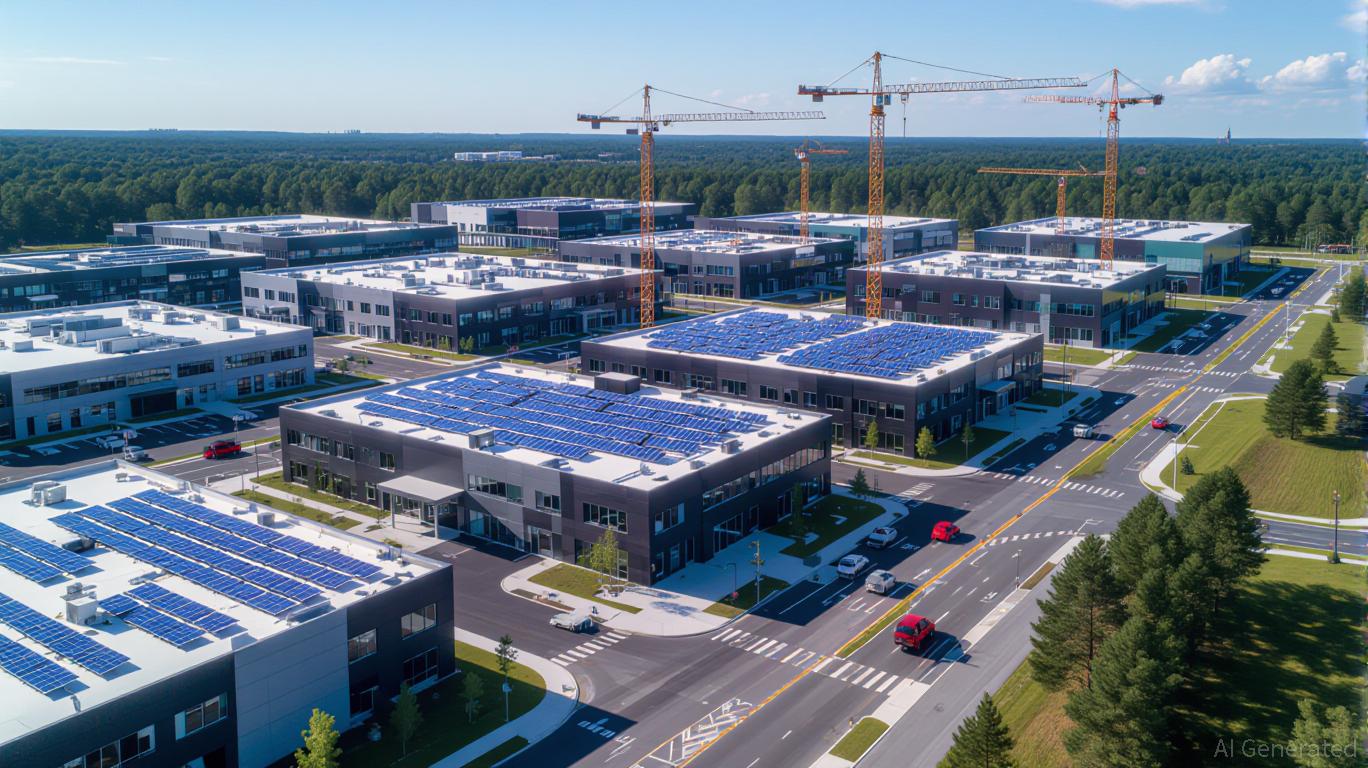
A pivotal moment in Webster’s resurgence came with the allocation of a $9.8 million FAST NY grant in 2025, dedicated to preparing the old Xerox site for advanced manufacturing and industrial operations. This investment has supported essential upgrades—such as new roads, modernized sewer systems, and comprehensive electrical planning—transforming the area into a prime destination for manufacturing and logistics businesses.
Additionally, the Village of Webster secured $4.5 million from the NY Forward Program to support broader community revitalization. These efforts are guided by the Reimagine Webster Master Plan, completed in 2024, which envisions the Xerox campus as a collaborative public-private venture. Key thoroughfares like Orchard Street and Panama Road are being transitioned to public ownership, improving access and connectivity for future growth.
This focus on infrastructure goes beyond physical improvements; it’s about fostering an environment that encourages economic diversity. By resolving long-standing issues—such as outdated utilities and limited electrical capacity—Webster has become a magnet for high-tech manufacturers and logistics companies, slashing industrial vacancy rates to just 2% in 2024.
Emerging Real Estate Trends and Investment Potential
The area surrounding the former Xerox campus has quickly become a hotspot for both residential and commercial investment. A 2024 market study reported a 10.1% annual rise in home values, attributed to the district’s rebranding as the Northeast Area for Technology (NEAT) and its enhanced infrastructure. On the commercial side, the announcement of the $650 million fairlife® dairy plant in 2023 highlights the confidence of private investors, with the facility set to generate 250 new jobs and reinforce Webster’s reputation as a destination for large-scale industry.
The surge in infrastructure-driven development has also led to speculative projects. Developers are subdividing land for advanced manufacturing, while logistics firms are taking advantage of the area’s proximity to I-390 and Rochester International Airport. According to the Webster Economic Development Alliance (WEDA), the NEAT corridor is on track to become a $1 billion industrial hub by 2026, powered by a $283 million blend of public and private investment.
Development Success Stories
Two standout projects illustrate the synergy between infrastructure upgrades and real estate growth in Webster. First, the FAST NY-funded improvements have enabled the division of the Xerox Wilson Campus into parcels ideal for semiconductor suppliers and advanced manufacturers. Second, the fairlife® dairy plant’s $650 million investment has not only created jobs but also sparked additional commercial activity, including new retail and service businesses catering to plant employees.
The Reimagine Webster plan continues to build on this momentum by dedicating major roads to public use, ensuring ongoing accessibility for future projects. Construction on these routes is scheduled to begin in late 2025, further reducing investment risk by enhancing campus connectivity.
Why Invest in Webster? Balancing Opportunity and Security
For investors, Webster’s post-Xerox transformation offers a compelling blend of low risk and high reward. State-backed infrastructure upgrades reduce the need for private capital in foundational improvements, while the village’s strategic location—close to major highways and a growing workforce—makes it an attractive center for logistics and manufacturing.
Public-private partnerships, such as those enabled by the NY Forward Program and FAST NY grants, help limit financial risk for developers while supporting long-term value. The area’s 2% industrial vacancy rate and 10.1% growth in residential property values further demonstrate its resilience and appeal, even in uncertain markets.
Conclusion: A Blueprint for Future Growth
The revitalization of Webster’s former Xerox campus stands as a prime example of how municipal infrastructure investment can unlock new real estate opportunities. By aligning public resources with private sector vision, Webster has created a cycle of sustainable growth. For those seeking strategic real estate investments, Webster’s story offers a scalable model for success in the modern, post-industrial landscape.
Disclaimer: The content of this article solely reflects the author's opinion and does not represent the platform in any capacity. This article is not intended to serve as a reference for making investment decisions.
You may also like
Unlocking Potential: The Impact of Targeted Grants and Public-Private Partnerships on Transforming Medium-Sized Real Estate Markets in the U.S.
- U.S. mid-sized cities leverage infrastructure investment and PPPs to drive commercial real estate growth, outpacing large cities in value creation. - Federal programs like IIJA enable upgrades in transportation and broadband, reducing business costs while boosting property values in Tampa and Grand Rapids. - PPPs in cities like Montgomery County combine affordable housing incentives with CRE development, balancing equity and economic resilience through data-driven strategies. - Market projections show $2
Modern Monetary Theory and the Transformation of International Markets: Inflation Trends, Asset Movements, and Currency Shifts in 2025
- Modern Monetary Theory (MMT) reshapes fiscal-monetary coordination, linking government spending to inflation and resource constraints in post-pandemic economies. - Central banks face challenges anchoring inflation expectations as CPI lags asset market pressures, risking self-fulfilling inflationary spirals amid eroding public trust. - Currency valuations shift with fiscal stimulus (e.g., euro's 2025 rebound) and U.S. dollar uncertainty, compounded by gold reserve diversification and rising bond yields. -

Grasping the COAI Price Decline: Key Factors and What It Means for Investors
- COAI Index, a crypto AI benchmark, fell 88% in 2025 due to governance failures, regulatory ambiguity, and market panic. - C3.ai's $116M loss, founder resignation, and lawsuits exposed systemic governance risks in AI crypto firms. - Regulatory "gray zone" over AI tokens and conflicting agency rules deterred institutional investment in the sector. - Volatile COAI prices ($44.9 to $2-3) and suspicious trading patterns highlighted sector-wide trust erosion. - Investors now prioritize governance transparency

The Importance of Industrial Property in Webster, NY, in Light of $9.8 Million Infrastructure Investment
- Webster , NY, transformed a 300-acre brownfield into the NEAT industrial hub via $9.8M FAST NY funding, boosting economic growth and real estate value. - Infrastructure upgrades (roads, utilities) reduced industrial vacancy rates to 2%, attracting high-capacity industries like semiconductor manufacturing and food processing. - A $650M fairlife® dairy facility will create 250 jobs by 2025, while rezoning expanded 1,400 acres of contiguous industrial land with mixed-use development. - Residential property
Trending news
MoreCrypto prices
More






