
News
Stay up to date on the latest crypto trends with our expert, in-depth coverage.

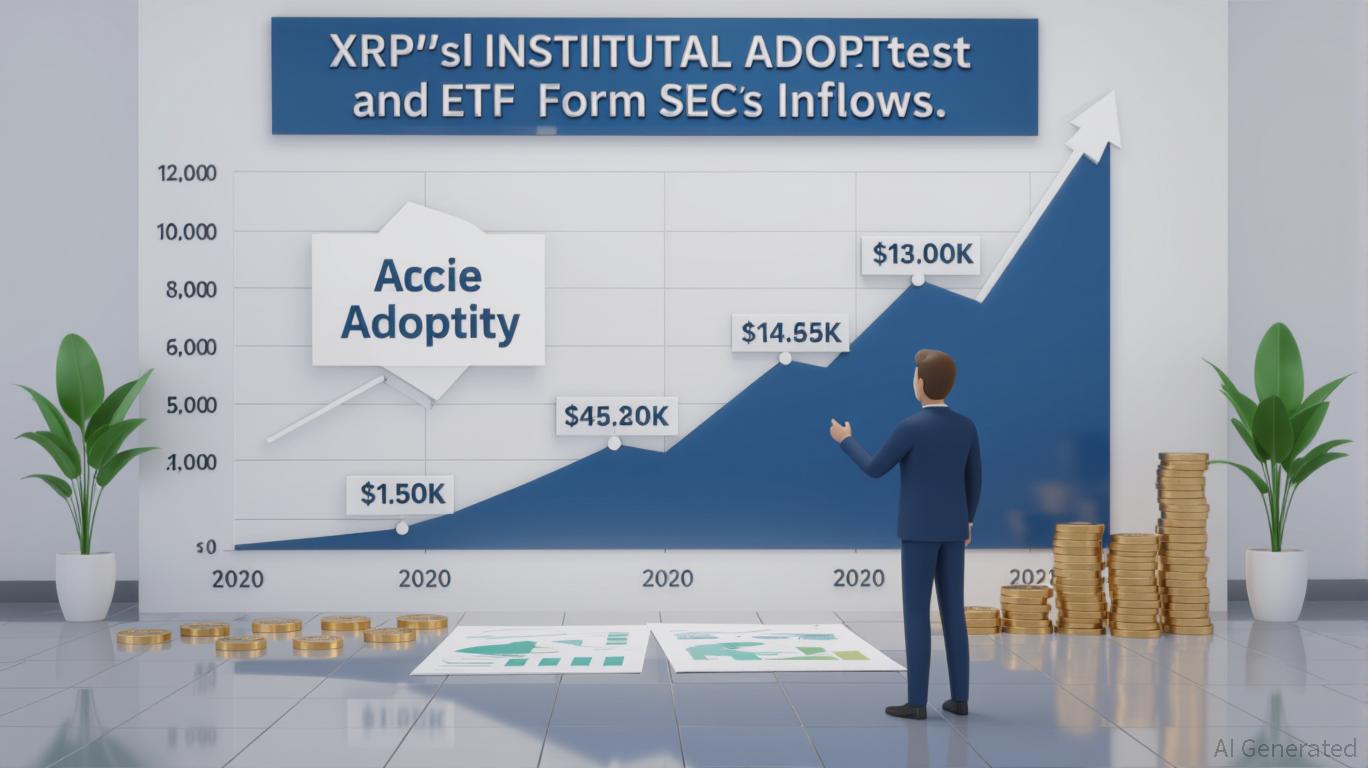
- 2025 post-presale crypto era prioritizes security, regulation, and DeFi infrastructure, with Cold Wallet, XRP, Ethena, and Chainlink leading innovation. - SEC's XRP ruling (commodity classification, $125M penalty) and ProShares ETF drove $1.2B inflows, projecting $12.60 price by year-end. - Ethena expanded cross-chain TVL to $10B via LayerZero, while Chainlink's TVS doubled to $84-95B, securing DeFi through oracle networks. - Cold Wallet's $0.3517 fixed price, 2M users post-Plus Wallet acquisition, and C

Bitmine’s stock fell after a PIPE share unlock, but with Ark Invest backing and rising ETH holdings, its long-term path remains bullish.
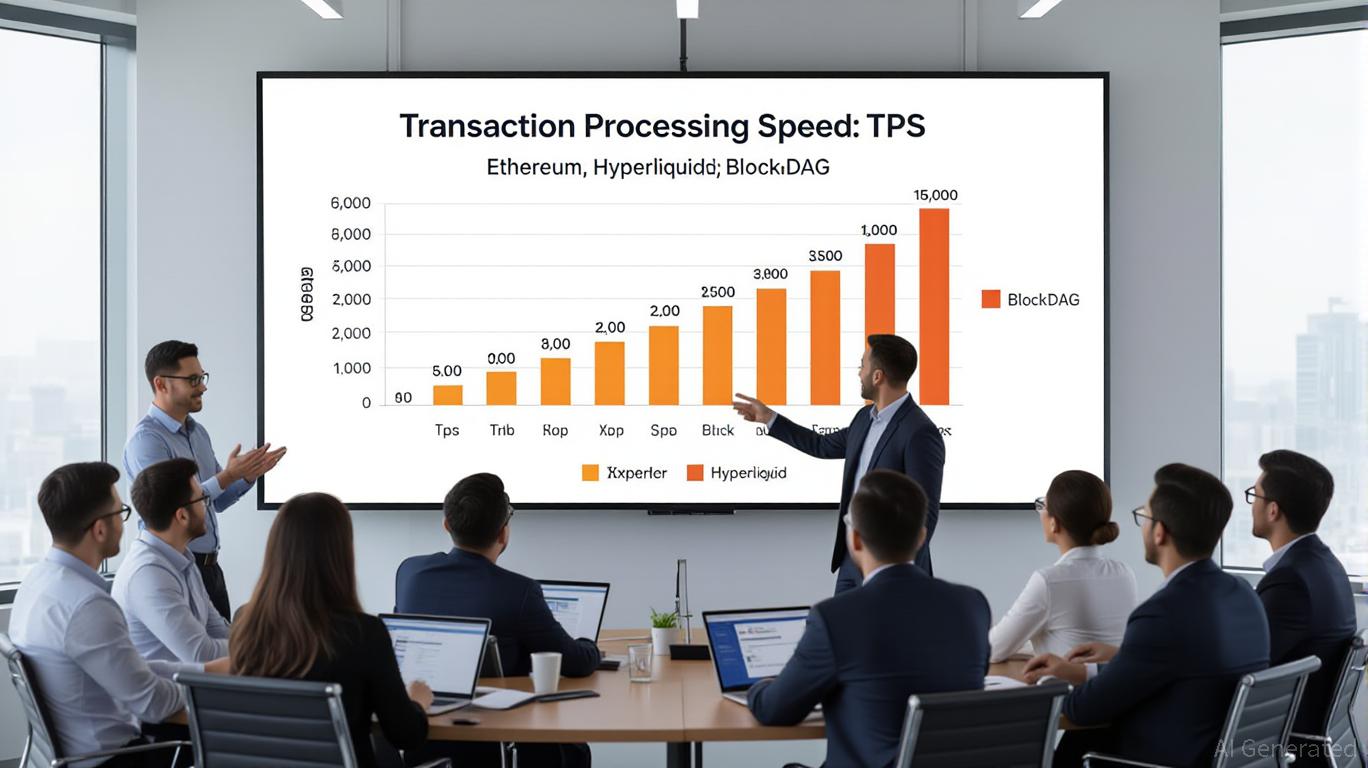
- 2025 crypto market prioritizes projects with strong tech, utility, and institutional backing, led by ETH, XRP, HYPE, and BlockDAG. - Ethereum's Pectra upgrade boosted scalability, attracting $145B in RWA tokenization and 5% ETF absorption via improved Layer-2 solutions. - XRP gained $1.2B ETF inflows post-regulatory clarity, while Hyperliquid's $43–$44 price range reflects demand for fast, low-cost DeFi trading. - BlockDAG's 15,000 TPS hybrid PoW-DAG architecture and $383M presale position it as a scalab

- Shiba Inu (SHIB) hovers near $0.000020 amid debates over whether its price surge reflects speculative hype or genuine ecosystem-driven value. - Shibarium's 1.5B+ transactions and 30% gas fee cuts correlate with SHIB's resilience, suggesting utility-driven demand despite 39% volume declines. - Deflationary burns reduced supply by 41% in 2025, but macroeconomic factors and whale activity remain key volatility drivers for the token. - Ecosystem expansion into AI, gaming, and metaverse projects aims to trans

- Q4 2025 DeFi balances institutional stability with speculative presales, driven by capital efficiency metrics reshaping asset allocation. - Core-satellite strategies allocate 60-70% to ETH/AAVE (36.4%-72% gains) and 20-30% to high-yield presales like Remittix ($HYPER) offering 205% APY. - Bitcoin DeFi TVL hits $5-6B BTC via layer-2 solutions, while omnichain platforms and AI tools redefine liquidity and institutional adoption. - High-risk presales (e.g., MAGACOIN FINANCE's $12.8M raise) highlight innovat
- Stablecoins face structural fragility and regulatory divergence, risking systemic collapse amid fragmented global oversight. - Algorithmic models like UST and USDC exposed liquidity mismatches, with algorithmic failures causing $200B+ losses in hours. - EU's MiCA enforces reserve transparency while U.S. GENIUS Act lacks consumer protections, creating uneven investor risk landscapes. - China's state-controlled stablecoins and global DeFi adoption highlight growing systemic risks, including 63% crypto crim

- Five 2025 crypto presales combine blockchain innovation with market traction, targeting scalability, AI integration, and real-world utility. - BlockDAG merges DAG/PoW for 10,000 TPS scalability, raising $384M with 2,660% investor returns, while Bitcoin Hyper (HYPER) enhances Bitcoin's programmability via Layer-2 SVM. - Nexchain's AI-driven 400,000 TPS blockchain and Snorter Token's 137% APY trading bot highlight enterprise and retail adoption potential in DeFi and algorithmic trading. - Remittix disrupts

- Pump.fun executed a $58.7M PUMP token buyback (4.261% of circulating supply) to stabilize and boost token value through supply reduction. - The buyback drove a 4% price increase to $0.003019 and 17% surge in 24-hour trading volume ($226.3M), reflecting renewed investor confidence. - By prioritizing token value over liquidity, Pump.fun reinforced its 84.1% Solana memecoin market dominance and 25,354 new token mints in 24 hours. - Strategic buybacks create a flywheel effect of reduced supply, higher prices
- 08:01Paradigm General Partner Charlie Noyes announces resignation from related positionJinse Finance reported that Charlie Noyes, General Partner at crypto venture capital firm Paradigm, announced on the X platform that he has resigned from his position. However, he will continue to participate in Kalshi affairs as a board observer together with Paradigm founder Matt Huang, and will also provide support to Paradigm's portfolio companies and founders. Charlie Noyes joined Paradigm at the age of 19 as the firm's first employee and was just promoted to General Partner this February.
- 07:43Report: South Korea's high-net-worth individuals increase allocation to gold and crypto assets, reduce allocation to real estateJinse Finance reported that KB Financial Group has released the "2025 Korea Wealth Report," which analyzes individuals with financial assets and real estate exceeding 1 billion KRW. The report shows that the number of high-net-worth individuals in Korea is growing at an annual rate of 9.7%, increasing from 130,000 in 2011 to 476,000 in 2025. Their total financial assets are also growing at an average annual rate of 7.2%, rising from 1,158 trillion KRW in 2011 to 3,066 trillion KRW in 2025, and surpassing the 3,000 trillion KRW mark for the first time this year. In addition, the proportion of real estate assets in the asset portfolios of Korea's high-net-worth individuals has declined, while the proportion of other assets such as physical assets like gold and jewelry, as well as crypto assets, has increased. (ETNews)
- 07:34The probability of the Federal Reserve cutting interest rates by 25 basis points in January is 24.4%, and the probability of a cumulative 50 basis point cut by March is 8.1%.According to Jinse Finance, CME FedWatch data shows that the probability of the Federal Reserve cutting interest rates by 25 basis points in January next year is 24.4%, while the probability of keeping rates unchanged is 75.6%. The probability of the Federal Reserve keeping rates unchanged until March next year is 50.5%, with a cumulative probability of a 25 basis point rate cut at 41.4%, and a cumulative probability of a 50 basis point rate cut at 8.1%. The next two FOMC meeting dates are January 28, 2026, and March 18, 2026, respectively.