
News
Stay up to date on the latest crypto trends with our expert, in-depth coverage.
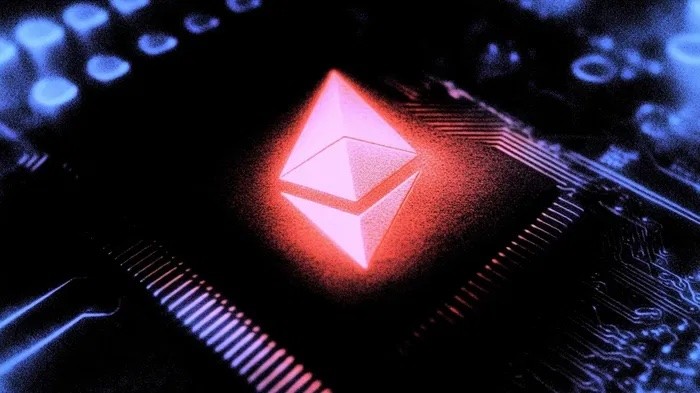
Ethereum has activated the key "Fusaka" upgrade, increasing Layer-2 data capacity eightfold through PeerDAS technology. Combined with the BPO fork mechanism and the blob base price mechanism, this upgrade is expected to significantly reduce Layer-2 operating costs and ensure the network’s long-term economic sustainability.
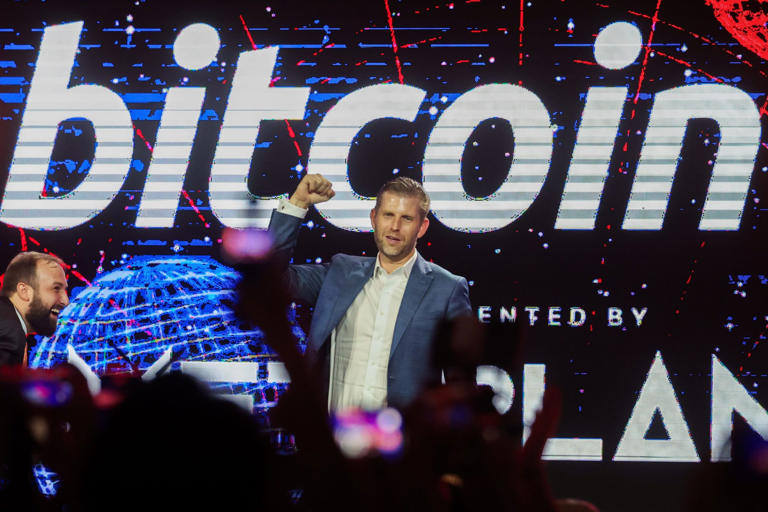
Cryptocurrency projects related to the Trump family were once market favorites, but are now experiencing a dramatic collapse in trust.

Bank of America believes that there is little to fear if Trump nominates a new Federal Reserve Chair, as the White House's ability to exert pressure will be significantly limited if Powell remains as a board member. In addition, a more hawkish committee would leave a Chair seeking to accommodate Trump's hopes for rate cuts with no room to maneuver.
BTC has strongly returned to $93,000. Although there appears to be no direct positive catalyst, in reality, four macro factors are resonating simultaneously to trigger a potential structural turning point: expectations of interest rate cuts, improving liquidity, political transitions, and the loosening stance of traditional institutions.


Ostium enables retail investors to use self-custody wallets to directly trade leveraged positions on traditional assets such as gold, crude oil, S&P 500, Nasdaq, Tesla, and Apple.
BTC Strongly Returns to $93,000, seemingly without any direct positive news, but actually a confluence of four macro clues: interest rate cut expectations, liquidity improvement, political transition, and institutional easing. This has triggered a potential inflection point in market structure.

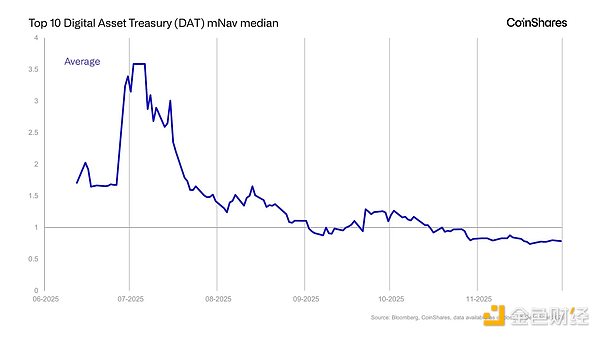

Whether it's investing or trading, SIG is always forward-looking.
- 07:08Jupiter founder introduces the HumidiFi project and team backgroundOn December 4th, Jupiter founder Meow posted on social media stating that although HumidiFi has driven a large volume of trading activity on Solana and seems to have risen suddenly, they have long been regarded as one of the most technically capable teams in the DeFi sector within the ecosystem. They have built several very fundamental core infrastructures and projects, such as Nozomi (trade settlement engine), Temporal, and the recent Harmonic (open block-building system). Another part of their background, of course, is their past experience in high-frequency trading (HFT) at institutions like Citadel. This explains why they are able to bring institutional-level market makers to Solana, combined with their aforementioned expertise in Solana's underlying infrastructure. Kevin Pang, who previously worked at Jump, Paradigm, and SCP, has also clearly brought a wealth of experience and resources on multiple fronts. Jupiter has already collaborated with them on several technical projects, which proves their ability to execute extremely challenging tasks, as well as their genuine determination to enhance liquidity not only on Solana but also across the entire decentralized trading sector.
- 07:08The US Congress advances legislation to ban lawmakers from trading stocksJinse Finance reported that a bipartisan coalition in the U.S. Congress is pushing legislation to ban lawmakers from trading individual stocks. This practice has long sparked ethical controversy and, due to the complexities of deeply regulating lawmakers' personal financial matters, has intensified internal divisions among members of Congress. Florida Republican Representative Anna Paulina Luna initiated related action on Tuesday evening, seeking to force a House vote on a bipartisan bill. The bill currently has more than 100 co-sponsors.
- 07:05Entrée Capital launches new $300 million fund focused on early-stage crypto and Web3 infrastructure projectsChainCatcher reported that Entrée Capital has recently launched a $300 million fund focused on investing in early-stage crypto and Web3 infrastructure projects. This move highlights the accelerating institutional interest in blockchain systems that can seamlessly interact with modern technology stacks. In an email statement on Thursday, the company said the fund will target financing stages from pre-seed to Series A, supporting entrepreneurs building foundational layers for mainstream Web3 applications. Investment targets include AI agents capable of autonomously managing assets within crypto policy frameworks, decentralized physical infrastructure networks, and blockchain protocols that use token incentive mechanisms to coordinate, finance, and operate real-world infrastructure. Entrée Capital stated that its long-standing investment history in fintech and crypto—including early investments in Stripe, Rapyd, Mesh, as well as Web3 builders Gen Labs and Breez—gives it a unique advantage to support entrepreneurs at the intersection of regulated finance and decentralized networks. Institutional investors are currently closely watching the fields of AI agents and DePIN, as these represent the two fastest-growing technology pillars in the crypto-native space: artificial intelligence and cloud computing.