
Why is the US embracing crypto? The answer may lie in its $37 trillion massive debt

Author | Andrei Jikh
Translation | Odaily (@OdailyChina)
Translator | Dingdang (
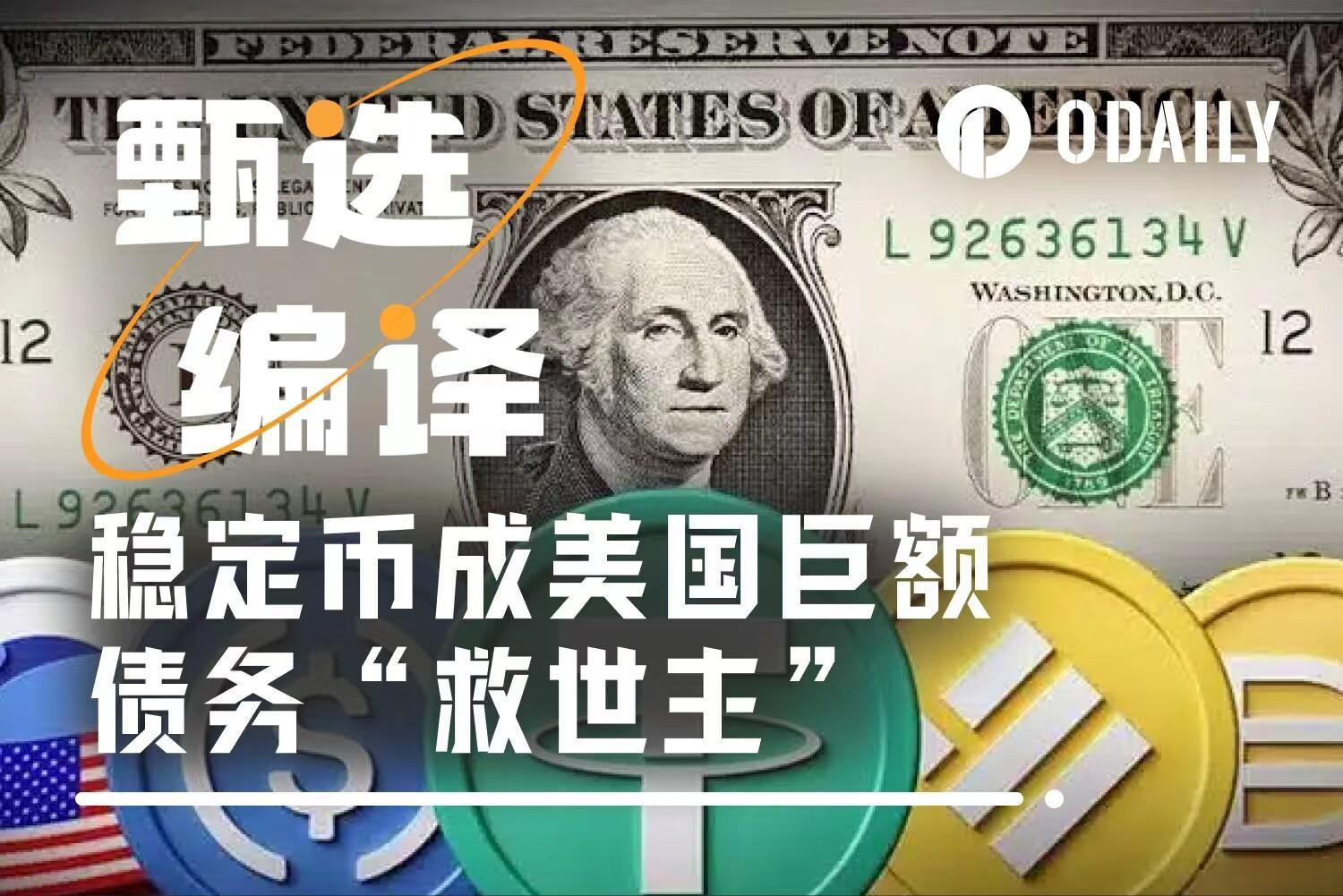
At the recent Eastern Economic Forum held in Russia, one of Putin's closest advisors made remarks that have attracted widespread attention. He stated that the United States is preparing to use cryptocurrencies and stablecoins, in an almost undetectable way, to systematically devalue its national debt of up to 37 trillion dollars.
His claim is that the US is plotting to "migrate" this debt into a crypto system, completing a system-level reset through the so-called "crypto cloud," with the ultimate result being that the rest of the world pays the price.
At first glance, this may sound like some kind of crazy theory. But similar views have actually appeared before. MicroStrategy founder and billionaire Michael Saylor once publicly made a highly controversial suggestion to Trump: sell all of America's gold and buy bitcoin instead. By liquidating the gold reserves, the same funds could buy 5 million bitcoins. In this way, you would demonetize the entire gold asset class. And our rival countries, who hold large gold reserves, would see their assets approach zero, while ours would balloon to 100 trillion dollars. The US would simultaneously control the global reserve capital network and the reserve currency system.
But the question is: Is this realistic? Is it really feasible?
A YouTube blogger with 2.93 million followers broke down in a video: What exactly did Putin's advisor say? And how could the US possibly use stablecoins and bitcoin to devalue its 37 trillion dollars of debt? Odaily has compiled and translated this video.
The first question: Who made these remarks?
The speaker is Anton Kobyakov, a senior advisor to Russian President Putin, who has served for over a decade, mainly responsible for delivering Russia's strategic narratives at important occasions like the Eastern Economic Forum.
In his speech, he made it clear: the US is trying to rewrite the rules of the gold and crypto markets, with the ultimate goal of pushing the global economic system into what he calls the "crypto cloud." Once the global capital system completes this migration, the US can embed its massive national debt into digital asset structures such as stablecoins, and then achieve a de facto "debt write-off" through devaluation.
The second question: What does "debt devaluation" actually mean? How does it work?
Let's use an extremely simplified example to understand. Suppose all the wealth in the world is worth just one $100 bill. I borrow all $100, so I owe the entire world's wealth, and I have to pay it back.
The problem is, if I pay back the debt honestly, I have to return the original $100 bill intact. But fortunately, I have a special "superpower"—I control the issuance of the world's reserve currency.
So, instead of returning the original $100, I simply print a new $100 bill out of thin air.
What is the result? The total amount of currency in circulation in the world goes from $100 to $200, but the number of goods, houses, and resources in the world does not increase.
The result is that the price of everything starts to rise: real estate, stocks, gold, especially things people want—all become more expensive; what used to cost $1 now costs $2. Everything gets more expensive, but the supply of goods remains unchanged. This is inflation.
Now, when I give you "that $100 bill" back, on the surface I have fully repaid the debt, but in reality, the money you receive has only half the purchasing power. I did not default, but I devalued the debt by diluting the currency.
Stablecoins are replicating this old playbook
However, what many people don't realize is: this is one of the oldest and most common ways of repaying debt in human history. This is also how the US has always repaid its debts.
Debt devaluation does not equal default, nor does it mean not repaying. It simply reduces the real value of the debt through inflation or currency manipulation.
This method has happened again and again throughout history. After World War II, in the great inflation of the 1970s, and after the pandemic with massive liquidity injections, it was the same.
So, when the Russian advisor says "the US may use cryptocurrencies to devalue its debt," he is not revealing a new mechanism, but describing an old method that the US has long mastered.
The real change is: stablecoins can spread this mechanism globally.
It needs to be clarified: this is not about "directly converting 37 trillion dollars into stablecoins," but using dollar stablecoins backed by US Treasuries as underlying assets to distribute the US debt structure into the hands of global holders. When the dollar is diluted by inflation, the loss is shared by all those holding these stablecoins.
I want to say something extremely important, an economic fundamental that many people overlook, which is also Jeff Booth's view: The natural state of the economy is actually deflation. This means that if there is a fixed amount of money in the world, as time goes by, with technological progress and increased productivity, goods will naturally become cheaper. Falling prices are the natural law. But in reality, the world we live in does not work this way. There is only one reason: governments can create unlimited money.
When new money flows into the system, this liquidity must "find a home" so it doesn't become worthless. So, it is invested in real estate, stocks, gold, bitcoin, and so on. This is why, in the long run, these assets seem to always be rising. But in reality, they are just maintaining their purchasing power, while the currency supporting everything is getting weaker and weaker. It's not that assets are rising, but the dollar is devaluing.
The real value of stablecoins: Distribution + Control
The question is, what if you could expand this superpower? What if you could extend the same trick outside the US? This is where stablecoins come in.
If the US can already devalue its debt through conventional inflation, what more can stablecoins do? The answer is two words: distribution + control.
Because when there is inflation in the US, the economic pain is immediate: we see higher grocery bills, more expensive housing, rising energy costs, and possibly higher interest rates to cool things down, with CPI and consumer price index reports going up, and Americans becoming dissatisfied.
But stablecoins are different. Because stablecoins usually keep their reserves in short-term US Treasuries, the demand for dollars and US Treasuries can actually rise as stablecoin adoption grows, making the whole thing self-reinforcing. When USDT and USDC are widely used globally, they are essentially digital IOUs backed by US Treasuries. This means that US debt financing is "invisibly outsourced" to global users.
So, if the US devalues its debt through inflation, the burden will not only fall on American citizens, but will also be "exported" globally through the stablecoin system. Inflation thus becomes a tax that all global stablecoin holders are forced to share. Because their digital dollars also lose purchasing power. Technically, today's system is already like this. The dollar is everywhere in the world, but stablecoins will become a bigger market and will exist on people's smartphones.
The other piece of the puzzle is that stablecoins can appear neutral because they can be created by private companies, not just the government. This means they do not carry the political baggage associated with the Federal Reserve or the Treasury Department. According to the "Genius Act," only approved issuers, such as banks, trust companies, or non-bank companies with special approval, can issue regulated, dollar-backed stablecoins in the US.
If Apple or Meta wanted to, they could theoretically issue their own currency, such as the so-called "Metacoin." What is really needed is not a technological breakthrough, but political permission. To put it bluntly, as long as you curry favor with the core of power and invest enough capital, you might get a pass.
It is precisely for this reason that stablecoins play such an important role in the process of US debt dilution. Essentially, they provide a level of control close to central bank digital currency (CBDC), but without the highly sensitive CBDC label on a global scale.
The fatal flaw of stablecoins: Trust cannot be fully verified
But the problem is, other countries are not buying it. We have already seen this from the continued large-scale gold purchases by central banks around the world.
Stablecoins claim to be pegged 1:1 to the dollar or US Treasuries. In theory, every stablecoin in circulation should be backed by $1 in cash or an equivalent amount of Treasury assets. But the real problem is: neither individuals nor foreign governments can independently audit these reserves with 100% certainty.
Tether and Circle will publish reserve reports, but you have to trust the issuer itself, and you also have to trust the auditing institutions, which are almost all within the US system. When it comes to trust issues involving trillions of dollars, this is already an extremely high threshold for countries.
Even if blockchain technology in the future could achieve real-time, transparent auditing of stablecoin reserves, it would not solve the deeper problem—the US always has the power to change the rules.
History has already given a clear warning. The US government once promised that dollars could be exchanged for gold at any time, but in 1971, the Nixon administration unilaterally cut off this exchange channel. From a global perspective, this was nothing less than a complete "rule reversal": the promise remained, but fulfillment was ended with a "just kidding."
Therefore, a digital token system built on "trust us" is hard to truly win the world's trust. Technically, there is nothing to stop the US from making a decision on stablecoins in the future similar to the dollar's decoupling from gold back then. This is precisely the fundamental reason why there is widespread vigilance towards the new generation of digital currency systems globally.
So, the next question is: Will the US really do this in the end?
In my view, not only is this possibility real, it is even inevitable. The US is already experimenting with this idea, just not in the way we've heard of.
For example, Michael Saylor once publicly advised Trump and his family, advocating for the US to establish a bitcoin strategic reserve. His vision was: if the US sold gold and instead bought bitcoin on a large scale, it could not only suppress gold prices and weaken competitors like China and Russia, but also push up bitcoin prices and reshape America's balance sheet.
But in the end, this did not happen. On the contrary, during Trump's term, the idea of a US bitcoin reserve was just mentioned and never became reality. The US government made it clear that it would not use taxpayers' money to buy bitcoin, and at least publicly, there has been no such action. So, I don't think it will happen in the way Michael Saylor publicly suggested.
However, this does not mean the story ends here. Because, the government does not necessarily have to get directly involved to be a participant. The real "backdoor path" lies in the private sector.
MicroStrategy has in fact become a "bitcoin-listed company," continuously increasing its bitcoin holdings under Michael Saylor's leadership, now holding hundreds of thousands of coins. So the question is: If a listed company accumulates a large amount of bitcoin first, is it safer and more low-key than the government buying directly?
This way, it would not be seen as a central bank operation, nor would it immediately trigger panic in global markets. And when bitcoin is truly established as a strategic asset, the US government can fully gain bitcoin exposure indirectly through equity stakes, shareholding, and other means—just as it once held stakes in companies like Intel, such precedents already exist.
Rather than openly selling gold, making trillion-dollar bitcoin bets, or forcefully pushing a stablecoin system, the smarter and more consistent approach for the US is to let private enterprises experiment first. When a certain model is proven effective and too important to ignore, the state can then absorb and institutionalize it.
This approach is more covert, gradual, and more "deniable," until one day, everything comes to light.
Therefore, the core point I want to express is: there are many ways for this to happen, and it is very likely to happen. The Russian advisor's judgment is not groundless—if the US really tries to fundamentally address its national debt problem, then some form of digital asset strategy is almost an inevitable choice.
Disclaimer: The content of this article solely reflects the author's opinion and does not represent the platform in any capacity. This article is not intended to serve as a reference for making investment decisions.
You may also like
How Mill closed the deal with Amazon and Whole Foods
Pippin’s 32% surge meets rising leverage – Can bulls sustain the rally?
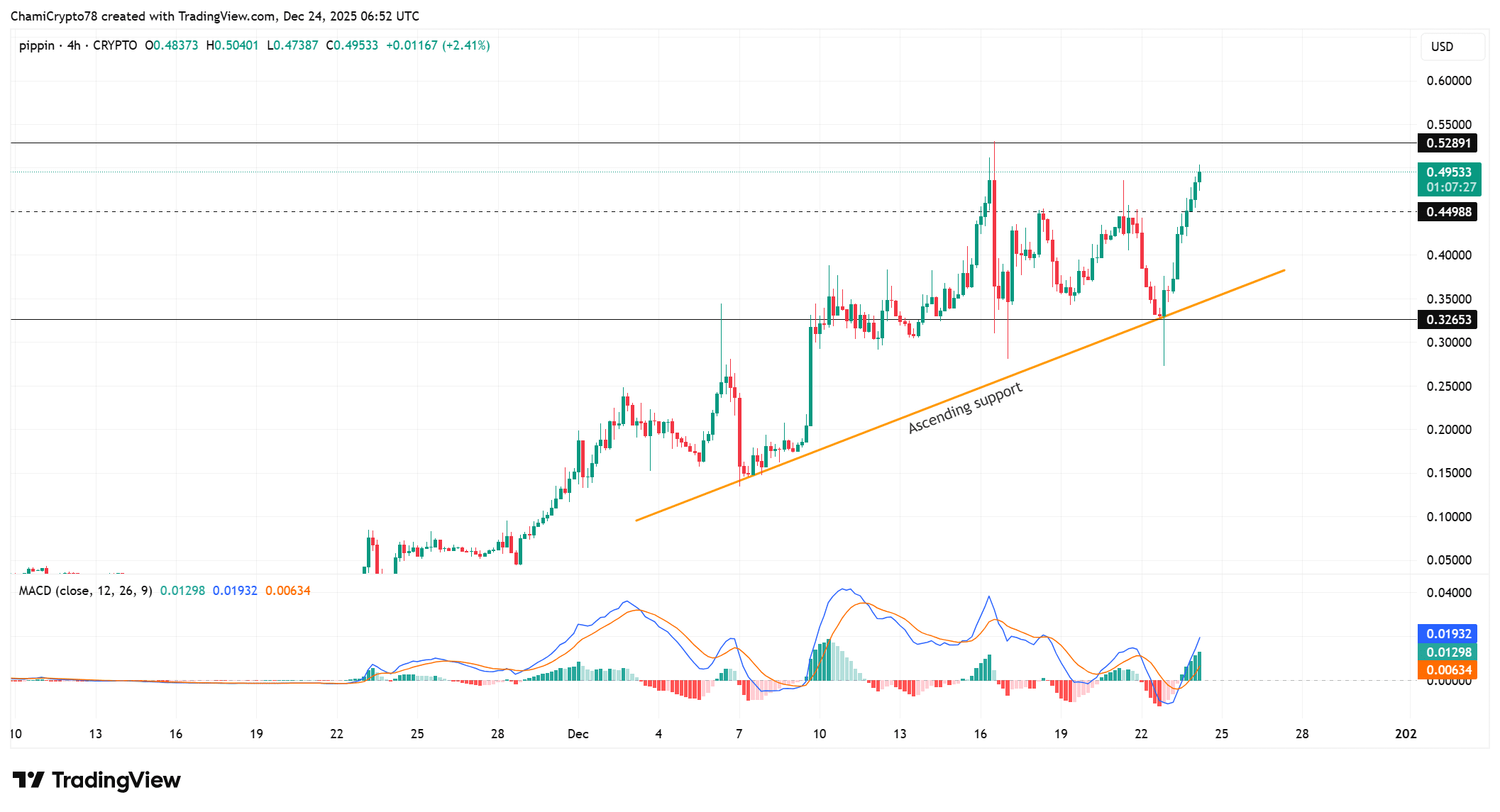
Upexi Files $1B Shelf Registration, Shares Slide on Solana Treasury Signal
Crypto Analytics Company CryptoQuant Announces the Crypto Market is Undergoing a Reset! Here Are the Details
Trending news
MoreCrypto prices
More





