
Emerging Prospects in EdTech and AI-Powered Learning Systems: Ways Educational Institutions Are Transforming Programs and Enhancing Student Achievement
- AI is transforming education by reshaping curricula, enhancing student engagement, and optimizing institutional efficiency. - Universities like Florida and ASU integrate AI literacy across disciplines, offering microcredentials and fostering innovation. - AI tools like Georgia Tech’s Jill Watson and Sydney’s Smart Sparrow boost performance and engagement through personalized learning. - AI streamlines administrative tasks but faces challenges like ethical misuse and skill gaps, requiring structured train
AI's Transformative Role in Modern Education
Artificial intelligence has moved beyond being a futuristic concept in education; it is now fundamentally altering how courses are designed, how students interact with material, and how institutions operate. As colleges and universities worldwide implement AI-powered learning systems, the conversation is shifting from what AI could do to what it is already achieving. This rapid evolution offers investors a unique chance to benefit from a sector experiencing explosive growth, fueled by the need for customized learning, job market preparedness, and efficient administrative processes.
Adapting Curricula for an AI-Driven World
Academic institutions are overhauling their course structures to harness the power of AI, ensuring students acquire skills relevant to a technology-driven society. For example, the University of Florida has woven AI education throughout its programs, focusing on topics such as ethical considerations and data analysis, with clear learning objectives. The University of Louisiana System has introduced a complimentary, self-guided AI literacy credential for its community, emphasizing both digital skills and responsible AI use. These efforts highlight a broader movement: AI is now a core component of educational infrastructure, not just a specialized tool.
Other universities, like Arizona State University and UMass Lowell, are also leading the way. ASU encourages faculty to create AI-based teaching strategies through campus-wide challenges, while UMass supports interdisciplinary projects with targeted grants. These initiatives not only keep curricula relevant but also establish these schools as centers for AI advancement, drawing in tech-minded students and industry collaborators.

Enhancing Student Engagement and Achievement
The influence of AI on student success is significant. At Georgia Tech, the introduction of "Jill Watson," an AI teaching assistant, dramatically cut response times in large classes, allowing educators to dedicate more time to mentoring students individually. The University of Sydney's adaptive learning platform, "Smart Sparrow," has led to notable improvements in student performance by customizing learning experiences—one study reported a 54% boost in test scores compared to conventional teaching methods.
In primary and secondary education, New Town High School in Australia utilized "Maths Pathway," an AI-based system, to personalize STEM education for each student. This approach resulted in a 30% increase in student engagement and measurable academic progress. These examples demonstrate how AI can close learning gaps and encourage independent learning, essential for preparing students for careers in an AI-integrated workforce.
Boosting Administrative Productivity and Growth
AI's benefits extend beyond teaching, streamlining administrative tasks, lowering operational costs, and enabling institutions to scale up services. Automated grading, predictive tools for student retention, and AI-powered chatbots for admissions are becoming commonplace. For instance, Shri Vishnu Engineering College for Women in India employs AI simulations and chatbots to proactively support students, leading to improved retention rates and academic success. These technologies allow educators to focus on impactful teaching while institutions efficiently expand their reach.
Overcoming Challenges and Shaping the Future
Despite these advancements, obstacles remain. A recent survey by the Digital Education Council revealed that over half of students feel unprepared for AI-centric careers, pointing to a lack of comprehensive AI education. Some universities, such as the University of North Carolina at Charlotte, are addressing this by blending AI instruction with creative teaching methods, like video and interactive theatre, to strengthen both technical and communication skills. This holistic approach is vital for developing well-rounded AI literacy.
Ethical and policy considerations are also crucial. Research from Johns Hopkins Center for Talented Youth found that students sometimes misuse AI tools, opting for quick answers instead of critical thinking. This highlights the importance of establishing strong guidelines and educational frameworks to promote responsible AI use.
Opportunities for Investment
The educational technology landscape is on the verge of major disruption. With the vast majority of students already utilizing AI for tasks like summarizing documents and drafting essays, the demand for structured AI education is rapidly increasing. Institutions that effectively integrate AI, such as the University of Florida and ASU, are setting new standards for return on investment, attracting both students and industry partners.
For investors, the greatest potential lies in supporting solutions that emphasize comprehensive AI training, ethical standards, and scalability. Startups offering adaptive learning platforms, AI-powered analytics, or microcredential programs—such as those pioneered by the University of Louisiana—present significant growth prospects. Collaborating with universities to develop AI-focused curricula can also yield lasting benefits as educational institutions seek to remain competitive and future-ready.
Final Thoughts
The adoption of AI in education represents more than just a technological upgrade; it signals a fundamental shift in teaching and learning culture. Schools and universities that proactively adapt—by modernizing curricula, improving student outcomes, and streamlining operations—are positioning themselves as leaders in this new era. For investors, the message is unmistakable: the future of education is powered by AI, and those who invest early stand to gain the most.
Disclaimer: The content of this article solely reflects the author's opinion and does not represent the platform in any capacity. This article is not intended to serve as a reference for making investment decisions.
You may also like
COAI Token Fraud: Insights for Cryptocurrency Investors During Times of Regulatory Ambiguity
- COAI token's 88% collapse in late 2025 exposed systemic risks in AI-driven DeFi ecosystems, with $116.8M investor losses. - Governance flaws included 87.9% token concentration in ten wallets, untested AI stablecoins, and lack of open-source audits. - Panic selling accelerated by AI-generated misinformation and CEO resignation, amid conflicting global crypto regulations. - Lessons emphasize scrutinizing token distribution, demanding transparent audits, and avoiding jurisdictions with regulatory ambiguity.

Renewable Energy Training as a Key Investment to Meet Future Workforce Needs
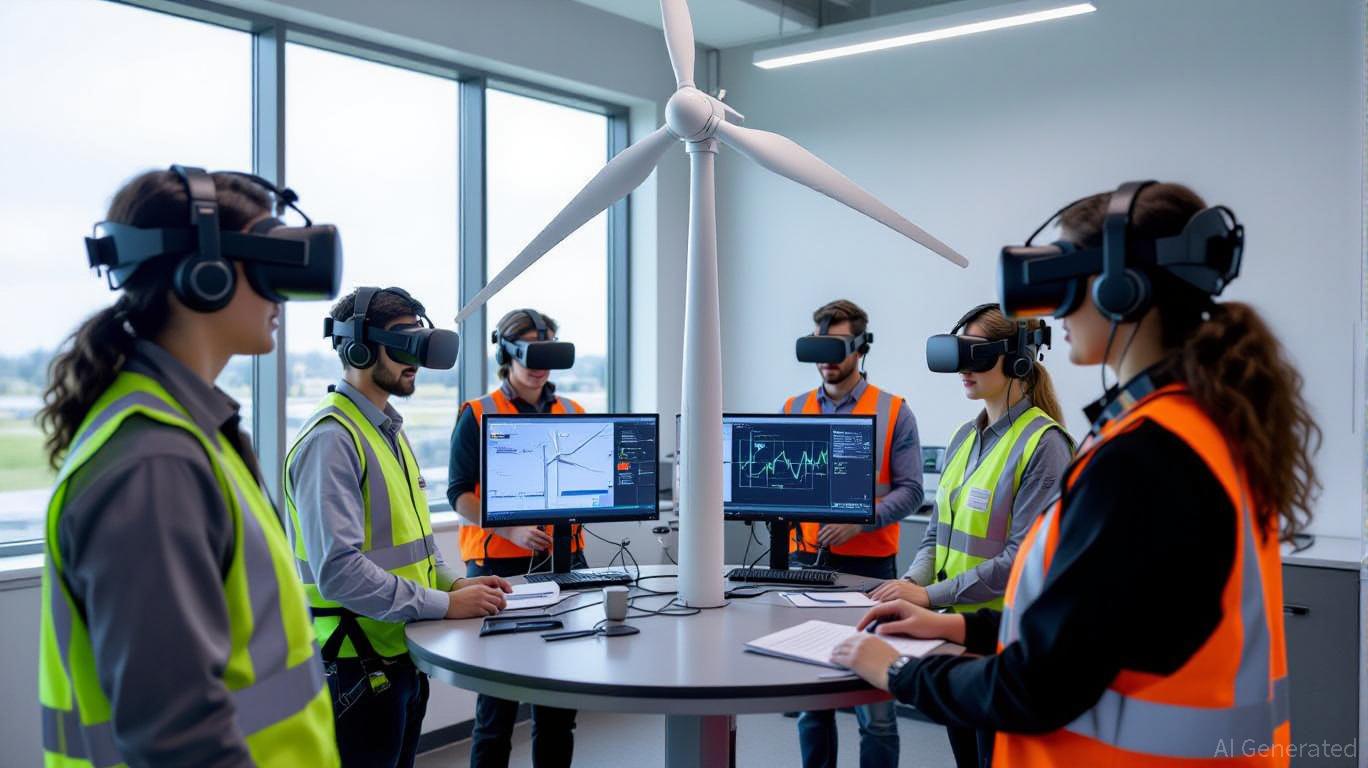
- Farmingdale State College's Wind Turbine Technology program aligns with surging demand for skilled labor in decarbonizing economies, driven by U.S. renewable energy targets. - Industry partnerships with Orsted, GE Renewable Energy, and $500K in offshore wind funding validate the program's role in addressing workforce shortages in expanding wind sectors. - Hands-on training with GWO certifications and VR simulations prepares graduates for high-demand, high-salary roles ($56K-$67K annually), reducing corpo
The Revival of STEM Learning as a Driving Force for Tomorrow’s Technology Investments
- Emerging STEM universities are driving tech innovation through interdisciplinary curricula and industry partnerships, focusing on AI, biotech , and advanced manufacturing. - U.S. programs like STEM Talent Challenge and NSF Future Manufacturing allocate $500K-$25.5M to bridge skills gaps and fund projects in quantum tech and biomanufacturing. - Leadership-focused STEM programs at institutions like Florida State and Purdue boost startup success rates (75-80%) and align with venture capital trends favoring

Assessing KITE’s Price Prospects After Listing as Institutional Interest Rises
- Kite Realty Group (KRG) reported Q3 2025 earnings below forecasts but raised 2025 guidance, citing 5.2% ABR growth and 1.2M sq ft lease additions. - Institutional investors showed mixed activity, with Land & Buildings liquidating a 3.6% stake while others increased holdings, reflecting valuation debates. - Technical indicators suggest bullish momentum (price above 50/200-day averages) but a 23.1% undervaluation vs. 35.1x P/E, exceeding sector averages. - KRG lags peers like Simon Property in dividend yie

Trending news
MoreCrypto prices
More





