
The Revival of Educational Technology in Higher Education After the Pandemic
- Global EdTech market grows to $7.3T by 2025, driven by hybrid learning and AI/AR/VR adoption in higher education. - Institutions like MIT and Harvard integrate AI across disciplines, boosting enrollment and workforce alignment through $350M-$500M investments. - EdTech platforms enabling personalized learning and immersive experiences see rising demand, with 45% annual growth in AI-related programs since 2020. - Undervalued EdTech stocks offer investment opportunities as $16B+ VC funding accelerates innov
EdTech’s Global Transformation: Opportunities for Investors
The education technology sector is experiencing a profound transformation, fueled by the growing need among academic institutions for digital learning solutions that meet modern teaching requirements. As universities and colleges adapt their strategies in the wake of the pandemic, the adoption of technology in fields such as anthropology, data science, and digital communication has shifted from experimental to essential. This evolution presents investors with significant prospects to invest in undervalued EdTech companies and platforms that are revolutionizing the way knowledge is shared and accessed.
Rising Demand and Sector Growth
The expansion of EdTech is unmistakable. By 2025, the education industry is expected to reach a value of $7.3 trillion, with digital learning expenditures climbing to $404 billion—an increase from less than 5% of total spending in 2023. This growth is largely driven by the widespread adoption of hybrid learning models, which seamlessly combine online and face-to-face instruction to address diverse student preferences. Institutions are increasingly utilizing AI-powered tools like ChatGPT to customize educational experiences, while advanced technologies such as augmented and virtual reality are making STEM and humanities courses more interactive and engaging.
Notable examples include MIT’s Schwarzman College of Computing, established with a $350 million investment, which demonstrates how universities are weaving artificial intelligence into multiple disciplines to attract both talent and funding. Similarly, Harvard’s Kempner Institute for Natural and Artificial Intelligence, supported by a $500 million donation, highlights the academic and financial benefits of aligning EdTech initiatives with workforce needs. These cases reflect a broader movement: schools that integrate technology into their curricula—especially in areas like data science and digital communication—are seeing tangible improvements in student achievement and enrollment numbers.

Innovations Across Disciplines and Sustained Demand
While the specific approaches of institutions like Farmingdale State College are not widely publicized, the broader trend of incorporating EdTech into disciplines such as anthropology, data science, and digital communication is reshaping higher education. In data science, AI-powered analytics are enabling educators to personalize resources, close skill gaps, and improve job readiness. Anthropology programs are using AR and VR to recreate archaeological sites and cultural settings, offering students immersive, hands-on learning experiences. Meanwhile, digital communication courses are leveraging interactive platforms that replicate real-world media environments, equipping students with skills relevant to today’s industries.
These advancements are part of a deliberate shift toward more scalable and accessible education. Research from 2023 indicates that EdTech tools foster structured, interactive learning—crucial for subjects that require practical application. For instance, OpenClassrooms’ apprenticeship-based approach has helped 43,000 students advance their careers, illustrating the scalability and effectiveness of technology-driven education. Such developments confirm the enduring demand for EdTech, especially as universities strive to close the digital divide and adapt to changing workforce requirements, as highlighted in a 2024 report.
Investment Potential in the EdTech Ecosystem
Despite robust sector growth, many EdTech stocks remain undervalued, offering promising opportunities for investors. Venture capital funding in education technology has soared, with over $16 billion invested in 2020 alone and China accounting for 60% of global investment. This influx of capital is accelerating the development of platforms that support microlearning, adaptive instruction, and AI-based personalization.
Investors should focus on companies that align with institutional needs, such as those providing interoperable tools for hybrid learning or data-driven course design. Platforms that enable real-time feedback in data science classes or facilitate virtual teamwork in digital communication programs are gaining momentum. With enrollment in AI-focused programs increasing by 45% annually since 2020, the appetite for specialized EdTech solutions is set to grow even further.
Conclusion: Strategic Investment in a Changing Landscape
The post-pandemic era has seen educational institutions prioritize tools that boost flexibility, engagement, and learning outcomes. Although the specific initiatives at Farmingdale State College remain unclear, the broader trends—ranging from AI integration and immersive technologies to curricula designed for workforce readiness—point to a lasting transformation. For investors, this is a prime moment to support platforms that are not only reshaping education but also delivering measurable financial returns. As the global EdTech market is projected to reach $598.82 billion by 2032, strategic investments in undervalued stocks and innovative platforms will be key to capitalizing on this dynamic sector.
Disclaimer: The content of this article solely reflects the author's opinion and does not represent the platform in any capacity. This article is not intended to serve as a reference for making investment decisions.
You may also like
COAI Token Fraud: Insights for Cryptocurrency Investors During Times of Regulatory Ambiguity
- COAI token's 88% collapse in late 2025 exposed systemic risks in AI-driven DeFi ecosystems, with $116.8M investor losses. - Governance flaws included 87.9% token concentration in ten wallets, untested AI stablecoins, and lack of open-source audits. - Panic selling accelerated by AI-generated misinformation and CEO resignation, amid conflicting global crypto regulations. - Lessons emphasize scrutinizing token distribution, demanding transparent audits, and avoiding jurisdictions with regulatory ambiguity.

Renewable Energy Training as a Key Investment to Meet Future Workforce Needs
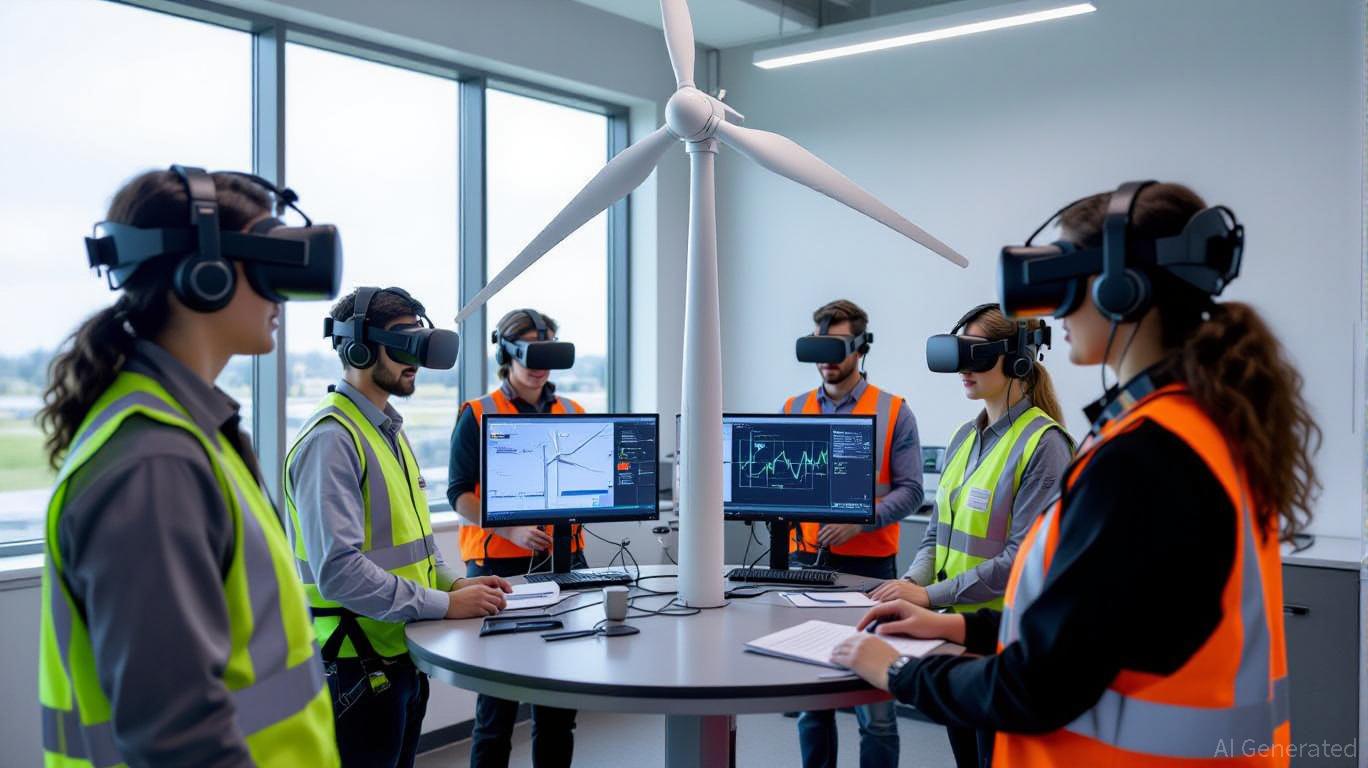
- Farmingdale State College's Wind Turbine Technology program aligns with surging demand for skilled labor in decarbonizing economies, driven by U.S. renewable energy targets. - Industry partnerships with Orsted, GE Renewable Energy, and $500K in offshore wind funding validate the program's role in addressing workforce shortages in expanding wind sectors. - Hands-on training with GWO certifications and VR simulations prepares graduates for high-demand, high-salary roles ($56K-$67K annually), reducing corpo
The Revival of STEM Learning as a Driving Force for Tomorrow’s Technology Investments
- Emerging STEM universities are driving tech innovation through interdisciplinary curricula and industry partnerships, focusing on AI, biotech , and advanced manufacturing. - U.S. programs like STEM Talent Challenge and NSF Future Manufacturing allocate $500K-$25.5M to bridge skills gaps and fund projects in quantum tech and biomanufacturing. - Leadership-focused STEM programs at institutions like Florida State and Purdue boost startup success rates (75-80%) and align with venture capital trends favoring

Assessing KITE’s Price Prospects After Listing as Institutional Interest Rises
- Kite Realty Group (KRG) reported Q3 2025 earnings below forecasts but raised 2025 guidance, citing 5.2% ABR growth and 1.2M sq ft lease additions. - Institutional investors showed mixed activity, with Land & Buildings liquidating a 3.6% stake while others increased holdings, reflecting valuation debates. - Technical indicators suggest bullish momentum (price above 50/200-day averages) but a 23.1% undervaluation vs. 35.1x P/E, exceeding sector averages. - KRG lags peers like Simon Property in dividend yie

Trending news
MoreCrypto prices
More





