
TWT Tokenomics and Its Impact on the Market: How Innovative Token Economic Models Influence Investor Perceptions and Crypto Asset Valuations
- Trust Wallet Token (TWT) rebranded as Toncoin (TON) in 2025, shifting from speculative governance to utility-driven tokenomics. - TON's supply model balances daily issuance and systematic burning, creating controlled scarcity unlike Bitcoin or Ethereum . - Utility features like FlexGas and Trust Premium boosted user engagement by 40% YoY and institutional confidence. - Partnerships with Onramper and Tether expanded TON's global reach, attracting 76% of institutional investors. - TON's valuation hit $1.31
The Transformation of Trust Wallet Token to Toncoin: A New Era in Tokenomics
The journey of Trust Wallet Token (TWT), which underwent a rebranding to become Toncoin (TON) in 2025, serves as a prime example of how contemporary tokenomics are reshaping investor perspectives and valuation strategies within the cryptocurrency sector. TON’s shift from a speculative governance token to a utility-focused asset, seamlessly woven into the Trust Wallet ecosystem, highlights the industry’s growing focus on sustainability, practical use, and community involvement. This evolution not only mirrors the broader direction of decentralized finance (DeFi) but also demonstrates how innovative token structures can impact both market trends and investor actions.
From Speculation to Real-World Utility
The transition from TWT to TON marked a deliberate move toward a utility-based token model. TON now operates under a dual mechanism: each day, 88,137 tokens are minted, while 3,140 are systematically burned, resulting in a carefully managed net supply increase. This stands in stark contrast to established cryptocurrencies like Bitcoin, which is capped at 21 million coins, and Ethereum, which has a variable supply and lacks a consistent burn process. TON’s approach creates a dynamic relationship between token usage and scarcity. For example, the FlexGas feature enables users to pay transaction fees using TWT, USDT, or USDC, which are then converted to TON and subsequently burned. This process not only decreases the circulating supply but also encourages practical adoption.
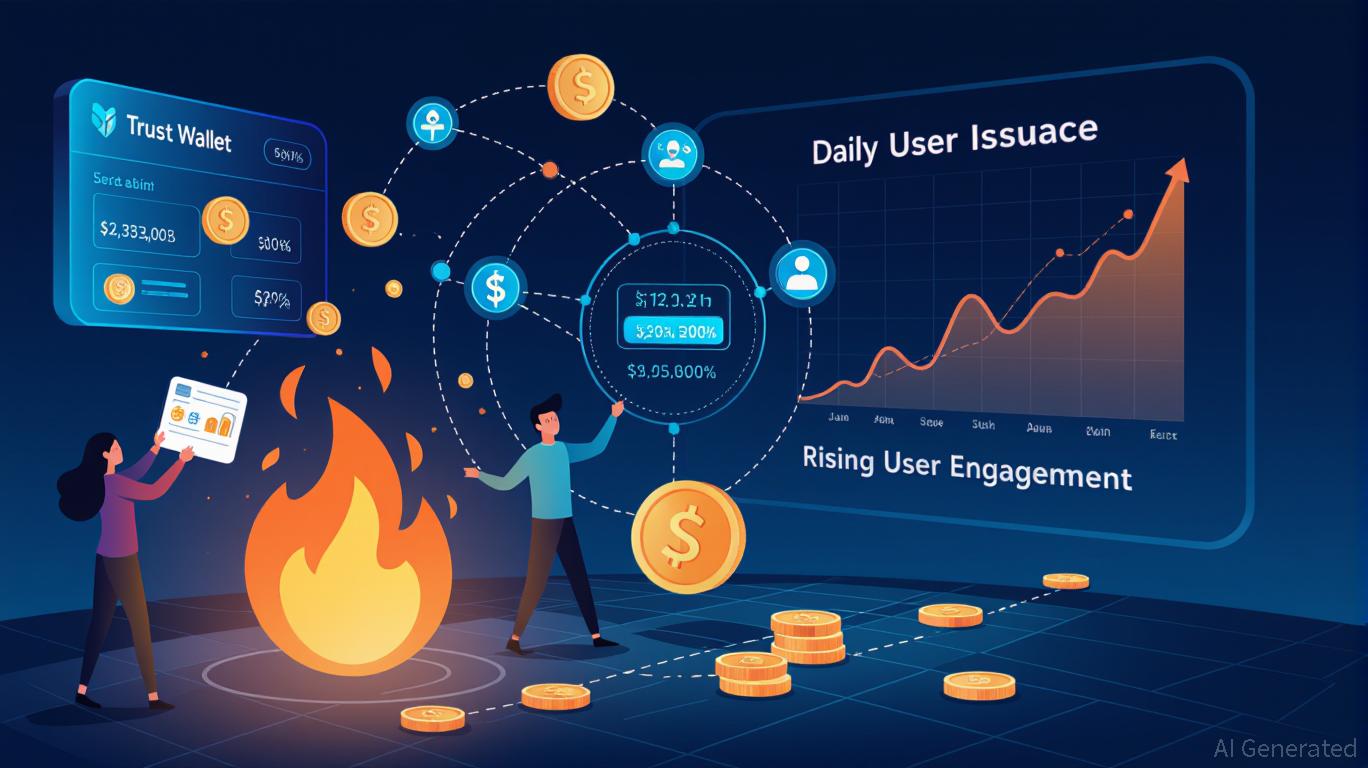
TON’s utility is further enhanced by the Trust Premium program—a gamified rewards system that incentivizes users for actions such as daily logins, token swaps, and wallet deposits. This tiered rewards structure motivates users to hold onto their tokens, creating a positive feedback loop of engagement and value preservation. By mid-2025, TON experienced a 40% increase in user activity compared to the previous year, underscoring the effectiveness of its utility-driven approach in building a dedicated community.
Impact on Investor Confidence and Market Performance
The overhaul of TON’s branding and tokenomics has had a noticeable impact on both investor sentiment and market valuation. By the close of 2025, TON’s price had climbed to $1.31, marking a 25% rise since mid-2024. This upward trend is largely credited to renewed institutional interest, fueled by TON’s integration with real-world assets such as tokenized U.S. Treasury bonds through Ondo Finance. The TON Strategy Company’s net profit of $84.7 million in Q3 2025 further cemented the token’s reputation among institutional players.
On-chain data also reflects TON’s growing adoption. In 2025, the network boasted 500,000 daily active addresses, placing it among the top four Layer 1 blockchains. Its leading decentralized exchange, STON.fi, reported $250 million in Total Value Locked (TVL) and $27 million in daily trading volume, indicating strong liquidity and user confidence. While Bitcoin remains a premier store of value and Ethereum dominates smart contract functionality, TON’s focus on utility has allowed it to establish a distinct position in the market.
Comparing TON’s Model to Traditional Cryptocurrencies
TON’s economic design diverges sharply from conventional crypto models. Where Bitcoin enforces scarcity through a strict supply limit, TON’s controlled issuance and burning are intended to balance liquidity and scarcity, supporting long-term value growth. Ethereum’s shift to Proof-of-Stake in 2022 improved scalability but did not introduce the deflationary elements present in TON’s framework. By combining systematic burns with real-world utility, TON offers a more predictable and attractive proposition for investors seeking both governance and practical use.
Institutional adoption further sets TON apart. Collaborations with platforms like Onramper and Tether have extended TON’s reach to 190 countries, allowing users to purchase cryptocurrencies using local payment options. Additionally, cross-chain liquidity solutions with Ethereum and Solana help reduce liquidity risks and expand the user base. In contrast, many traditional cryptocurrencies face ongoing regulatory and scalability challenges, making TON’s structured and utility-driven approach particularly appealing to institutional investors.
Looking Ahead: The Future of Crypto Valuation
TON’s model demonstrates the potential for tokenomics to reshape how investors assess and value digital assets. By tying token value to tangible use cases—such as cross-chain swaps, transaction fee discounts, and real-world asset integration—TON aligns with the financial sector’s broader movement to bridge DeFi and traditional finance. This strategy has attracted a significant portion of institutional investors, with 76% now favoring tokens that combine governance with real-world utility.
Nonetheless, challenges persist. Uncertainties in regulation and dependence on the Solana blockchain introduce certain risks. While TON’s price forecasts for 2025 range from $1.17 to $2.86, with some projections reaching $2.55 by 2030, ongoing success will require continuous innovation and effective management of liquidity.
Summary
The transformation of TWT into TON highlights the powerful role of modern tokenomics in redefining crypto asset valuation. By focusing on utility, scarcity, and community-driven governance, TON has strengthened investor trust and shown how well-designed economic models can align user interests with sustainable value creation. As the digital asset market evolves, tokens like TON may become templates for building resilient DeFi ecosystems, shaping how investors interact with and evaluate cryptocurrencies in an increasingly institutional environment.
Disclaimer: The content of this article solely reflects the author's opinion and does not represent the platform in any capacity. This article is not intended to serve as a reference for making investment decisions.
You may also like
The Rise of Dynamic Clean Energy Markets
- CleanTrade, CFTC-approved as a Swap Execution Facility (SEF), transformed clean energy markets into institutional-grade assets by standardizing VPPAs, PPAs, and RECs. - The platform addressed fragmented pricing and opaque risks, enabling $16B in transactions within two months and bridging renewable assets with institutional capital. - Institutional investors now use CleanTrade’s tools to hedge fossil fuel volatility and lock in renewable energy prices, mirroring traditional energy strategies. - Global cl

COAI Token Fraud: Insights for Cryptocurrency Investors During Times of Regulatory Ambiguity
- COAI token's 88% collapse in late 2025 exposed systemic risks in AI-driven DeFi ecosystems, with $116.8M investor losses. - Governance flaws included 87.9% token concentration in ten wallets, untested AI stablecoins, and lack of open-source audits. - Panic selling accelerated by AI-generated misinformation and CEO resignation, amid conflicting global crypto regulations. - Lessons emphasize scrutinizing token distribution, demanding transparent audits, and avoiding jurisdictions with regulatory ambiguity.

Renewable Energy Training as a Key Investment to Meet Future Workforce Needs
- Farmingdale State College's Wind Turbine Technology program aligns with surging demand for skilled labor in decarbonizing economies, driven by U.S. renewable energy targets. - Industry partnerships with Orsted, GE Renewable Energy, and $500K in offshore wind funding validate the program's role in addressing workforce shortages in expanding wind sectors. - Hands-on training with GWO certifications and VR simulations prepares graduates for high-demand, high-salary roles ($56K-$67K annually), reducing corpo

The Revival of STEM Learning as a Driving Force for Tomorrow’s Technology Investments
- Emerging STEM universities are driving tech innovation through interdisciplinary curricula and industry partnerships, focusing on AI, biotech , and advanced manufacturing. - U.S. programs like STEM Talent Challenge and NSF Future Manufacturing allocate $500K-$25.5M to bridge skills gaps and fund projects in quantum tech and biomanufacturing. - Leadership-focused STEM programs at institutions like Florida State and Purdue boost startup success rates (75-80%) and align with venture capital trends favoring

Trending news
MoreCrypto prices
More





