
Valuation Soars to $11 Billion, How Did Kalshi Thrive Against Regulatory Headwinds?

Kalshi is facing lawsuits and regulatory scrutiny in multiple states, being qualitatively classified as gambling. At the same time, its trading volume has surged, and its valuation has skyrocketed to $11 billion, revealing the structural contradiction of the prediction market's rapid growth within the legal grey area in the United States.
Original Article Title: "Facing Lawsuits Across Seven States While Raising Funds at a $11 Billion Valuation: The Song of Ice and Fire for Prediction Market Star Kalshi"
Original Article Author: Ethan, Odaily Planet Daily
Recently, a class-action lawsuit filed in the Southern District of New York has dragged prediction platform Kalshi into yet another regulatory dispute.
Seven users have accused the platform of selling sports-related contracts without obtaining any state gambling licenses and have questioned its market-making structure that "effectively pits users against the house." Just days ago, a Nevada court lifted Kalshi's protective order, leaving it open to potential criminal enforcement action in the state at any time.
The regulatory landscape has become increasingly stringent. The Nevada Gaming Control Board has determined that Kalshi's sports "event contracts" are essentially unlicensed gambling products and should not enjoy regulatory protection from the CFTC (Commodity Futures Trading Commission). Federal Judge Andrew Gordon bluntly stated during a hearing, "No one would have thought sports bets were financial instruments before Kalshi came along."
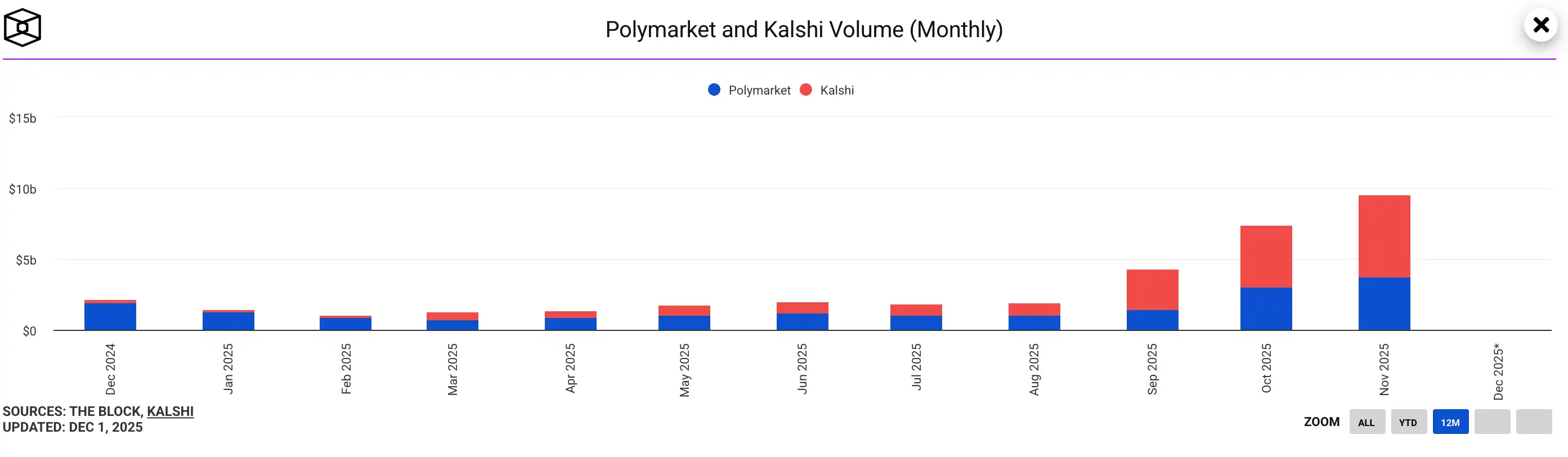
However, what most did not anticipate was that in the weeks following the tightening regulatory crackdown and legal pressure, Kalshi's key business metrics exhibited a defiant counter-trend growth—trading volumes hit record highs, and its latest funding round valued the company at $11 billion, solidifying its position as a well-deserved super star in the prediction market race.
The juxtaposition of frenzied capital and icy regulation has created a stark and contemporary contrast: why is a company that has been widely labeled as "illegal" demonstrating unprecedented vitality in the market? This article seeks to penetrate the legal rulings and transactional data, dissecting the regulatory logical conflicts, trust crises, and the reverse bet of capital, revealing the true logic behind this billion-dollar market at the eye of the storm.
Legal Identity Fracture: How Did Kalshi Shift from "Compliant" to "Illegal"?
If we go back to the beginning of the event, one of the most commonly overlooked questions is: Kalshi was not "illegal" in the past; it simply ceased to be allowed to operate legally suddenly. This shift from "compliant" to "illegal" did not stem from a change in the business itself but rather from a regulatory determination shift—especially concerning whether the prediction market should be categorized as a "financial derivative" or "unlicensed gambling."
Kalshi's self-narrative has always been clear: it is a CFTC-registered Designated Contract Market (DCM), and its event contracts are a form of binary options derivatives with a "true economic purpose," therefore deserving exclusive federal regulation. Over the past few years, this argument has indeed found space in the U.S. regulatory system, allowing Kalshi to launch binary prediction contracts in hundreds of areas such as election cycles, macroeconomics, and tech events, gradually becoming an industry leader.
However, the regulatory agency in Nevada evidently does not accept this logic, especially when Kalshi began entering the sports realm, causing an instant escalation of conflict. Sports betting is one of the most strictly regulated and localized areas in the U.S., with each state having completely different systems for licensing, taxation, and risk management. In other words, sports betting is a typical "state's rights red line." When Kalshi started introducing contracts related to touchdown times, match progress, and other sports events, the Nevada regulatory agency considered these products fundamentally as prop bets, typical of sports betting categories rather than financial derivatives.
This is also the reason Judge Gordon notably shifted his stance during the hearing. He pointed out that, following Kalshi's definition, as long as it involves a future event and is money-related, almost anything could be packaged as a derivative, leading to a regulatory system failure. The court explicitly stated in its subsequent ruling: sports events do not fall under the "excluded commodity" framework of the Commodity Exchange Act and therefore are not part of CFTC's exclusive regulation.
Therefore, the Nevada court not only officially lifted Kalshi's protective injunction at the end of November but also made it clear: these sports event contracts are essentially gambling contracts, not derivatives.
This ruling not only immediately exposed Kalshi's operations in Nevada to the dual risks of criminal and civil enforcement but also provided crucial legal reference points for other states across the U.S. Currently, at least six states have engaged in litigation in different courts regarding the "regulatory boundary of prediction markets," and the rulings are showing increasingly clear jurisdictional divergences:
· Federalists: Some states still insist on federal primacy through the CFTC for unified regulation;
· Gambling Bloc: More states are following Nevada's lead, mandating inclusion in their local gambling licensing system;
· Legislators: Some states are attempting to redefine the legal boundaries of the "prediction market" through legislation.
In an environment of regulatory fragmentation, Kalshi's legitimacy suddenly no longer has a unified interpretation, but has become a casualty of a "regulatory jurisdiction battle." More realistically, after losing the injunction, if Kalshi continues to operate in Nevada, it will face imminent potential criminal enforcement, which is why the company urgently applied for a court stay of execution.
From derivatives to gambling, from federal regulation to state regulation, and then to the fierce dispute among courts, users, and industry participants, several unavoidable questions have surfaced: What exactly is a prediction market? Is its legal identity stable? Can it find its place within the existing U.S. regulatory framework?
And as this identity crisis remains unresolved, Kalshi faces an even more challenging second blow—from questioning by users themselves.
Why Are Users Also Suing? Market Making Disputes, Gaming Allegations, and the Shadow of the "House"
If regulatory conflicts only exposed institutional fissures, then the collective lawsuit from users directly strikes at the trust foundation of the trading platform.
In a collective lawsuit filed on November 28, initiated by seven Kalshi users represented by the nationally renowned plaintiff law firm Lieff Cabraser Heimann & Bernstein, although the core accusations are only two, each one is deadly, attempting to fundamentally reshape external perceptions of Kalshi:
First, Illegal Operation Allegation: The plaintiffs argue that, without holding any state-level gambling licenses, Kalshi engaged in false advertising and provided essentially "sports betting" services.
Second, Acting as Both Referee and Player: The plaintiffs accuse Kalshi's affiliated market maker of not merely being a liquidity provider but actually acting as the platform's "house," allowing users to gamble against professional trading platforms with information or funding advantages without their knowledge.
In other words, what users are questioning is not the prediction contract itself but the transparency and fairness of the trading mechanism. The highly provocative statement in the lawsuit document quickly spread within the industry: "When consumers bet on Kalshi, they are not facing the market but the house."
The reason this statement is so powerful is that it precisely pierces the "identity defense line" of the prediction market. Platforms like Kalshi have always vehemently argued that they are neutral matchmakers, price discovery markets, not gambling companies betting against users. However, once the accusation of "platform participating in pricing and profiting from it" is substantiated, this boundary will instantly collapse on legal and ethical grounds.
Facing the allegations, Kalshi co-founder Luana Lopes Lara swiftly counterattacked, stating that the lawsuit was based on a "fundamental misunderstanding of the derivatives market mechanism." Her defense logic aligns with standard financial market common sense:
· Like other financial trading platforms, Kalshi allows multiple market makers to competitively provide liquidity;
· Affiliated market makers do not receive any internal preferential treatment;
· It is "industry practice" for early-stage liquidity to be provided by affiliated entities.

In traditional finance or mature cryptocurrency markets (such as Binance or Coinbase), this coexistence of "market makers" and "prop trading" may perhaps be an industry norm. However, in the gray area of the prediction market, the user structure and perception are vastly different. When retail investors encounter high-win-rate opponents, seemingly bottomless order books, or instant adjustments to the order book, they find it challenging to perceive it as "efficient market pricing" and are more inclined to view it as "market manipulation."
The most dangerous aspect of this lawsuit is that it has formed a deadly narrative resonance with regulatory actions in Nevada. Regulators say you are unlicensed gambling; users say you are running a house-banked casino. With both narratives overlaying, Kalshi faces not only compliance risks but also narrative risks that are harder to reverse.
In the financial world, "market-making" is neutral infrastructure; however, in the context of the prediction market, it is rapidly being stigmatized as "manipulation" and "harvesting." When "Kalshi is not the open market it claims to be" becomes the consensus, its legitimacy and business ethics will collapse simultaneously.
Yet, in a highly ironic twist, the dual crisis of law and trust has not halted Kalshi's growth trajectory. After the lawsuit exposure, its sports and politics segments saw increased trading volume. This paradoxical phenomenon reveals the deepest contradiction in the current prediction market: in the face of extreme speculative demand, users seem not to care whether this is a "trading platform" or a "casino," as long as the order book is moving, funds will flow in.
Why is Kalshi more embraced by the market as it gets deeper into the "compliance quagmire"?
Despite being besieged by multiple state regulatory agencies, judicial rulings against them, and collective user lawsuits, Kalshi has delivered a staggering report card amidst the crisis: platform trading volume has exponentially surged, driven by sports and politics contracts, while also completing a $1 billion financing round led by Sequoia Capital, pushing its latest valuation to a high of $11 billion. This situation of "regulatory winter" coexisting with "market summer" may seem illogical but profoundly reveals the structural characteristics of this emerging prediction market track. Kalshi's counter-trend outbreak is not accidental but the result of the resonance of four-layered market logics.
1. Psychological Game: FOMO Effect Triggered by "Regulatory Countdown"
The uncertainty of regulation has not scared off users but has instead sparked a kind of "doomsday celebration"-style enthusiasm. With the lifting of the ban in Nevada, the public has realized the blurred boundary between prediction markets and traditional gambling. This "imminent regulatory tightening" expectation has transformed on the user side into a scarcity anxiety: traders are eager to enter the market before the window closes. For speculative funds, the less clear the rules, the greater the potential arbitrage space. Kalshi has actually benefited from a "regulatory risk premium" traffic dividend.
2. Capital Voting: Betting on the Endgame of "Institutional Dividend"
From the perspective of top institutions like Sequoia, the current legal disputes are just early pains of industry development, not the endgame. The logic of capital is very clear: prediction markets are not only an alternative to gambling but also a part of the future financial infrastructure. According to Certuity's research report, by 2035, the market size will exceed $95.5 billion, with a compound annual growth rate of nearly 47%. In the eyes of institutional investors, the resistance Kalshi is currently facing is proof that it is a leading player. Capital is making a reverse bet: the prediction market will eventually be integrated into the regulatory system, and the surviving top platforms will enjoy a huge institutional dividend. The current high valuation is a pricing of the "regulation is not yet defined, but the demand is irreversible" time window.
3. Competitive Landscape: Liquidity Suction from Supply-Side Consolidation
The surge in Kalshi's trading volume is largely due to the forced exit of competitors. With Crypto.com and Robinhood suspending related services one after another during the appeal period, there has been a huge vacuum in the supply side of the U.S. compliant prediction market. With the demand side (especially the election, sports season) continuing to expand, market liquidity is forced to find new outlets. As the only surviving open platform in this field, Kalshi has absorbed a huge flow from competing platforms. This "survival of the fittest" effect has made it the deepest and broadest liquidity pool in the U.S. market in the short term, further strengthening its Matthew effect.
4. Demand Essence: Shift from "Speculation" to "Risk Expression" Paradigm
Lastly, and most fundamentally: the core driving force of user participation in the prediction market is no longer just speculation. In an era of intensified macro fluctuations, the demand for risk pricing of events such as interest rate decisions, election trends, and geopolitics has sharply increased. Traditional financial derivatives are unable to cover these non-standardized events, and prediction markets precisely fill this gap. For professional traders, this is a risk hedging tool; for ordinary users, it is a high-frequency channel to participate in public events. This transaction demand based on the "event itself" is highly rigid and will not disappear due to a single state's regulatory ban. On the contrary, the high exposure brought about by regulatory disputes has pushed the prediction market from a niche financial circle to the center of public opinion.
In conclusion, Kalshi's contrarian growth is not due to a "the more illegal, the more attractive" mindset, but rather a combination of demand-side rigid breakout, capital-side long-term wager, and competition-side supply vacuum.
Current Kalshi is at an extremely tense historical moment: it faces an unprecedentedly dark moment at the legal level, yet it is experiencing its brightest growth at the commercial level. This may be the "coming-of-age ceremony" that all disruptive financial innovations must go through—before the regulatory framework achieves logical self-consistency, the market has already cast its vote of confidence with real money.
Conclusion: The future of the prediction market is being prematurely unveiled in Kalshi
The eye of the storm where Kalshi currently resides is not merely a compliance crisis for a startup but a systemically ignited conflict. In an extremely condensed and intense manner, it forces the U.S. financial system to confront the core proposition that has long been shelved: how should the prediction market, this new type of financial infrastructure, be defined, regulated, and even allowed to exist?
It hovers on the edge between securities and gambling—possessing both the price discovery function of the financial market and the entertainment attribute of mass consumption; carrying the serious demand for hedging real-world risks and being filled with the fervor of speculators' gambling. It is precisely this "hybrid identity" that has led to a four-way tug-of-war among CFTC regulators, state-level enforcers, the judiciary, and market users on this issue with disparate goals and conflicting means.
In this sense, Kalshi's plight is not a coincidental "accident" but an inevitable "origin" of the entire industry.
From Nevada to Massachusetts, the regulatory boundaries of the prediction market are being rewritten state by state; from the CFTC's policy swings to the district court's repeated precedents, the federal system is revealing its hesitation in the face of a new species; and from user-initiated class-action lawsuits to vigorous public debate, the public is also beginning to scrutinize the industry's true nature—whether it is an information-transparent "oracle" or a "digital casino" cloaked in financial garb?
This intense uncertainty may seem dangerous, but it is actually a testament to the industry's explosiveness. Looking back over the past two decades, from electronic payments to crypto assets, from internet securities to DeFi, every institutional conflict that has occurred on the financial edge has ultimately driven a restructuring of its underlying logic and ushered in new regulatory paradigms. The prediction market is now entering a similar cycle, except its evolution is far ahead of expectations.
Standing at the fork in the road of the future, we can at least establish three irreversible trends:
First, the legality game will be stuck in a "prolonged war." Since at least six states have seen radically different legal interpretations, this means that the jurisdictional dispute is highly likely to escalate to the Supreme Court level. A single ruling cannot determine everything, and regulatory fragmentation will be the norm.
Second, the prediction market is shifting from a "niche toy" to "infrastructure." Whether using money as a vote to hedge political risk or quantifying societal expectations of macro events, the prediction market is becoming an indispensable "risk pricing anchor" in the real world.
Third, the industry's endgame will be dynamically reshaped by multiple forces. The ultimate determination of the form of the prediction market will not be the unilateral will of a regulator but a dynamic equilibrium constructed by market demand, capital will, political maneuvering, and judicial precedents.
Therefore, Kalshi's victory or defeat may no longer be the sole focus; it is more like the first veil being torn apart. In the short term, the two key legal documents on December 8th and 12th will determine whether Kalshi can survive after this regulatory storm. Still, looking at history in perspective, the confrontation on these two days is destined to be the first watershed in the ten-billion-dollar race of the prediction market.
The future of the prediction market will not be solely authored by a single court ruling, but its course will undoubtedly change at some critical juncture. And this juncture is set to arrive early through the hands of Kalshi.
Original Article Link
Disclaimer: The content of this article solely reflects the author's opinion and does not represent the platform in any capacity. This article is not intended to serve as a reference for making investment decisions.
You may also like
The Evolution of Crypto Privacy Technologies


Bitcoin Bollinger Bands repeat ‘parabolic’ bull signal from late 2023

Trending news
MoreCrypto prices
More






