
Hyperliquid (HYPE) Price Rally: Is This a Short-Lived Hype or a Genuine Breakthrough?
- Hyperliquid's HYPE token surged amid a 2.66% supply unlock and HIP-3 fee cuts, testing $31–$32 support levels. - Institutional adoption via BlackRock/Stripe partnerships and a $1B token buyback strategy signal DeFi's growing legitimacy. - A $42.75 price breakout could trigger liquidity-driven growth, but $10.8B future token releases pose dilution risks. - Regulatory clarity and 21Shares' SEC-approved ETF proposal highlight DeFi's integration with traditional finance. - HYPE's trajectory reflects DeFi's m
Hyperliquid’s HYPE Token: Market Hype or Sustainable Growth?
The dramatic rise in Hyperliquid’s native token, HYPE, has sparked heated discussions among market participants. As the token approaches a pivotal moment, many are questioning whether this surge is simply a speculative bubble or the beginning of a lasting rally, driven by meaningful upgrades and increased institutional involvement. To gain clarity, it’s essential to examine the underlying drivers, market behavior, and the evolving landscape of decentralized trading platforms as we look toward 2025.
Main Drivers of the Recent Price Movement
HYPE’s price trajectory in late 2025 has been influenced by a mix of on-chain developments and strategic enhancements. In November 2025, a release of 2.66% of the circulating supply introduced $344 million worth of new HYPE tokens into the market, causing significant price swings as the influx of tokens met established resistance zones. Despite this volatility, the token managed to find support near the $31–$32 range—a historically important level that has shown signs of weakening with repeated tests.
Market observers, such as OxMakeSense, point to the $37–$38 price window as a crucial threshold. A decisive move above this range could force short sellers to cover, potentially fueling further gains. Conversely, failure to break through may see the price retreat toward $25, as highlighted in recent analyses.
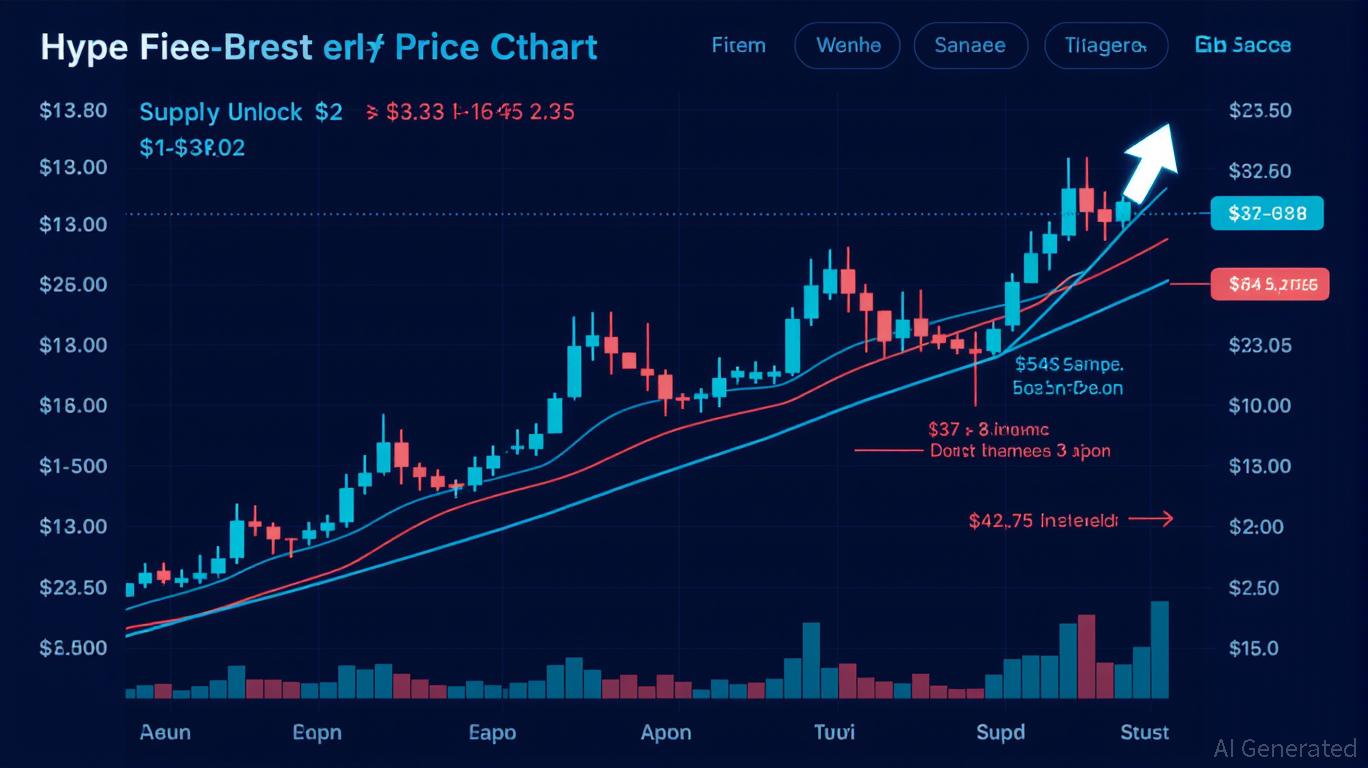
Looking further ahead, optimism is fueled by the HIP-3 protocol upgrade, which dramatically reduced taker fees by 90% for new markets, and the introduction of Hyperliquid Strategies—a digital asset treasury with ambitions to amass up to $1 billion in HYPE. These initiatives are expected to enhance liquidity and attract institutional buybacks. Should the token surpass the $42.75 mark, forecasts suggest it could set off a positive feedback loop, driving liquidity and institutional participation and potentially pushing HYPE toward the $50 milestone.
Sentiment Shifts and DeFi Industry Trends
HYPE’s journey is emblematic of broader movements within decentralized finance. By mid-2025, Hyperliquid had secured a commanding 80% share of the decentralized perpetual contract market, boasting a total value locked (TVL) of $5 billion and open interest reaching $15 billion. The platform’s custom Layer-1 blockchain, engineered for high-frequency trading with sub-second transaction finality and the ability to process 200,000 orders per second, has drawn both individual and institutional traders.
Institutional engagement has accelerated, with notable collaborations involving firms like BlackRock and Stripe, as well as the submission of ETF applications approved by the SEC. These developments signal a deepening connection between decentralized and traditional finance. Hyperliquid’s innovative HyperBFT consensus and fully on-chain order book (CLOB) have further established it as a credible alternative to centralized exchanges, especially as regulators intensify scrutiny of custodial platforms.
Institutional Involvement and Regulatory Landscape
Despite strong technical progress and growing institutional interest, certain risks remain. The scheduled release of $10.8 billion in HYPE tokens over the next two years has raised concerns about potential dilution and the market’s capacity to absorb this supply. Regulatory uncertainty also looms large; shifting positions from agencies like the SEC and CFTC could either accelerate adoption or introduce new hurdles. The proposed SEC-approved HYPE ETF from 21Shares highlights both the increasing confidence of institutional players and the pressing need for robust governance structures.
Outlook: Temporary Hype or Lasting Success?
HYPE’s recent rally cannot be dismissed as mere speculation, nor can it be considered a guaranteed breakout. Short-term price swings, driven by supply shocks and repeated tests of key support levels, underscore ongoing market uncertainty. However, the token’s long-term prospects—bolstered by protocol upgrades, strategic partnerships, and a dominant position in decentralized perpetual trading—point to the potential for sustained expansion.
- Key metrics to watch: Can HYPE withstand the $344 million token unlock without falling below the $31–$32 support zone?
- Will Hyperliquid Strategies successfully accumulate enough tokens to counteract supply pressures?
If these factors align, HYPE could solidify its status as a foundational asset within the DeFi sector. If not, a period of sideways movement may follow.
Ultimately, Hyperliquid’s evolution reflects the broader maturation of decentralized finance. As these platforms continue to rival their centralized counterparts in terms of liquidity, speed, and institutional trust, the boundaries between traditional and crypto-native finance are becoming increasingly indistinct. The coming months will reveal whether HYPE emerges as a lasting leader or simply a brief phenomenon in this rapidly changing environment.
Disclaimer: The content of this article solely reflects the author's opinion and does not represent the platform in any capacity. This article is not intended to serve as a reference for making investment decisions.
You may also like
Internet Computer's Rapid Rise: Key Drivers and What It Means for Long-Term Investors
- Internet Computer (ICP) surged 385% in November 2025, driven by Caffeine AI, Chain Fusion, and institutional partnerships. - Caffeine AI's no-code dApp platform and Chain Fusion's cross-chain interoperability expanded ICP's utility and developer adoption. - Institutional adoption via Microsoft/Azure and $237B TVL growth positioned ICP as a decentralized infrastructure leader in AI and DeFi. - Price forecasts range $4.4-$30 by 2025-2030, but risks include volatility, regulatory uncertainty, and unproven u

Bitcoin’s Sharp Decline: What Sparks Anxiety During a Bullish Market?
- Bitcoin's 2025 bull market collapsed 30% to $83,824 amid Fed policy shifts and liquidity contractions, defying typical risk-on dynamics. - A 0.72 correlation to Nasdaq 100 and $19B leveraged liquidation event exposed Bitcoin's vulnerability to macro risks and institutional sentiment shifts. - AI-driven algorithms and algorithmic feedback loops amplified volatility, with Treasury yields and dollar strength triggering cascading sales. - Market psychology metrics (Fear & Greed Index, stablecoin outflows) an

Infrastructure Initiatives Fuel Real Estate Growth in Upstate New York: The Impact of Local Government Projects on Industrial Market Transformation
- Webster , NY leveraged a $9.8M FAST NY grant to transform a 300-acre Xerox brownfield into a high-tech industrial hub, slashing vacancy rates to 2%. - Infrastructure upgrades attracted food processing and semiconductor firms , with a $650M fairlife® dairy plant expected to create 250 jobs by 2025. - Strategic site readiness and pre-leased industrial space at the NEAT site reduced investor risk, driving 10.1% residential property value growth since 2023. - The model highlights underpenetrated markets' pot

ZEC Rises 4.81% After Major Investor Increases Long Position with 10x Leverage
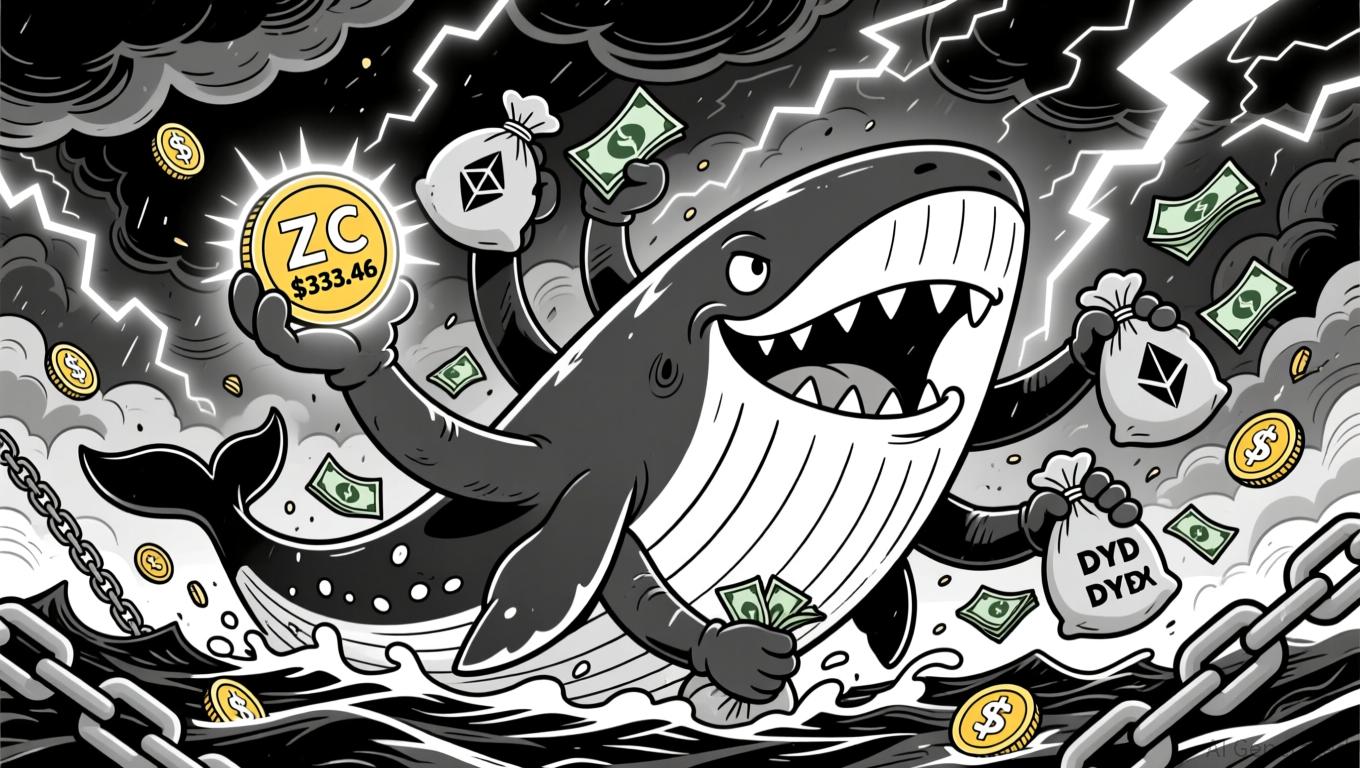
- ZEC surged 4.81% in 24 hours to $330.5 amid a whale's 10x leveraged long position on HyperLiquid targeting $333.46. - The whale also holds 20x ETH and 5x DYDX longs but faces $2.7M total losses, highlighting risks of leveraged trading during crypto volatility. - Grayscale's ZEC ETF filing and Chainlink's ETF launch signal growing institutional interest in altcoins, potentially boosting ZEC liquidity and demand. - ZEC's 482.71% annual gain contrasts with 27.45% weekly drop, reflecting its cyclical nature
Trending news
MoreCrypto prices
More






