
MMT Token Soars: On-Chain Drivers and Changing DeFi Sentiment Fuel 1,300% Increase
- MMT token surged 1,300% in Nov 2025 after Binance listing and BNB holder airdrop, driven by on-chain innovation and regulatory clarity. - $12B DEX volume and $265M TVL, plus Sui-based perpetual futures DEX, attracted institutional capital under CLARITY Act and MiCA 2.0 frameworks. - Investor shift from memecoins to utility-driven DeFi boosted MMT's deflationary buybacks and community engagement via yield-generating airdrops. - Regulatory classification as a utility token reduced legal risks, with 85% of
Momentum (MMT) Token: Redefining the DeFi Landscape
The Momentum (MMT) token has rapidly become a focal point in decentralized finance, experiencing an extraordinary price increase of more than 1,300% in November 2025 after its debut on Binance and a strategic airdrop to BNB holders. This dramatic rise is not merely a short-lived trend; it is the result of innovative blockchain developments, favorable regulatory changes, and a noticeable shift in investor preferences toward DeFi projects with real-world utility. Below, we explore the driving forces behind MMT's ascent and what they could mean for its future trajectory.
Key On-Chain Drivers: Liquidity, TVL, and Institutional Interest
MMT's remarkable growth has been fueled by significant on-chain activity. According to blockchain analytics provider LookonChain, the token recorded $12 billion in decentralized exchange (DEX) trading volume over 30 days and achieved $265 million in total value locked (TVL). These figures point to strong liquidity and active user participation—both essential for maintaining momentum in the often unpredictable DeFi market.
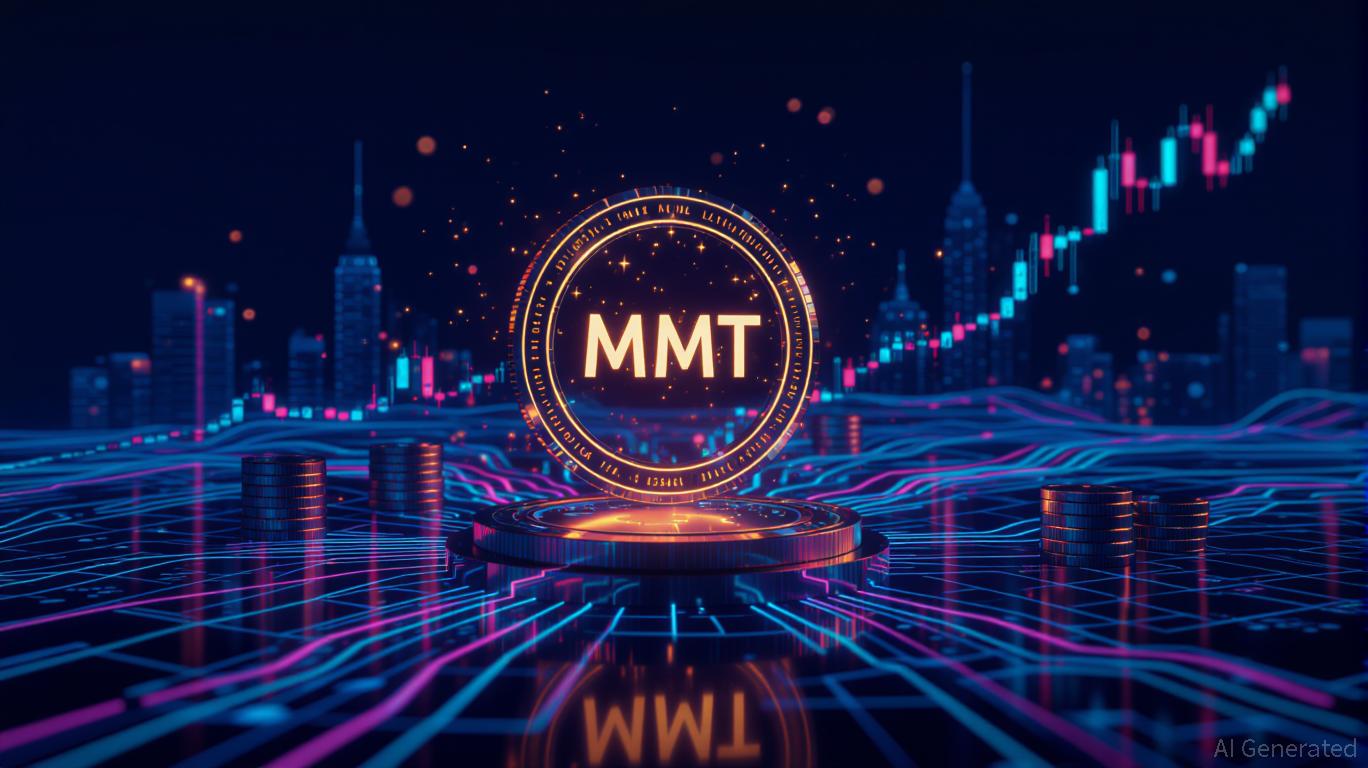
The launch of a perpetual futures DEX on the Sui blockchain further enhanced MMT's appeal. By combining Hyperliquid's MLP vault system with Aster DEX's risk management engine, Momentum has established itself as a hybrid protocol that bridges the gap between centralized and decentralized liquidity. This technical advancement, together with regulatory approval under the U.S. CLARITY Act and MiCA 2.0, has attracted significant institutional investment.
Changing Investor Attitudes: From Memecoins to Functional DeFi
November 2025 marks a turning point in DeFi, as retail investors shift their focus from speculative memecoins to platforms offering practical utility and deflationary features. MMT's buyback initiative, which uses protocol-generated fees to redistribute tokens to veMMT holders, has created a deflationary environment—reducing the circulating supply and encouraging long-term staking.
The airdrop strategy also played a crucial psychological role. By rewarding BNB holders who participated in yield-generating products between October 10 and 19, 2025, Momentum fostered a community of engaged users with a vested interest in the protocol. This approach not only increased short-term liquidity but also reinforced the token's value within the Sui ecosystem.
Regulatory Developments: Paving the Way for Institutional Involvement
The classification of MMT as a utility token under the CLARITY Act has proven transformative. By clearly differentiating digital commodities from securities, this legislation has reduced legal uncertainty, making it easier for institutional investors to participate without regulatory concerns. Additionally, the harmonized framework provided by MiCA 2.0 in the European Union has further strengthened MMT's international credibility.
Institutional interest is already gaining momentum. Companies such as Galaxy Digital and Coinbase are positioned to benefit from the CLARITY Act's regulatory structure, which delineates responsibilities between the SEC and CFTC. This newfound clarity is expected to unlock substantial institutional capital, with 85% of firms planning to invest in digital assets during 2025.
Potential Challenges: Volatility and Token Supply
Despite the optimistic outlook, certain risks remain. The gradual release of tokens held by early supporters in 2026 could lead to increased selling pressure, potentially counteracting MMT's deflationary measures. Moreover, the token's 224% volatility over a 24-hour period underscores its speculative nature. Retail investors should carefully consider these risks alongside the project's strengths, such as its $500 million liquidity pool and a user base exceeding 2.1 million.
Outlook: Is DeFi Entering a New Phase?
MMT's meteoric rise signals a broader transformation within DeFi—from hype-driven speculation to innovation grounded in utility and compliance. While the token's regulatory standing and on-chain performance are promising, its continued success will depend on maintaining user growth and effectively managing token supply. For investors, the message is clear: DeFi is evolving, and projects like MMT that combine regulatory transparency with strong fundamentals are well-positioned to lead the next wave of institutional adoption.
Disclaimer: The content of this article solely reflects the author's opinion and does not represent the platform in any capacity. This article is not intended to serve as a reference for making investment decisions.
You may also like
Internet Computer's Rapid Rise: Key Drivers and What It Means for Long-Term Investors
- Internet Computer (ICP) surged 385% in November 2025, driven by Caffeine AI, Chain Fusion, and institutional partnerships. - Caffeine AI's no-code dApp platform and Chain Fusion's cross-chain interoperability expanded ICP's utility and developer adoption. - Institutional adoption via Microsoft/Azure and $237B TVL growth positioned ICP as a decentralized infrastructure leader in AI and DeFi. - Price forecasts range $4.4-$30 by 2025-2030, but risks include volatility, regulatory uncertainty, and unproven u

Bitcoin’s Sharp Decline: What Sparks Anxiety During a Bullish Market?
- Bitcoin's 2025 bull market collapsed 30% to $83,824 amid Fed policy shifts and liquidity contractions, defying typical risk-on dynamics. - A 0.72 correlation to Nasdaq 100 and $19B leveraged liquidation event exposed Bitcoin's vulnerability to macro risks and institutional sentiment shifts. - AI-driven algorithms and algorithmic feedback loops amplified volatility, with Treasury yields and dollar strength triggering cascading sales. - Market psychology metrics (Fear & Greed Index, stablecoin outflows) an

Infrastructure Initiatives Fuel Real Estate Growth in Upstate New York: The Impact of Local Government Projects on Industrial Market Transformation
- Webster , NY leveraged a $9.8M FAST NY grant to transform a 300-acre Xerox brownfield into a high-tech industrial hub, slashing vacancy rates to 2%. - Infrastructure upgrades attracted food processing and semiconductor firms , with a $650M fairlife® dairy plant expected to create 250 jobs by 2025. - Strategic site readiness and pre-leased industrial space at the NEAT site reduced investor risk, driving 10.1% residential property value growth since 2023. - The model highlights underpenetrated markets' pot

ZEC Rises 4.81% After Major Investor Increases Long Position with 10x Leverage
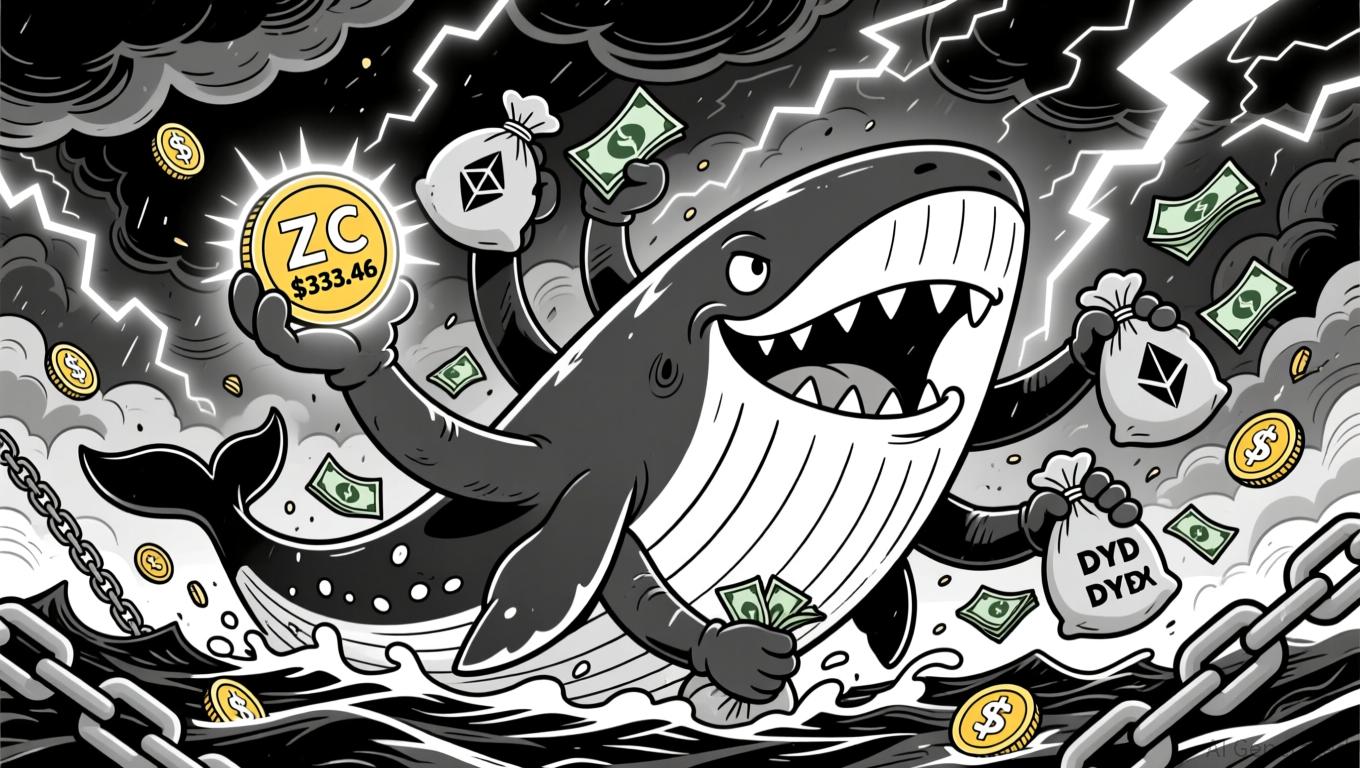
- ZEC surged 4.81% in 24 hours to $330.5 amid a whale's 10x leveraged long position on HyperLiquid targeting $333.46. - The whale also holds 20x ETH and 5x DYDX longs but faces $2.7M total losses, highlighting risks of leveraged trading during crypto volatility. - Grayscale's ZEC ETF filing and Chainlink's ETF launch signal growing institutional interest in altcoins, potentially boosting ZEC liquidity and demand. - ZEC's 482.71% annual gain contrasts with 27.45% weekly drop, reflecting its cyclical nature
Trending news
MoreCrypto prices
More






