
Bitcoin Death Cross Causes Market Fear, BTC Under $90K
- Bitcoin forms a death cross, sparking market-wide fear.
- BTC price drops below $90K, raising investor concerns.
- Investors fear potential prolonged bearish trend in cryptocurrency.
Bitcoin formed a death cross on November 16, 2025, with its 50-day moving average falling below its 200-day average, causing prices to drop below $90,000.
The event sparked widespread fear, with Bitcoin’s price hitting $89,426 before a slight recovery, highlighting potential market instability.
Bitcoin recently formed a death cross on November 16, 2025, when its 50-day moving average dropped below the 200-day average. This technical indicator resulted in Bitcoin’s price falling sharply below the $90,000 mark, igniting widespread fear in the market.
The current scenario lacks direct involvement from Bitcoin’s core developers or major institutional leaders. The death cross event is primarily driven by market technicals and reactions from macro traders rather than any intervention from Bitcoin’s leadership.
The immediate market reaction to Bitcoin’s death cross saw prices for BTC plunge to $89,426, later regaining some ground. This event has brought fear into the market, influencing investor sentiment documented by a drop in the Fear & Greed Index.
Financial implications include uncertainty about future investment strategies, given the historical context where previous death crosses have sometimes led to extended bearish periods. The lack of institutional buying or shifting confirms risk-averse behavior in the current landscape.
With the significant price drop, Bitcoin’s latest technical pattern has instilled caution among market participants. Fear of potential prolonged downturns remains evident with sentiment indices reporting extreme fear levels.
Historical data suggests bearish trends often follow a death cross, but recovery timelines vary. On-chain data and analytics will be key in assessing whether this event could prompt future market adjustments or a more sustained bearish phase.
Bitcoin has fallen below $90K following the death cross, which has ignited market-wide fear and affected other assets like DOGE, but no key figures have provided commentary on this specific event.
Disclaimer: The content of this article solely reflects the author's opinion and does not represent the platform in any capacity. This article is not intended to serve as a reference for making investment decisions.
You may also like
PENGU Price Forecast for 2026: Managing Fluctuations and Momentum from Key Catalysts After the 2025 Market Adjustment
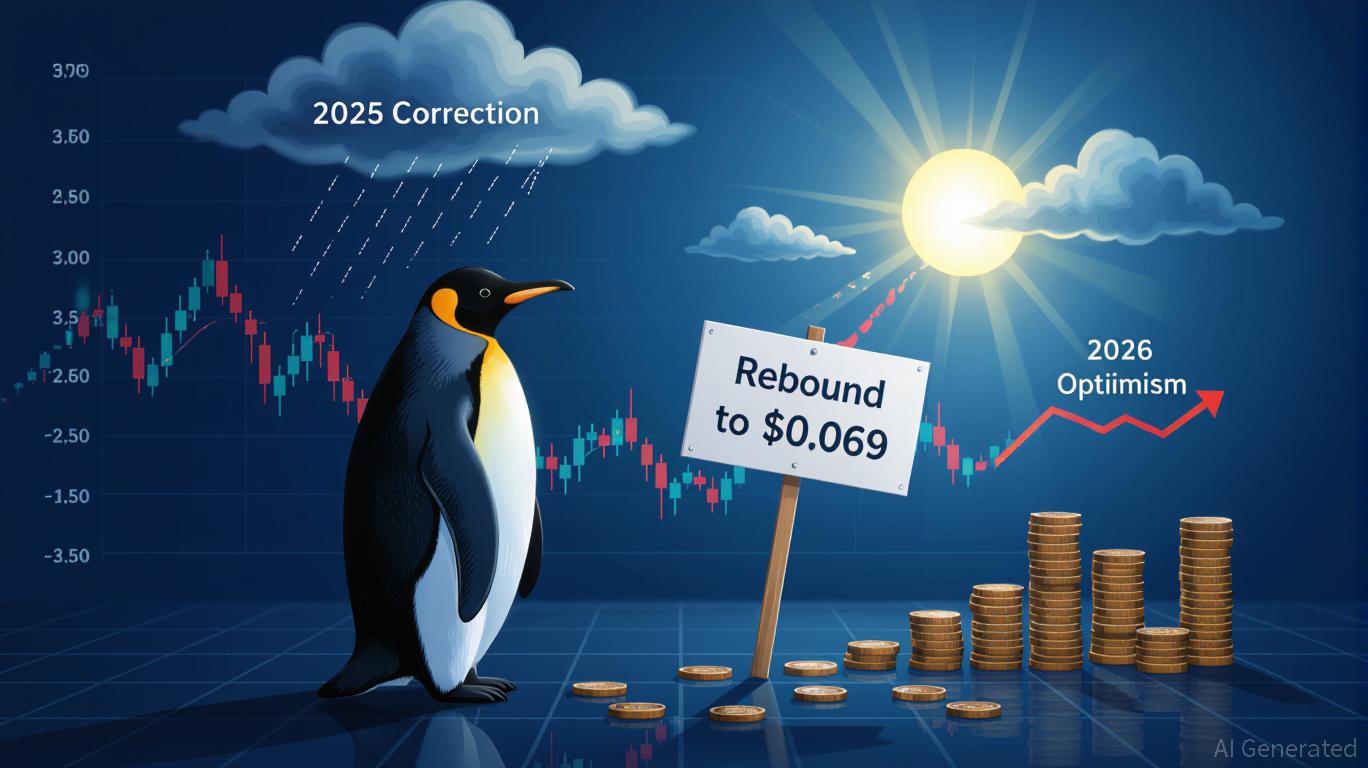
- 2025 crypto market correction reshaped altcoin dynamics as Bitcoin/Ethereum declined amid macroeconomic uncertainty and regulatory pressures. - Pudgy Penguins (PENGU) saw sharp volatility post-correction, with technical indicators suggesting potential $0.069 rebound by 2026 if adoption metrics align. - Strategic partnerships with Bitso and cross-chain integrations, plus Kung Fu Panda NFT collaborations, aim to boost PENGU's liquidity and mainstream adoption. - Despite 12% early 2026 price drop, Pudgy Inv
ZEC Value Increases by 4.82% Following Recent Exchange Listing
- Zcash (ZEC) surged 4.82% in 24 hours after Bitget listed it for spot trading on Dec 3, 2025, boosting short-term liquidity and visibility. - Zcash’s zero-knowledge proof technology enables encrypted transactions while maintaining blockchain integrity, distinguishing it as a privacy-focused asset. - Bitget’s UEX model supports multi-chain access, aligning with Zcash’s goal to balance transparency and privacy, though recent 7-day and 1-month declines highlight market volatility risks.
Tether (USDT) Price Fluctuations and Market Response to PENGU Sell Indicators: Assessing Potential Risks and Opportunities within a Divided Stablecoin Landscape
- Tether (USDT) faced 2025 depegging to $0.90, exposing reserve management flaws and triggering S&P's "weak" stability rating. - Algorithmic PENGU USDT's 28.5% price drop and $66.6M team outflows highlighted systemic risks in opaque collateral structures. - Regulatory shifts (GENIUS Act, MiCA) accelerated migration to compliant stablecoins like USDC , now dominating 30% of on-chain transaction volume. - Market fragmentation reveals dual dynamics: algorithmic risks vs. institutional adoption opportunities i

DASH Increases by 2.44% as Significant Insider Selling and Purchase Indicators Emerge
- DASH rose 2.44% in 24 hours to $50.1, showing a 31.63% annual gain despite a 11.79% seven-day drop. - High-ranking insiders sold millions via 10b5-1 plans, including $9. 3M by Stanley Tang and $6.19M by Andy Fang. - Alfred Lin’s $100.2M purchase signaled confidence, contrasting with other sales and suggesting undervaluation. - Market reacted positively short-term, but analysts expect macroeconomic and business fundamentals to support DASH ahead.

Trending news
MoreCrypto prices
More






