
U.S. Regulator OCC Clarifies How Banks Can Handle Network 'Gas Fees'

The U.S. Office of the Comptroller of the Currency issued new policy guidance that lays out how national banks can maintain crypto assets to be used for the payment of blockchain networks' "gas fees."
In what's known as "interpretive letter No. 1186," the agency said Tuesday that the banks can keep on their balance sheets digital assets they think will reasonably be required for their operations.
Blockchain networks routinely require the use of their own specific token as a fee for transactions, so banks that wish to handle such activity need to have the necessary assets on-hand. Activity "explicitly allowed under the Guiding and Establishing National Innovation for U.S. Stablecoins Act" will require banks needing to pay network fees as an agent for customers or as part of its custody operations, the letter said.
The need for banks "to pay network fees to facilitate otherwise permissible crypto-asset activities and to hold, as principal, amounts of crypto-assets on balance sheet necessary to pay network fees for which the bank anticipates a reasonably foreseeable need is permissible for the bank," the OCC concluded
U.S. banking regulators — also including the Federal Reserve, Federal Deposit Insurance Corp. and the wider Treasury Department — are already working on writing new regulations to govern stablecoin issuers and activity, based on the new GENIUS Act requirements. But those rules aren't yet in place for the law approved earlier this year.
The OCC has reversed years of hesitation about letting regulated banks engage in digital assets activity with the arrival of the pro-crypto administration of President Donald Trump. The agency is now run by Trump appointee Jonathan Gould, who was confirmed by the Senate in July.
Read More: What Are Ethereum Gas Fees?
Disclaimer: The content of this article solely reflects the author's opinion and does not represent the platform in any capacity. This article is not intended to serve as a reference for making investment decisions.
You may also like
Internet Computer's Rapid Rise: Key Drivers and What It Means for Long-Term Investors
- Internet Computer (ICP) surged 385% in November 2025, driven by Caffeine AI, Chain Fusion, and institutional partnerships. - Caffeine AI's no-code dApp platform and Chain Fusion's cross-chain interoperability expanded ICP's utility and developer adoption. - Institutional adoption via Microsoft/Azure and $237B TVL growth positioned ICP as a decentralized infrastructure leader in AI and DeFi. - Price forecasts range $4.4-$30 by 2025-2030, but risks include volatility, regulatory uncertainty, and unproven u

Bitcoin’s Sharp Decline: What Sparks Anxiety During a Bullish Market?
- Bitcoin's 2025 bull market collapsed 30% to $83,824 amid Fed policy shifts and liquidity contractions, defying typical risk-on dynamics. - A 0.72 correlation to Nasdaq 100 and $19B leveraged liquidation event exposed Bitcoin's vulnerability to macro risks and institutional sentiment shifts. - AI-driven algorithms and algorithmic feedback loops amplified volatility, with Treasury yields and dollar strength triggering cascading sales. - Market psychology metrics (Fear & Greed Index, stablecoin outflows) an

Infrastructure Initiatives Fuel Real Estate Growth in Upstate New York: The Impact of Local Government Projects on Industrial Market Transformation
- Webster , NY leveraged a $9.8M FAST NY grant to transform a 300-acre Xerox brownfield into a high-tech industrial hub, slashing vacancy rates to 2%. - Infrastructure upgrades attracted food processing and semiconductor firms , with a $650M fairlife® dairy plant expected to create 250 jobs by 2025. - Strategic site readiness and pre-leased industrial space at the NEAT site reduced investor risk, driving 10.1% residential property value growth since 2023. - The model highlights underpenetrated markets' pot

ZEC Rises 4.81% After Major Investor Increases Long Position with 10x Leverage
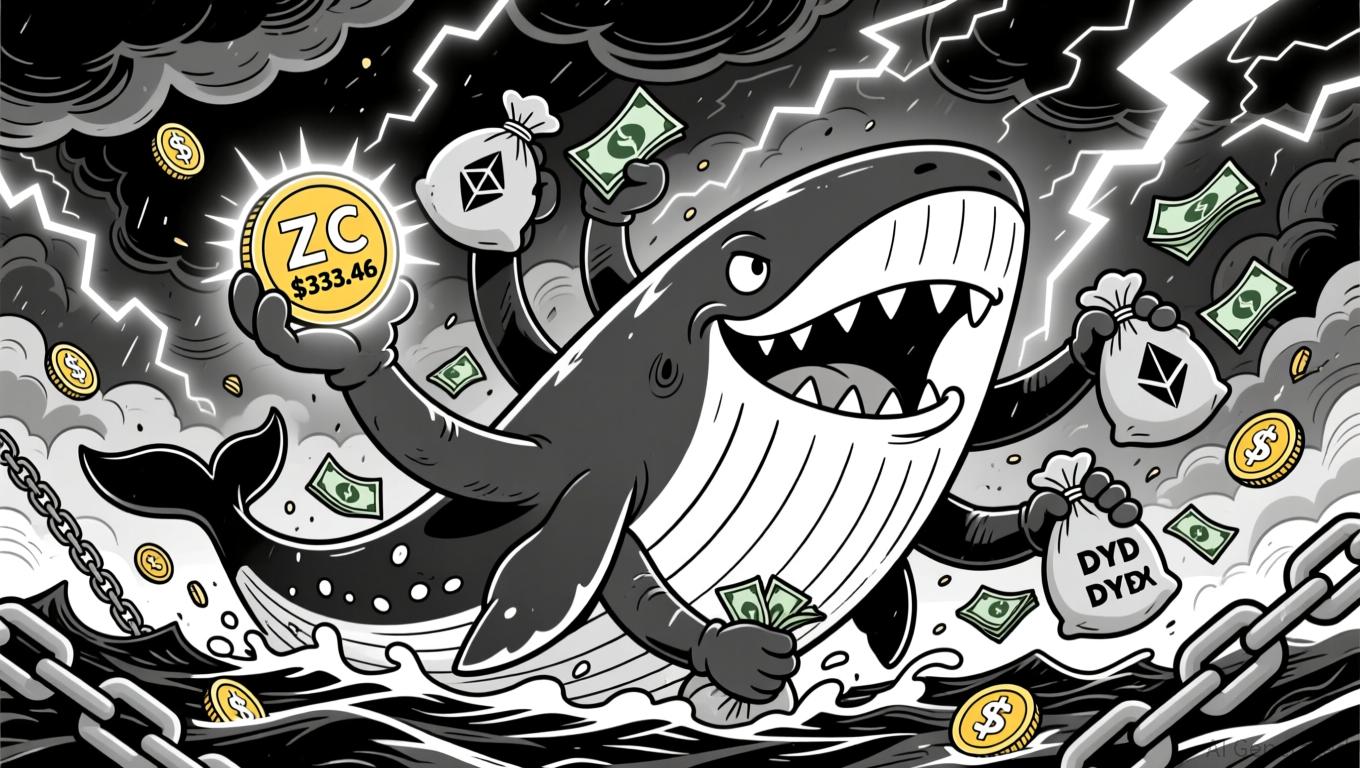
- ZEC surged 4.81% in 24 hours to $330.5 amid a whale's 10x leveraged long position on HyperLiquid targeting $333.46. - The whale also holds 20x ETH and 5x DYDX longs but faces $2.7M total losses, highlighting risks of leveraged trading during crypto volatility. - Grayscale's ZEC ETF filing and Chainlink's ETF launch signal growing institutional interest in altcoins, potentially boosting ZEC liquidity and demand. - ZEC's 482.71% annual gain contrasts with 27.45% weekly drop, reflecting its cyclical nature
Trending news
MoreCrypto prices
More






