
Global shift to renewable energy slows down amid tariff disputes and Saudi Arabia's environmental goals
- Saudi Arabia advances 4.5 GW renewable projects under NREP, including record-low-cost solar/wind initiatives aligned with Vision 2030. - U.S. 50% tariffs on Indian goods and protectionist policies risk disrupting global energy collaboration, per Outlook India and PV Magazine. - Executive Order 14318 prioritizes nuclear/natural gas infrastructure, raising fossil fuel vs. renewables balance concerns in U.S. strategy. - Experts warn tariffs create artificial scarcity and inflate clean energy costs, threaten
Saudi Arabia is making significant progress with its large-scale renewable energy initiatives, even as a global conversation continues about how tariffs and trade restrictions may slow the shift to clean energy. The country has recently allocated 4.5 gigawatts (GW) of new renewable energy capacity through its National Renewable Energy Programme (NREP), featuring solar and wind projects at record-low costs, as reported by
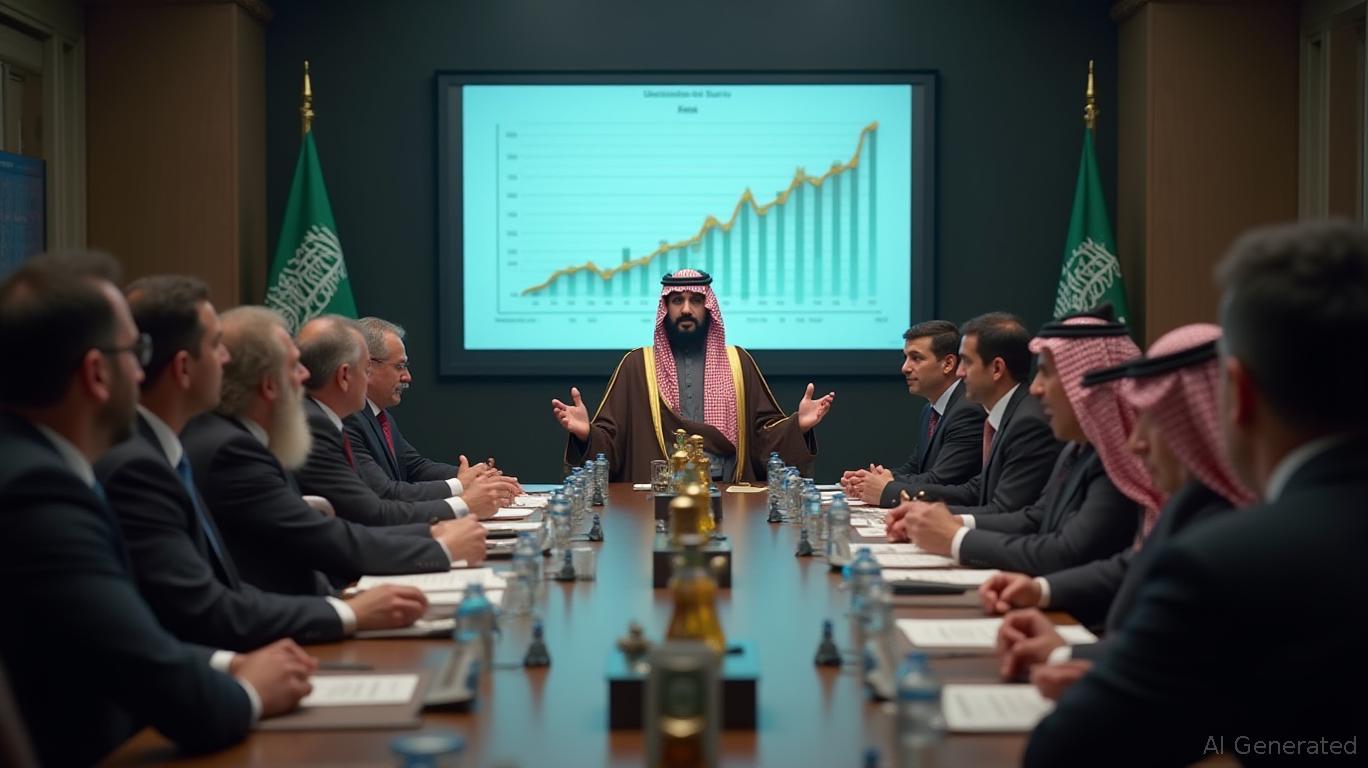
The projects, with a combined value exceeding $2.4 billion, include the 1,500 MW Dawadmi Wind IPP and the 1,400 MW Najran Solar PV IPP, both achieving unprecedented low Levelised Cost of Energy (LCOE), according to Reuters. A partnership between
Yet, the worldwide transition to clean energy is being challenged by protectionist trade policies. Since 2023, the U.S. has imposed a 50% tariff on goods from India, a move New Delhi has criticized as "unfair and unreasonable," according to Outlook India. The two countries are close to finalizing a bilateral trade deal, with energy security becoming a central topic in the negotiations. Critics argue that such tariffs distort markets and discourage investment in clean energy, particularly in developing nations.
At the same time, changes in U.S. energy policy are opening new domestic opportunities.
Market responses to new energy alliances have also shown significant fluctuations. Shares of American Rebel Holdings (AREB) jumped 75% after announcing a strategic partnership in the energy sector, according to
Industry experts caution that tariffs and trade restrictions could slow down the global move toward clean energy. "Tariffs artificially limit supply and drive up prices at a time when rapid, scalable decarbonization is essential," said a source familiar with Saudi Arabia’s energy sector. The nation’s renewable projects, which depend on international engineering and construction firms such as Energy China and PowerChina, may encounter setbacks if supply chain issues intensify, as reported by
As Saudi Arabia and other countries pursue ambitious renewable energy goals, the relationship between trade policy and energy infrastructure will be increasingly important. With COP30 on the horizon, the urgency for unified global action—rather than fragmented trade restrictions—has never been greater.
Disclaimer: The content of this article solely reflects the author's opinion and does not represent the platform in any capacity. This article is not intended to serve as a reference for making investment decisions.
You may also like
The Enduring Insights of R.W. McNeel and How They Apply to Today’s Cryptocurrency Investment
- R.W. McNeel's 1927 investment principles, mirroring Buffett's value-driven philosophy, emphasize intrinsic value, emotional discipline, and long-term utility—critical for volatile crypto markets. - The 2025 MMT token surge exemplifies behavioral biases like FOMO and overconfidence, aligning with McNeel's warnings against herd mentality and speculative frenzies. - McNeel's framework advocates assessing crypto projects by utility and governance rather than hype, offering strategies like intrinsic value foc

Long-Term Care and Dementia-Oriented Stocks: A Tactical Safeguard Against Rising Healthcare Expenses
- Global aging drives healthcare cost inflation, with U.S. dementia expenses hitting $781B in 2025, straining Medicare/Medicaid programs. - Long-term care ETFs like HTEC and HEAL outperform as health tech innovation addresses rising demand for remote monitoring and AI diagnostics. - Dementia-focused equities (Anavex, AbbVie) show resilience amid $7.7B market growth projections, aligned with aging demographics and policy reforms. - Strategic investments in care-tech and pharmaceuticals offer inflation hedge

CryptoCap Charts Reveal 4 Key Turns as Decline Slows Near the Lower Band

Top 5 Memecoins Set for December Surge — Potential 10x–100x Gains Before Year-End

Trending news
MoreCrypto prices
More






