
Canada’s FINTRAC slaps Cryptomus with landmark $126m fine

Canada’s financial watchdog has levied its largest-ever penalty against a crypto firm. Vancouver’s Cryptomus faces a $126 million fine for failing to report more than 1,000 suspicious transactions linked to darknet markets and terrorist financing in a single month.
- FINTRAC fined Vancouver-based Cryptomus $126 million, Canada’s largest crypto penalty to date.
- Regulators cited over 1,000 unreported suspicious transactions and more than 7,500 transfers linked to Iran.
In a statement the Financial Transactions and Reports Analysis Centre of Canada announced it had levied an administrative monetary penalty of C$176.96 million (about $126 million) against Xeltox Enterprises Ltd., the Vancouver-based entity operating the crypto platform Cryptomus.
The penalty, issued on Oct. 16, stems from what the agency described as non-compliance so severe that it allowed the platform to process more than a thousand suspicious transactions in a single month without a single report to authorities.
FINTRAC linked these failures to the laundering of proceeds from trafficking in child sexual abuse material, fraud, ransomware, and sanctions evasion.
“Given that numerous violations in this case were connected to trafficking in child sexual abuse material, fraud, ransomware payments and sanctions evasion, FINTRAC was compelled to take this unprecedented enforcement action,” FINTRAC CEO Sarah Paquet said.
A pattern of non-compliance and cross-border blind spots
FINTRAC’s examination revealed that Cryptomus operated for an entire month without reporting 1,518 separate virtual currency transactions that met or exceeded the C$10,000 threshold.
This fundamental reporting requirement is a cornerstone of Canada’s anti-money laundering framework, designed to create a financial trail for large movements of value. The sheer volume of these missed reports suggests a monitoring system that was either broken or entirely absent.
Compounding these failures was the firm’s neglect of a specific Ministerial Directive concerning Iran. Between July and December of 2024, Cryptomus failed to report a staggering 7,557 transactions originating from the sanctioned nation. By ignoring this, the trading platform allegedly created a direct channel that could have been exploited for sanctions evasion, a critical national security concern.
Notably, this was not an isolated incident for the Vancouver-based firm. The pattern of regulatory disregard was already evident last May, when the B.C. Securities Commission temporarily banned Cryptomus from trading securities and other market activities.
Within Canada’s evolving crypto landscape, the penalty marks a turning point. Just last year, FINTRAC’s largest fine, around C$20 million, was levied against KuCoin operator Peken Global Ltd. The Cryptomus case eclipses that record nearly ninefold, sending a clear message to digital-asset businesses that systemic neglect of compliance obligations is no longer tolerable.
Disclaimer: The content of this article solely reflects the author's opinion and does not represent the platform in any capacity. This article is not intended to serve as a reference for making investment decisions.
You may also like
Economic Truth: AI Drives Growth Alone, Cryptocurrency Becomes a Political Asset
The article analyzes the current economic situation, pointing out that AI is the main driver of GDP growth, while other sectors such as the labor market and household finances are in decline. Market dynamics have become detached from fundamentals, with AI capital expenditure being key to avoiding a recession. The widening wealth gap and energy supply are becoming bottlenecks for AI development. In the future, AI and cryptocurrencies may become the focus of policy adjustments. Summary generated by Mars AI This summary was generated by the Mars AI model, and its accuracy and completeness are still in the process of iterative improvement.

AI unicorn Anthropic accelerates IPO push, taking on OpenAI head-to-head?
Anthropic is accelerating its expansion into the capital markets, initiating collaboration with top law firms, which is seen as an important signal toward going public. The company's valuation is approaching 300 billions USD, and investors are betting it could go public before OpenAI.
Did top universities also get burned? Harvard invested $500 million heavily in bitcoin right before the major plunge
Harvard University's endowment fund significantly increased its holdings in bitcoin ETFs to nearly 500 million USD in the previous quarter. However, in the current quarter, the price of bitcoin subsequently dropped by more than 20%, exposing the fund to significant timing risk.

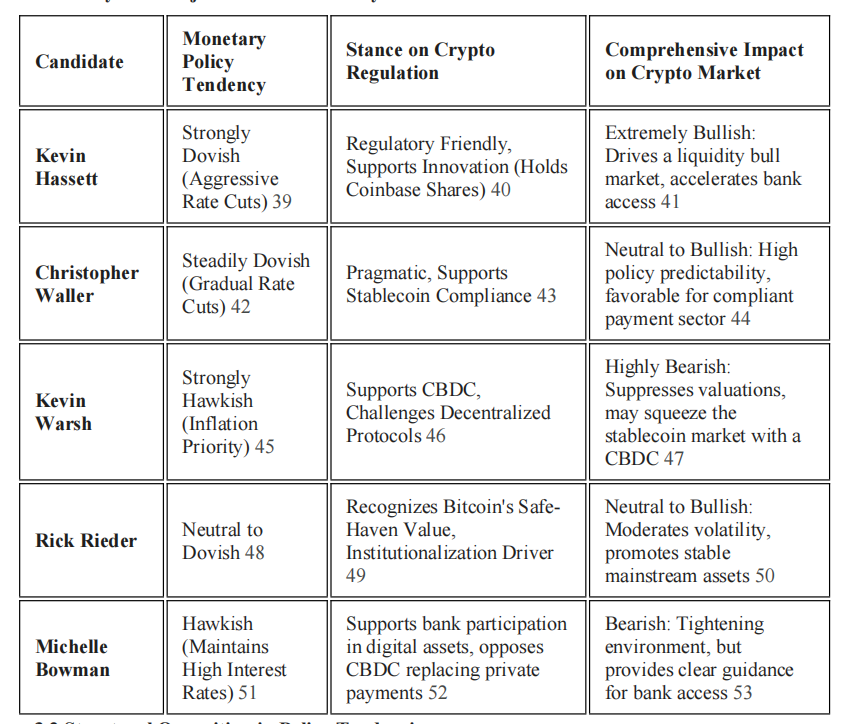
The Structural Impact of the Next Federal Reserve Chair on the Cryptocurrency Industry: Policy Shifts and Regulatory Reshaping
The change of the next Federal Reserve Chair is a decisive factor in reshaping the future macro environment of the cryptocurrency industry.
Trending news
MoreCrypto prices
More






