
Aave DAO Considers Annual $50 Million AAVE Buyback

- Aave DAO Proposes Annual Revenue-Funded Buyback
- Weekly AAVE purchases between $250 and $1,75 million
- Plan reinforces Aavenomics and creates consistent demand
The Aave Chan Initiative (ACI), led by Marc Zeller, has submitted a proposal to the Aave DAO to establish a permanent $50 million annual AAVE buyback program, fully funded by protocol revenue. The idea is to make buybacks an ongoing pillar of Aavenomics, adding predictable buying pressure to the token and optimizing treasury allocation.
According to the text, the Financial Committee (AFC) and TokenLogic would be responsible for execution, with weekly ranges between $250.000 and $1,75 million in AAVE purchases in the market. The design provides flexibility to adjust volumes according to the protocol's cash availability and market conditions, avoiding price distortions and preserving capital efficiency.
“With the completion of the existing buyback initiative and the strong success of the program, we believe it is an opportune time to enshrine a buyback program to further enhance Aavenomics,”
states the proposal. Aave's recent revenue generation history is cited as a basis for supporting the measure without compromising growth initiatives.
The plan also authorizes the AFC to leverage BTC and ETH reserves in complementary strategies, such as creating collateralized debt and yield-generating conversions, expanding the treasury's ability to capture opportunities without diluting holders. This move parallels a broader trend in DeFi, where protocols have been institutionalizing buybacks to align incentives and capture value on a recurring basis.
Aave is solidifying its position among the industry's largest protocols, recently surpassing the $25 billion mark in outstanding loans and diversifying its products. Highlights include Horizon, a credit platform backed by tokenized real-world assets, and the first implementation outside the EVM ecosystem, on Aptos, which expands its reach to new audiences.
In collateral management, the protocol has begun integrating yield-bearing assets from Maple Finance as a new type of collateral, strengthening its offering for institutional participants. Despite the recent market downturn—and a slight daily decline in AAVE—the proposal seeks to anchor structural demand and provide predictability to the capital policy under Aave DAO governance.
Disclaimer: The content of this article solely reflects the author's opinion and does not represent the platform in any capacity. This article is not intended to serve as a reference for making investment decisions.
You may also like
Economic Truth: AI Drives Growth Alone, Cryptocurrency Becomes a Political Asset
The article analyzes the current economic situation, pointing out that AI is the main driver of GDP growth, while other sectors such as the labor market and household finances are in decline. Market dynamics have become detached from fundamentals, with AI capital expenditure being key to avoiding a recession. The widening wealth gap and energy supply are becoming bottlenecks for AI development. In the future, AI and cryptocurrencies may become the focus of policy adjustments. Summary generated by Mars AI This summary was generated by the Mars AI model, and its accuracy and completeness are still in the process of iterative improvement.

AI unicorn Anthropic accelerates IPO push, taking on OpenAI head-to-head?
Anthropic is accelerating its expansion into the capital markets, initiating collaboration with top law firms, which is seen as an important signal toward going public. The company's valuation is approaching 300 billions USD, and investors are betting it could go public before OpenAI.
Did top universities also get burned? Harvard invested $500 million heavily in bitcoin right before the major plunge
Harvard University's endowment fund significantly increased its holdings in bitcoin ETFs to nearly 500 million USD in the previous quarter. However, in the current quarter, the price of bitcoin subsequently dropped by more than 20%, exposing the fund to significant timing risk.

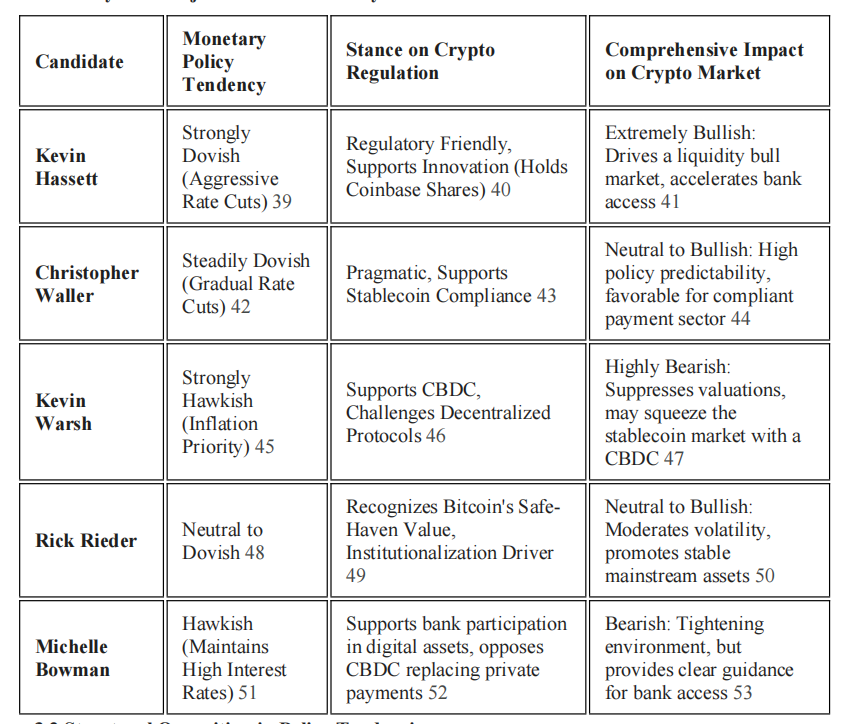
The Structural Impact of the Next Federal Reserve Chair on the Cryptocurrency Industry: Policy Shifts and Regulatory Reshaping
The change of the next Federal Reserve Chair is a decisive factor in reshaping the future macro environment of the cryptocurrency industry.
Trending news
MoreCrypto prices
More






