
Bitcoin Faces $115K Resistance Amid Recovery Fatigue
- Bitcoin struggles near $115K amid US-China tensions.
- Resistance at $118,350 and support at $105,000.
- Recovery fatigue and volatility impact the market.
Bitcoin is facing significant resistance at the $115K level amid sharp market fluctuations, primarily influenced by U.S.-China trade tensions, as analysts express concerns over potential recovery fatigue.
This struggle highlights the delicate balance in the cryptomarket, where macroeconomic factors can instigate swift changes, possibly leading to sustained volatility and impacting investor sentiment significantly.
Bitcoin is currently struggling near the $115K level, with recent fluctuations driven by renewed US-China trade tensions. The cryptocurrency market is witnessing sharp volatility , exacerbated by macro events that influence global risk sentiment.
The primary catalyst for Bitcoin’s movements is U.S. President Donald Trump’s policy announcement on tariffs. Key resistance is noted at $118,350, and the support level lies at $105,000, with analysts warning of recovery fatigue.
The market crash resulted in over $19 billion in leveraged liquidations, briefly sending Bitcoin to $105,617. This affected other major cryptocurrencies like ETH and DOGE, reflecting sector-wide risk aversion.
No new regulatory statements have directly impacted this price action, and the focus remains on Bitcoin. However, the reduction in leverage and stable inflows indicate resilience among long-term holders.
The historical precedents of price drops due to macroeconomic shocks emphasize the autonomous nature of Bitcoin’s price discovery. Market patterns show that failing to reclaim critical resistance often leads to consolidation. The latest on-chain data suggests long-term holders are not panicking.
“Bitcoin is battling to maintain momentum near the $115K mark as the market reacts to unpredictable macro events.” – John Doe, Crypto Analyst, Blockchain Insights, from Bitcoin Magazine
Disclaimer: The content of this article solely reflects the author's opinion and does not represent the platform in any capacity. This article is not intended to serve as a reference for making investment decisions.
You may also like
After viewing your Spotify Wrapped 2025, take a look at these similar alternatives

Privacy Coins and Market Fluctuations: Uncovering the Factors Behind ZEC's Latest Price Jump
- Zcash (ZEC) surged 700% in late 2025 driven by institutional backing and network upgrades like the Zashi wallet. - Regulatory pressures and market fragmentation intensified as exchanges delisted privacy coins and liquidity shifted to decentralized platforms. - ZEC's volatility reflects macroeconomic tailwinds and speculative demand, but its long-term viability hinges on balancing privacy with regulatory compliance. - Institutional adoption of privacy coins accelerated in 2025, yet fragmented markets and
Why Dash (DASH) Is Soaring as Institutions Embrace It and Privacy Concerns Fuel Demand
- Dash (DASH) surged 150% in June 2025, driven by institutional adoption and privacy-focused demand. - Institutional ownership reached 90.64% after AGF Management's $7.79M investment and DoorDash's $450M partnership. - Dash Platform 2.0 enhanced scalability while PrivateSend usage grew 25% YoY amid rising privacy needs. - Regulatory challenges persist under EU MiCA and SEC scrutiny, prompting multi-jurisdictional compliance strategies. - DeFi integration and Latin American adoption expanded DASH's utility
ZK Atlas Upgrade: Pioneering the Future of Blockchain Infrastructure for Enhanced DeFi Scalability
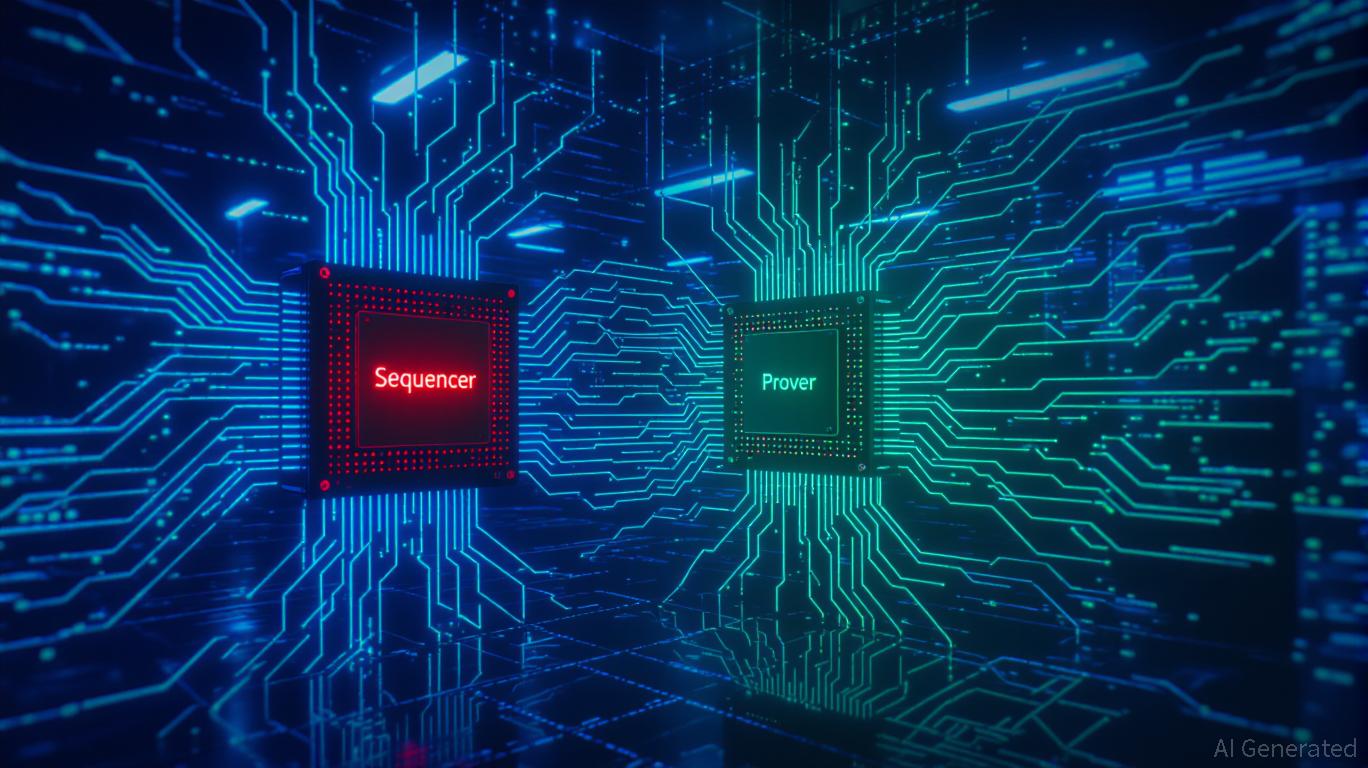
- ZKsync's 2025 Atlas Upgrade revolutionizes DeFi scalability via zero-knowledge rollups, boosting transaction throughput to 43,000 TPS and slashing costs to $0.0001 per transfer. - Modular architecture with Atlas Sequencer and Airbender Prover enables real-time execution, while zkSync OS supports EVM/WASM compatibility and cross-chain liquidity unification. - Post-upgrade DeFi metrics show 300% transaction volume growth and $0.28–$1.32 ZK token price projections, positioning ZKsync as a key Layer 2 infras
Trending news
MoreCrypto prices
More





