
Trump Tower moving on chain: How the President could make millions

World Liberty Financial (WLFI), the blockchain venture associated with the Trump family, is reportedly advancing plans to tokenize portions of Donald Trump’s multi-billion-dollar real estate portfolio.
The project aims to convert some of the most recognizable Trump properties into digital investment products, opening access to retail investors who would otherwise be shut out of high-value real estate.
WLFI hopes to bridge the gap between exclusive real estate assets and the broader investing public by selling fractional ownership on the blockchain.
Meanwhile, Zak Folkman, co-founder of WLFI, said the project will not stop with real estate. The team is already exploring how real-world commodities could be brought on-chain.
According to a CNBC report, he said:
“We’ve not only thought about it, we’re actively working on it. I think commodities are a really interesting area for us, whether it be oil, gas, things like cotton, timber, all of those things, frankly, should be traded on chain.”
How does the president benefit?
The precise share of Trump’s portfolio that will be tokenized has not been disclosed. However, Forbes values his real estate holdings, including the iconic Trump Tower buildings, at $1.2 billion, so even a modest tokenization program could generate liquidity and investor yield.
Considering this, CryptoSlate’s scenario models provide a sense of what different levels of tokenization could mean for the president.
A conservative scenario in which only 10 to 20% of the portfolio is tokenized would raise between $120 million and $240 million.
This could produce annual returns between $3.6 million and $7.2 million, assuming the net operating yields on the tokenized assets are 3%. In this projection, Trump keeps majority control of the venture.
A mid-range scenario, covering 30 to 50% of the portfolio, would unlock as much as $600 million and generate substantially higher returns without Trump ceding majority control.
Here, the business is projected to produce a 5% yield, generating $18 million to $30 million annually.
Meanwhile, the most aggressive path, tokenizing 70% or more of his holdings, would allow Trump to raise close to the entire portfolio’s book value, providing nearly a billion dollars in immediate liquidity and handing investors annual yields approaching $80 million if market conditions hold.
So, each case illustrates the trade-off between Trump’s retention of control and the scale of financial benefit available to both sides.
The post Trump Tower moving on chain: How the President could make millions appeared first on CryptoSlate.
Disclaimer: The content of this article solely reflects the author's opinion and does not represent the platform in any capacity. This article is not intended to serve as a reference for making investment decisions.
You may also like
Economic Truth: AI Drives Growth Alone, Cryptocurrency Becomes a Political Asset
The article analyzes the current economic situation, pointing out that AI is the main driver of GDP growth, while other sectors such as the labor market and household finances are in decline. Market dynamics have become detached from fundamentals, with AI capital expenditure being key to avoiding a recession. The widening wealth gap and energy supply are becoming bottlenecks for AI development. In the future, AI and cryptocurrencies may become the focus of policy adjustments. Summary generated by Mars AI This summary was generated by the Mars AI model, and its accuracy and completeness are still in the process of iterative improvement.

AI unicorn Anthropic accelerates IPO push, taking on OpenAI head-to-head?
Anthropic is accelerating its expansion into the capital markets, initiating collaboration with top law firms, which is seen as an important signal toward going public. The company's valuation is approaching 300 billions USD, and investors are betting it could go public before OpenAI.
Did top universities also get burned? Harvard invested $500 million heavily in bitcoin right before the major plunge
Harvard University's endowment fund significantly increased its holdings in bitcoin ETFs to nearly 500 million USD in the previous quarter. However, in the current quarter, the price of bitcoin subsequently dropped by more than 20%, exposing the fund to significant timing risk.

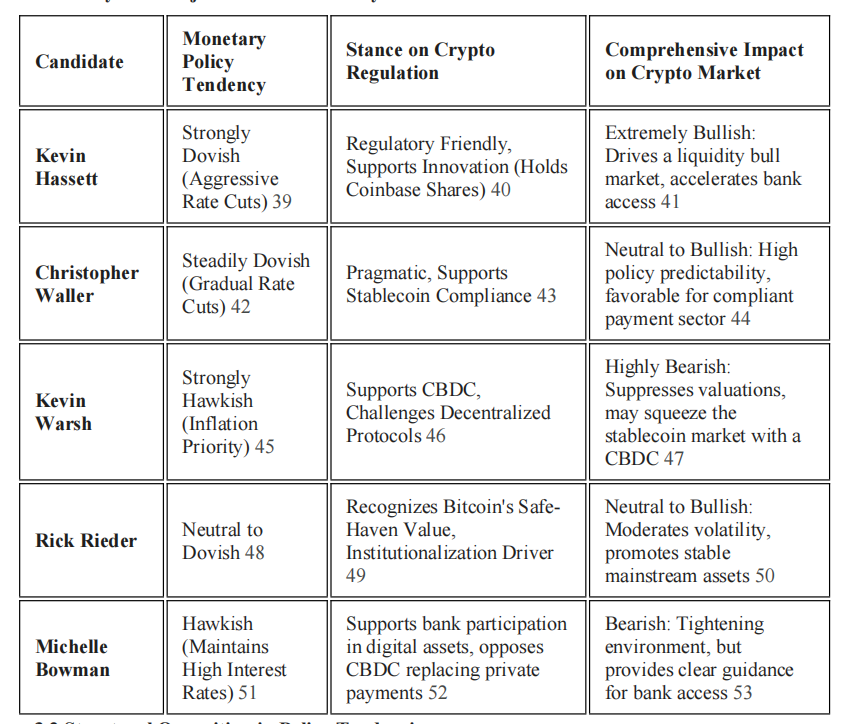
The Structural Impact of the Next Federal Reserve Chair on the Cryptocurrency Industry: Policy Shifts and Regulatory Reshaping
The change of the next Federal Reserve Chair is a decisive factor in reshaping the future macro environment of the cryptocurrency industry.
Trending news
MoreCrypto prices
More






