
Will SWIFT’s new crypto ledger choke or boost existing chains?

SWIFT has announced it will add a blockchain-based ledger to its infrastructure stack. Built with Consensys, the new ledger will connect banks, tokenized deposits, and digital asset platforms directly to the world’s largest payments network.
This project isn’t a small pilot for SWIFT but a structural shift in its business, touching $150 trillion in annual cross-border transactions. It sets up a collision between bank-grade settlement infrastructure and the open rails that define the crypto industry and will force the market to deal with changes in liquidity when the world’s biggest payments network rewires its plumbing.
For decades, SWIFT has operated as the neutral layer moving trillions through secure messages between banks. Its new ledger, developed with Consensys, is not a standalone chain but an interoperability tool designed to stitch together digital asset platforms, tokenized deposits, and central bank digital currencies with existing fiat rails.
By embedding this directly into its stack, SWIFT will position itself as the connector of fragmented systems rather than the operator of a public blockchain. This choice matters because it means global banks won’t need to build custom integrations with each stablecoin or RWA platform; they can plug into SWIFT’s ledger instead.
Effect on Bitcoin and crypto
For crypto, the obvious question is whether this helps or hurts liquidity.
Stablecoin issuers have been the de facto backbone of dollar settlement in crypto, moving billions across exchanges and wallets. If banks gain a SWIFT-native way to issue tokenized deposits or handle on-chain settlement, the incentive to use USDC corridors could shift. Fees that once flowed through exchanges and stablecoin issuers might be redirected into bank channels, tightening margins on existing players.
The effect on Bitcoin and Ethereum would most likely be a bit different. They aren’t designed for settlement finality in the same sense as bank money, but they’re increasingly tied into these flows via ETF liquidity and derivatives. When an ETF provider or a market-maker hedges exposure, the path often runs through stablecoins before touching BTC or ETH.
A SWIFT ledger that lowers settlement costs for banks could dampen the relative advantage of crypto rails in arbitrage and cross-exchange settlement.
Yet it could also expand the funnel: if banks are more willing to hold tokenized liabilities, they may become more comfortable using BTC or ETH liquidity in collateral frameworks. Integration pain, standard-setting, and timelines will decide which outcome dominates.
Looking at numbers shows how high the stakes are. SWIFT handles more than $150 trillion annually across 11,000 institutions. Average corridor costs for remittances remain above 6%, with settlement times stretching into days.
A ledger that trims even 50 basis points across those flows would unlock tens of billions in annual savings. Whether those savings accrue to banks or leak into crypto corridors depends on adoption. If exchanges and custodians are approved participants, the gap between fiat wires and crypto liquidity pools could narrow in real time.
There are also obvious risks to this.
A permissioned ledger may not interoperate smoothly with public blockchains, creating walled gardens instead of open liquidity.
Standard battles like the ISO 20022 messaging versus smart contracts could delay uptake.
Banks may also be slow to integrate tokenized assets at scale, fearing regulatory whiplash. But SWIFT’s history shows that once standards settle, adoption cascades. Its original GPI program went from a handful of banks to a global standard in under five years.
The prevailing narrative in the crypto industry has been that public chains would eat cross-border settlements once mass adoption sets in. What SWIFT is building is a counteroffer: bank-controlled rails with blockchain plumbing.
The question is whether these rails will choke existing stablecoin corridors or expand the overall market for tokenized settlement. Either way, BTC and ETH liquidity are tied to the outcome. The world’s wires just got a blockchain, and the next move belongs to the banks.
The post Will SWIFT’s new crypto ledger choke or boost existing chains? appeared first on CryptoSlate.
Disclaimer: The content of this article solely reflects the author's opinion and does not represent the platform in any capacity. This article is not intended to serve as a reference for making investment decisions.
You may also like
A decade-long tug-of-war ends: "Crypto Market Structure Bill" sprints to the Senate
At the Blockchain Association Policy Summit, U.S. Senators Gillibrand and Lummis stated that the "Crypto Market Structure Bill" is expected to have its draft released by the end of this week, with revisions and hearings scheduled for next week. The bill aims to establish clear boundaries for digital assets by adopting a classification-based regulatory framework, clearly distinguishing between digital commodities and digital securities, and providing a pathway for exemptions for mature blockchains to ensure that regulation does not stifle technological progress. The bill also requires digital commodity trading platforms to register with the CFTC and establishes a joint advisory committee to prevent regulatory gaps or overlapping oversight. Summary generated by Mars AI. The accuracy and completeness of this summary, generated by the Mars AI model, is still being iteratively updated.

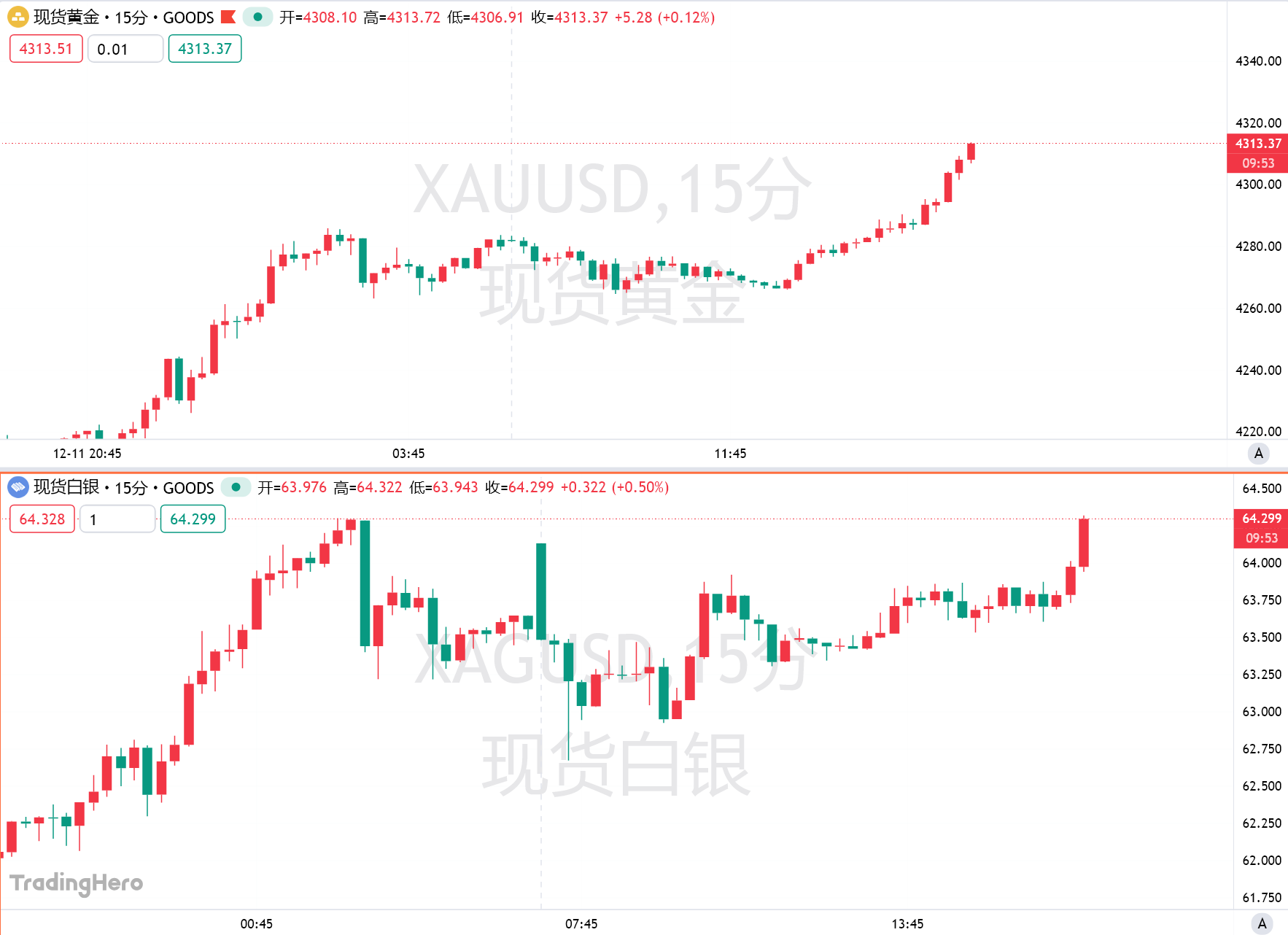
Gold surpasses the $4,310 mark—Is the "bull frenzy" returning?
Boosted by expectations of further easing from the Federal Reserve, gold has risen for four consecutive days. Technical indicators show strong bullish signals, but there remains one more hurdle before reaching a new all-time high.
Trend Research: Why Are We Still Bullish on ETH?
Against the backdrop of relatively accommodative expectations in both China and the US, which suppress asset downside volatility, and with extreme fear and capital sentiment not yet fully recovered, ETH remains in a favorable "buy zone."

Trending news
MoreCrypto prices
More





