
Regulatory Challenges Cause Fluctuations in Kimchi Premium for 2025
- South Korea's Kimchi Premium for Bitcoin swung between -3% and +5% in 2025, driven by regulatory shifts and institutional behavior. - Stricter compliance rules and capital controls forced South Korean institutions to reduce crypto holdings, creating temporary oversupply and negative premiums. - Retail investors showed cautious behavior with 22% lower KRW deposits, while won depreciation and travel rules worsened liquidity constraints. - Arbitrage became unprofitable due to 3-4% hidden costs, pushing trad
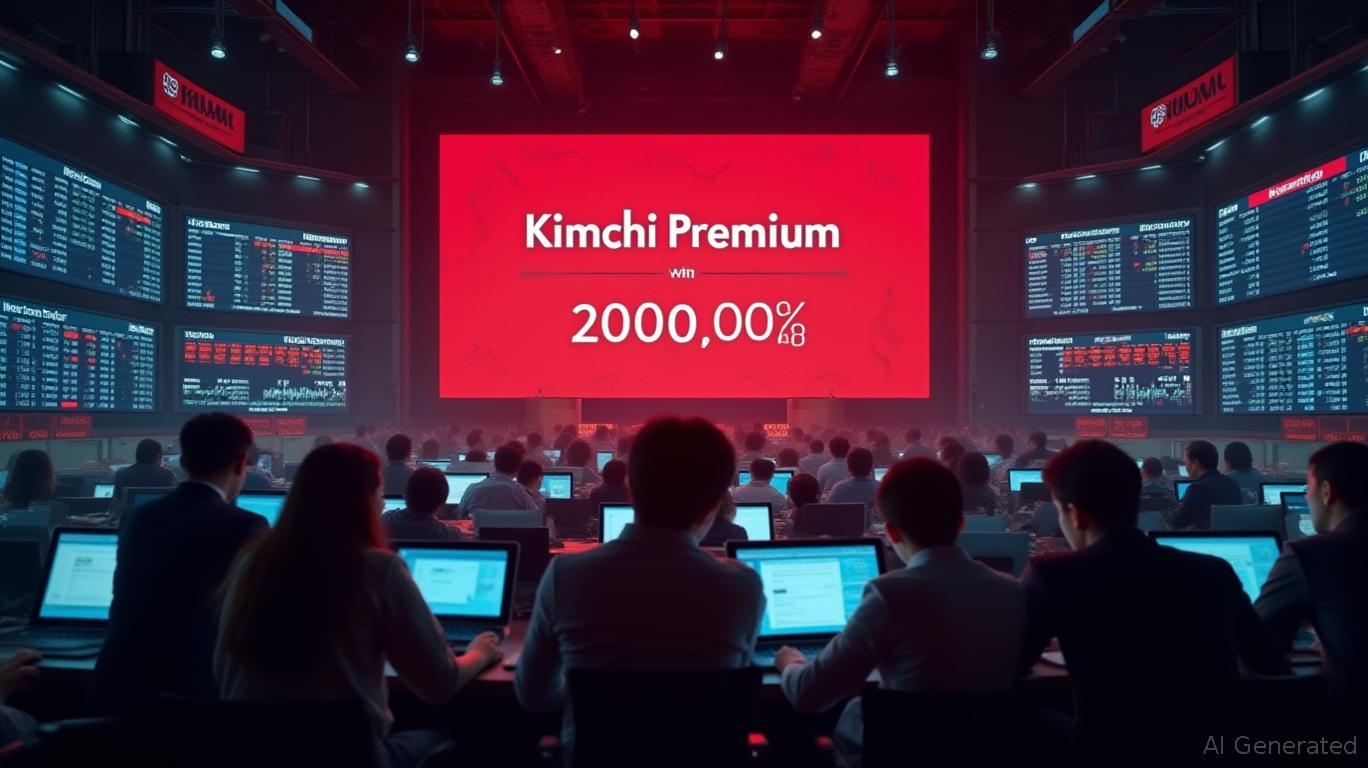
The Kimchi Premium, a persistent gap in pricing between
The Kimchi Premium originally arose from South Korea’s strict capital controls, which limit the movement of large amounts of Korean won (KRW) abroad. These measures, established after the 1997 financial crisis, restrict arbitrage and foster local price premiums. Yet, during 2024–2025, the premium turned negative for extended periods, reflecting a change in institutional strategies. Local funds and corporations scaled back crypto investments in response to tighter regulations, such as the
Retail investor sentiment also had an impact. Blockchain data showed a 22% drop in KRW deposits to Korean exchanges in July 2025, indicating more cautious trading by individuals amid economic uncertainty and regulatory fatigue Bitcoin Is $2,500 Cheaper in South Korea—What the … [ 2 ]. Additionally, the Korean won’s depreciation against the U.S. dollar in 2024 made Bitcoin more expensive for local buyers, further reducing demand. These factors, along with the introduction of a “travel rule” that requires ID checks for crypto transfers above 1 million won, tightened liquidity even more How to Understand the Kimchi Premium and Its Weird Flip in … [ 1 ].
Traditional arbitrage, once used to profit from the Kimchi Premium, became less attractive as hidden costs mounted. Traders faced combined expenses of 3–4% from trading, transfers, compliance, and currency conversion, making arbitrage worthwhile only when the premium surpassed 5–6% How to Understand the Kimchi Premium and Its Weird Flip in … [ 1 ]. During periods of negative premium, savvy traders shifted away from direct arbitrage, instead engaging in premium momentum strategies—buying when the discount was under 2% and selling when it exceeded 8%. Some companies also used both domestic and offshore entities to work around capital restrictions How to Understand the Kimchi Premium and Its Weird Flip in … [ 1 ].
With the Kimchi Premium fluctuating between -3% and +5% in 2025, it signals an ongoing adjustment in South Korea’s crypto landscape. Positive premiums point to robust local demand and speculative activity, while negative premiums suggest risk aversion among institutions or regulatory concerns. Experts note that the increasing occurrence of negative premiums points to deeper structural changes, such as the introduction of crypto taxes in 2025 and possible relaxation of travel rules for smaller transfers How to Understand the Kimchi Premium and Its Weird Flip in … [ 1 ]. These trends could further align South Korean prices with global markets, reducing the Kimchi Premium’s historical volatility.
For large investors and institutions, the Kimchi Premium acts as a real-time indicator of market mood. A positive premium often reflects capital flowing into Korean exchanges, driven by retail enthusiasm or a search for safety during geopolitical tensions. On the other hand, a negative premium signals capital leaving the local market, especially as institutions reduce exposure. The recent swings in the premium highlight the ongoing push and pull between South Korea’s regulatory environment and the international nature of Bitcoin trading, affecting both liquidity and price formation.
Disclaimer: The content of this article solely reflects the author's opinion and does not represent the platform in any capacity. This article is not intended to serve as a reference for making investment decisions.
You may also like
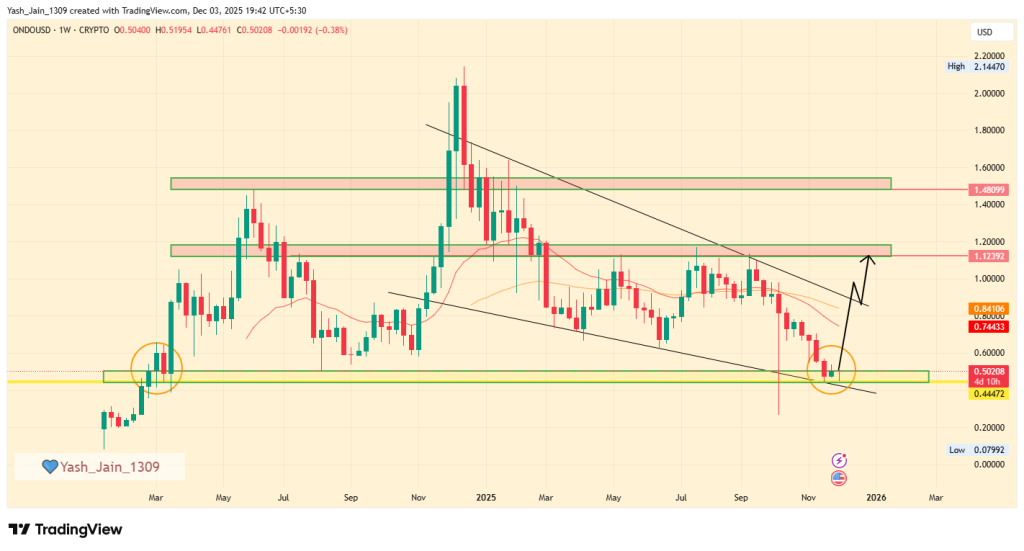
ONDO Price Eyes 120% December Rally as Falling Wedge Pattern Strengthens
Crypto News Today: SEC Stops ProShares From Launching XRP and Other Leveraged Crypto ETFs
Bitcoin Leverage Liquidation and Potential Dangers of Excessive Exposure in 2025
- 2025 crypto market saw $1B+ leveraged liquidations as Bitcoin fell from $126k to $92k amid Fed policy uncertainty and geopolitical tensions. - Retail traders suffered disproportionately from 10x-20x leverage during price corrections, while institutions used ETFs and hedging to mitigate risks. - Derivatives market vulnerabilities exposed include liquidity crunches, algorithmic feedback loops, and cross-market contagion risks via crypto-treasury overlaps. - Post-2025 lessons emphasize 3x-5x leverage caps,

The Recent Fluctuations in the Solana Network and What They Mean for Blockchain Investors
- Solana's 2025 volatility highlights risks for blockchain investors from market psychology and infrastructure flaws. - November 2025 saw 6.1% price drops driven by leverage, Fed rate uncertainty, and plummeting on-chain activity metrics. - $3.1B in DeFi losses from smart contract exploits and AWS outage risks exposed technical vulnerabilities despite decentralization gains. - Investors must balance sentiment indicators (fear/greed index) with technical metrics (TVL, DEX volume) to navigate Solana's instab

Trending news
MoreCrypto prices
More






