
Crypto payments firm RedotPay reaches unicorn status following $47 million investment round

Quick Take RedotPay announced the closure of its latest strategic investment round, with participation from Coinbase Ventures, Galaxy Ventures, and Vertex Ventures. The round sees the crypto payments firm reach unicorn status, valued at over $1 billion.
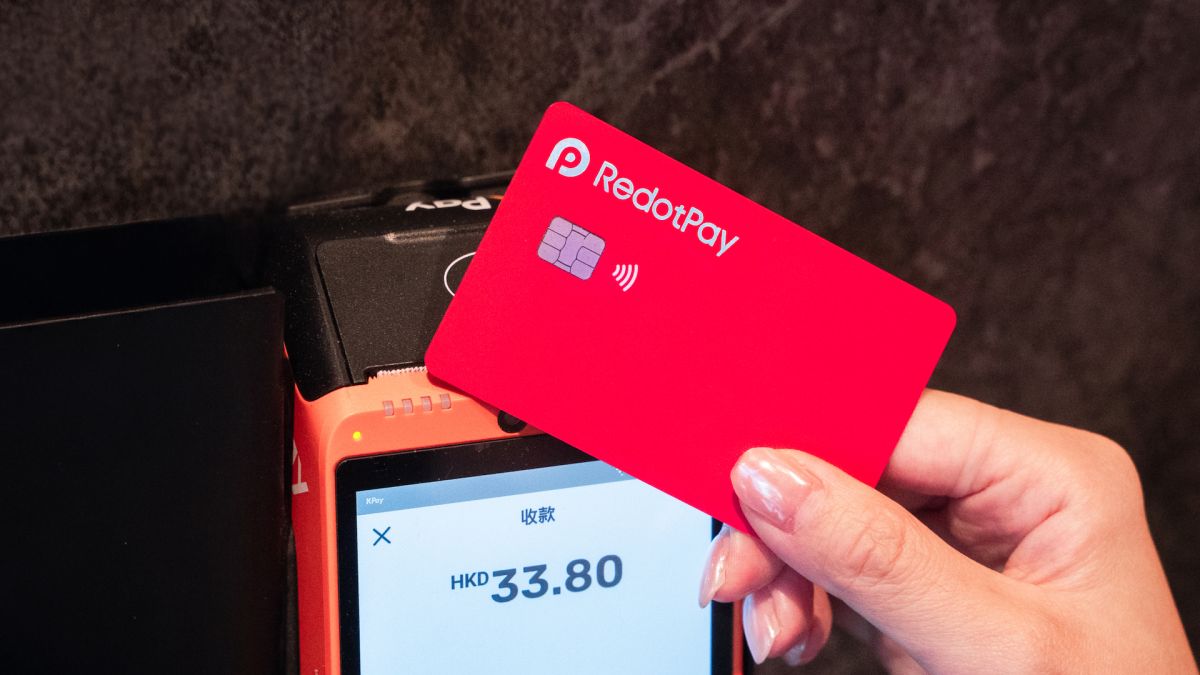
Crypto payments firm RedotPay announced the closure of a $47 million strategic investment round on Thursday, achieving unicorn status with a valuation exceeding $1 billion.
The round included new backing from Coinbase Ventures and an unnamed "global technology entrepreneur," along with increased commitments from Galaxy Ventures and Vertex Ventures, the firm stated in a statement shared with The Block.
"Our mission has always been to make digital finance accessible, secure, and efficient for everyone," RedotPay co-founder and CEO Michael Gao said. "Having Coinbase Ventures join us, along with the continued support from Galaxy Ventures and Vertex Ventures, validates the progress we've made and the confidence investors have in our vision. Their global expertise across both crypto and fintech will help us accelerate growth, strengthen compliance, and expand access to the broader blockchain ecosystem worldwide."
Founded in 2023, RedotPay offers stablecoin cards, multi-currency wallets, and global payout solutions, combining the speed and efficiency of stablecoins with the reach of established payment networks. The company claims to have grown to over 5 million users across more than 100 markets, generating $10 billion in annualized payment volume in two years, expanding access to payment services in underserved markets.
"We believe stablecoins will power the future of payments. The team at RedotPay is executing impressively to bring this value proposition to users around the world. We're proud to support them as part of our common goal to bring billions of users onchain," Hoolie Tejwani, Head of Coinbase Ventures, said.
With the fresh funding in place, RedotPay said it plans to expand its global payment corridors through partnerships with banks, payment networks, and other ecosystem players, while strengthening its focus on compliance and licensing to ensure secure and responsible financial innovation.
Fintech stablecoin push heats up
A number of other fintechs are pushing deeper into stablecoins this year, especially following greater regulatory clarity from the recently passed GENIUS Act in the U.S. PayPal continues to expand PYUSD, integrating it into Venmo and merchant payments. Circle is building beyond USDC with its Layer 1 Arc chain , and Stripe, through its in-development Tempo blockchain, aims to bring stablecoin rails into everyday commerce.
In March, RedotPay announced it had raised $40 million in a Series A funding round led by Lightspeed, with participation from Galaxy Ventures, HSG, DST Global Partners, Accel, and Vertex Ventures.
Disclaimer: The content of this article solely reflects the author's opinion and does not represent the platform in any capacity. This article is not intended to serve as a reference for making investment decisions.
You may also like
Emerging Educational Initiatives Driving Sustainable Economic Expansion: An Analytical Perspective on Strategic Investments
- Skills-based education prioritizes practical competencies over degrees, addressing 61% of employers' evolving workforce needs. - Experiential learning boosts career readiness (73% of interns) and aligns education with industry demands through hybrid training models. - AI-driven learning personalizes education, projected to increase global productivity by 1.5% by 2035 through targeted skill development. - Mental health support in academic programs becomes critical as 78% of students link well-being to lon

New Prospects in EdTech and Advancements in STEM Career Training
- Global EdTech market to grow from $277B to $907B by 2034, driven by AI, cybersecurity, and engineering education. - U.S. universities expand AI programs (114% growth since 2024) while states integrate AI into K-12 curricula to address 750K cybersecurity job shortage. - Federal and corporate investments ($18.5B U.S. AI Action Plan, IBM's 2M-trainee goal) create innovation ecosystems aligning education with AI-driven workforce needs. - Mentorship programs and federal grants (e.g., Cybersecurity Talent Init

Wellness-Driven Industries: A Profitable Intersection of Individual Health and Economic Wellbeing
- The global wellness industry, valued at $2 trillion, is reshaping healthcare , tech, and education through holistic well-being integration. - Younger generations drive 41% of U.S. wellness spending, prioritizing mental resilience and financial stability alongside physical health. - AI and wearables bridge health and financial wellness, with startups like Akasa and Meru Health leveraging tech for personalized solutions. - Education institutions adopt wellness programs, supported by public-private partners

Financial Well-being and Investment Choices: The Impact of Individual Financial Stability on Market Involvement and Building Lasting Wealth
- Financial wellness, combining objective health and subjective well-being, directly influences market participation and investment success according to 2025 studies. - Four financial wellness quadrants reveal systemic gaps: only 38% achieve high health and well-being, while millennials show mixed confidence amid rising debt and stagnant wages. - Behavioral biases affect all investors: 84% of high-net-worth individuals seek education to counter overconfidence, while young investors rely on social media for
Trending news
MoreCrypto prices
More





