
SEC and CFTC Work Together to Align Digital Asset Rules, Striving for Both Innovation and Investor Safety
- SEC and CFTC co-hosted a September 29, 2025 roundtable to align digital asset regulations, aiming to eliminate regulatory gaps and boost market clarity. - Key priorities included harmonizing product definitions, expanding trading hours to match global 24/7 activity, and onshoring perpetual derivatives to regulated exchanges. - Industry leaders from Nasdaq, Kraken, and others discussed reforms like portfolio margining to reduce capital inefficiencies and DeFi exemptions with safeguards. - The initiative f
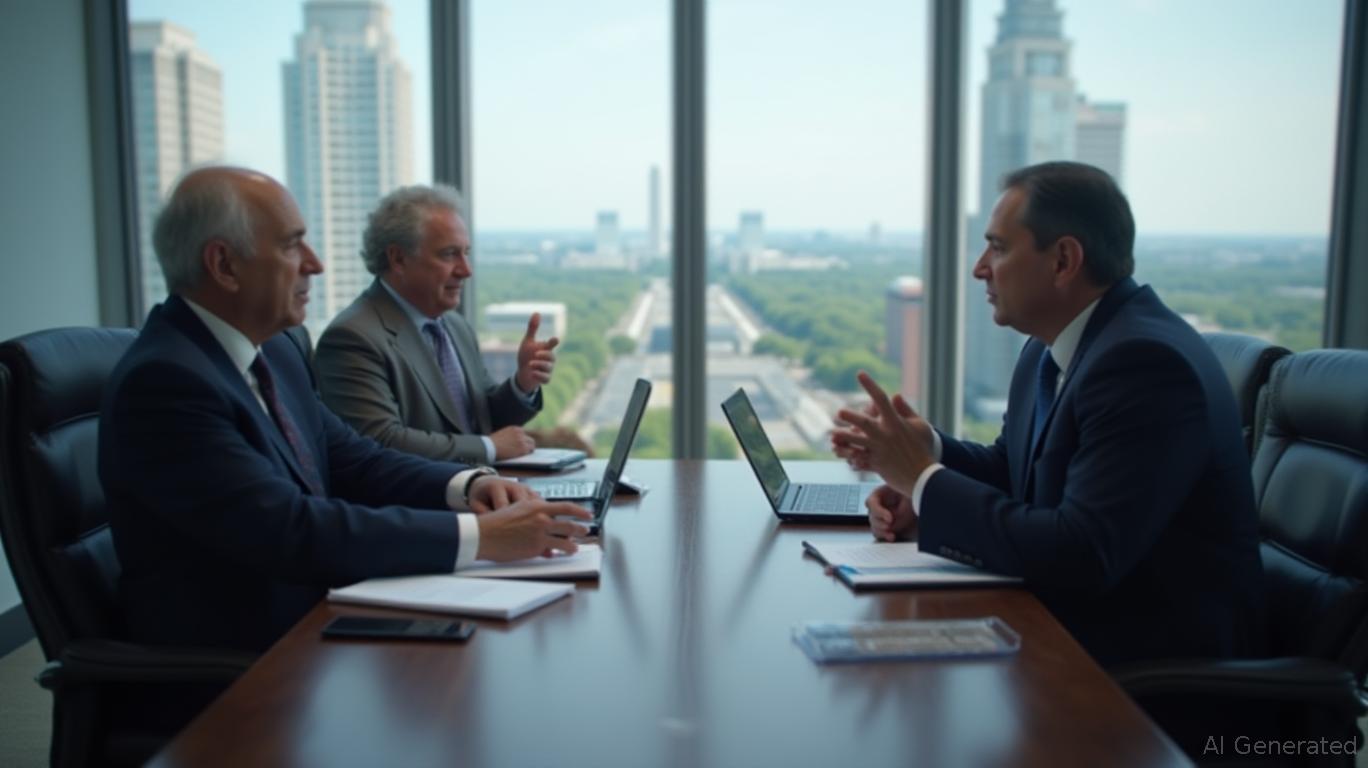
The U.S. Securities and Exchange Commission (SEC) and the Commodity Futures Trading Commission (CFTC) have scheduled a joint roundtable for September 29, 2025, to discuss regulatory alignment in the digital asset sector. Taking place at the SEC’s headquarters in Washington, D.C., the meeting aims to synchronize regulatory approaches to encourage innovation while safeguarding investors. SEC Chair Paul Atkins and CFTC Acting Chair Caroline Pham highlighted the importance of working together to close regulatory gaps and provide greater clarity for the market. The agenda includes panels on the evolution of regulatory frameworks, harmonizing trading platforms, and reforms centered on market participants title1 [ 1 ].
The joint statement identified key goals such as unifying definitions for products and trading venues, simplifying reporting requirements, and coordinating capital and margin standards. The agencies also suggested evaluating the possibility of extending U.S. trading hours to better reflect the global, round-the-clock nature of digital asset markets, as long as operational integrity and investor safety are preserved title2 [ 2 ]. The discussion will also cover the potential introduction of perpetual derivative contracts on regulated U.S. exchanges and the adoption of portfolio margining systems to improve capital efficiency through cross-product risk offsetting title3 [ 3 ].
Industry representatives from both traditional finance and crypto sectors, such as Nasdaq,
This collaborative initiative follows a statement issued on September 2, clarifying that exchanges registered with the SEC and CFTC are permitted to facilitate spot trading of crypto commodity products. This move is consistent with broader efforts such as the SEC’s Project Crypto and the CFTC’s Crypto Sprint, both of which aim to implement recommendations from the President’s Working Group on Digital Asset Markets. The agencies also reiterated their support for foreign board of trade (FBOT) registrations, which allow overseas exchanges to serve U.S. clients under CFTC supervision title5 [ 5 ].
As the U.S. strives to maintain its leadership in financial innovation, regulatory coordination is seen as essential. The joint agenda will address topics like prediction markets, event-based contracts, and the use of stablecoins as collateral in derivatives. With the House recently passing the CLARITY Act to clarify the roles of the SEC and CFTC, the timing of the roundtable highlights the urgency of establishing a unified regulatory structure ahead of Senate discussions title6 [ 6 ].
The agencies stressed that harmonizing regulations will not only boost U.S. competitiveness but also uphold strong investor protections. For instance, while longer trading hours could bring U.S. markets in line with global practices, appropriate safeguards are needed to manage liquidity risks. Likewise, the introduction of perpetual contracts would require clear leverage limits and strict risk controls to prevent issues seen in offshore markets title7 [ 7 ].
Disclaimer: The content of this article solely reflects the author's opinion and does not represent the platform in any capacity. This article is not intended to serve as a reference for making investment decisions.
You may also like
Ethereum network sees 62% drop in fees: Is ETH price at risk?

SOL Price Forecast: Solana Enters a New Phase with Network Enhancements and Market Fluctuations
- Solana's 2025 upgrades (Firedancer, Alpenglow) enable 1M TPS and 5,200x cheaper transactions, boosting institutional adoption. - TVL rebounded to $8.8B with 32.7% QoQ growth, supported by Bitwise ETF and 7% staking yields attracting institutional capital. - Fed's December 2025 rate cut and QT cessation create favorable macro conditions, historically correlating with crypto gains. - Technical indicators (RSI 42.5, bullish MACD) suggest strategic entry above 200-day EMA ahead of December FOMC meeting. - In

Solana's Abrupt Price Swings and Institutional Reactions: Analyzing Core and Market Factors Behind the Decline and Reviewing Long-Term Value
- Solana (SOL) plummeted 14% in late 2025 due to weak on-chain metrics, 7.5% inflation, and waning memecoin demand. - Institutional investors maintained 1% SOL treasury holdings and $101.7M ETF inflows despite macro risks and $19B crypto liquidations. - Alpenglow/Firedancer upgrades (1M+ TPS, 150ms finality) and 50-80% lower validator costs aim to strengthen Solana's infrastructure resilience. - Regulatory uncertainties (SEC ETF reviews, MiCA) and delayed $2.9B inflation reduction plan (2029) persist as sy

The Impact of Institutional Funding on Education and Workforce Training in Renewable Energy
- Institutional investors are boosting renewable energy education and workforce programs to drive long-term economic resilience and sustainability. - Global investments hit $386B in H1 2025, with education initiatives bridging skill gaps and enabling equitable clean energy transitions. - Case studies like Morocco’s 38% renewable electricity and Portugal’s green skills programs highlight education’s role in job creation and sector growth. - Education and green finance synergies in RCEP and U.S. $265B 2024 i

Trending news
MoreCrypto prices
More





