
South Korea's first won-pegged stablecoin KRW1 launches on Avalanche

Quick Take South Korean crypto custody firm BDACS announced that it launched the first local currency-backed stablecoin named KRW1 on Avalanche. The stablecoin launch remains in a PoC stage and is not publicly circulated, as the regulations around stablecoins are still unclear in South Korea.

South Korea's crypto custody service provider BDACS announced Thursday that it has launched KRW1, a stablecoin fully backed by the South Korean won, on the Avalanche network.
BDACS said in a press release that it successfully completed a full proof of concept (PoC) of KRW1's technical viability. The company added that it selected Avalanche for the network's reliability and security in public-sector use.
Each KRW1 stablecoin is fully collateralized with the won currency held at Woori Bank, one of the largest banking institutions in South Korea. BDACS noted that real-time banking API integration with Woori ensures transparent and verifiable proof of reserves.
"The launch extends far beyond token issuance," the company said in the release. "BDACS has developed a comprehensive framework, including issuance and management systems as well as a user-facing app supporting peer-to-peer transfers and transaction verification."
The company said it aims to position KRW1 as a globally-used stablecoin for remittances, payments, investments and deposits, with further plans to deploy the stablecoin in public-sector applications such as settlement systems for emergency relief disbursements.
BDACS also plans to expand KRW1 on to other blockchains to improve interoperability, and said it is exploring potential collaborations with U.S. dollar stablecoins such as USDT or USDC.
Stablecoin regulation in Korea
Meanwhile, BDACS noted that the KRW1 launch remains at the PoC stage, and thus the stablecoin is not circulated publicly and does not violate local regulations.
South Korea currently lacks a regulatory framework for stablecoins, although the country is putting efforts to establish one.
South Korean President Lee Jae Myung is endorsing a local currency-pegged stablecoin market to strengthen its monetary sovereignty in the age of digital finance, while lawmakers continue to debate several stablecoin-related bills . This policy momentum has prompted many local financial institutions to prepare their own stablecoin launches, including filing trademark applications for stablecoin ticker symbols.
However, the country's central bank has insisted that local stablecoin issuance be limited to licensed banking institutions to prevent financial instability caused by a sudden, uncontrolled flood of new digital currency.
BDACS said it is strategically positioning itself to be a key player in South Korea's upcoming local stablecoin market.
"While large tech companies may eventually enter the market, KRW1 is already operational with strong institutional backing from Woori Bank and global blockchain partners," BDACS said. "This combination provides infrastructure depth that big tech alone cannot match. BDACS sees these firms as potential collaborators rather than competitors."
Disclaimer: The content of this article solely reflects the author's opinion and does not represent the platform in any capacity. This article is not intended to serve as a reference for making investment decisions.
You may also like
A decade-long tug-of-war ends: "Crypto Market Structure Bill" sprints to the Senate
At the Blockchain Association Policy Summit, U.S. Senators Gillibrand and Lummis stated that the "Crypto Market Structure Bill" is expected to have its draft released by the end of this week, with revisions and hearings scheduled for next week. The bill aims to establish clear boundaries for digital assets by adopting a classification-based regulatory framework, clearly distinguishing between digital commodities and digital securities, and providing a pathway for exemptions for mature blockchains to ensure that regulation does not stifle technological progress. The bill also requires digital commodity trading platforms to register with the CFTC and establishes a joint advisory committee to prevent regulatory gaps or overlapping oversight. Summary generated by Mars AI. The accuracy and completeness of this summary, generated by the Mars AI model, is still being iteratively updated.
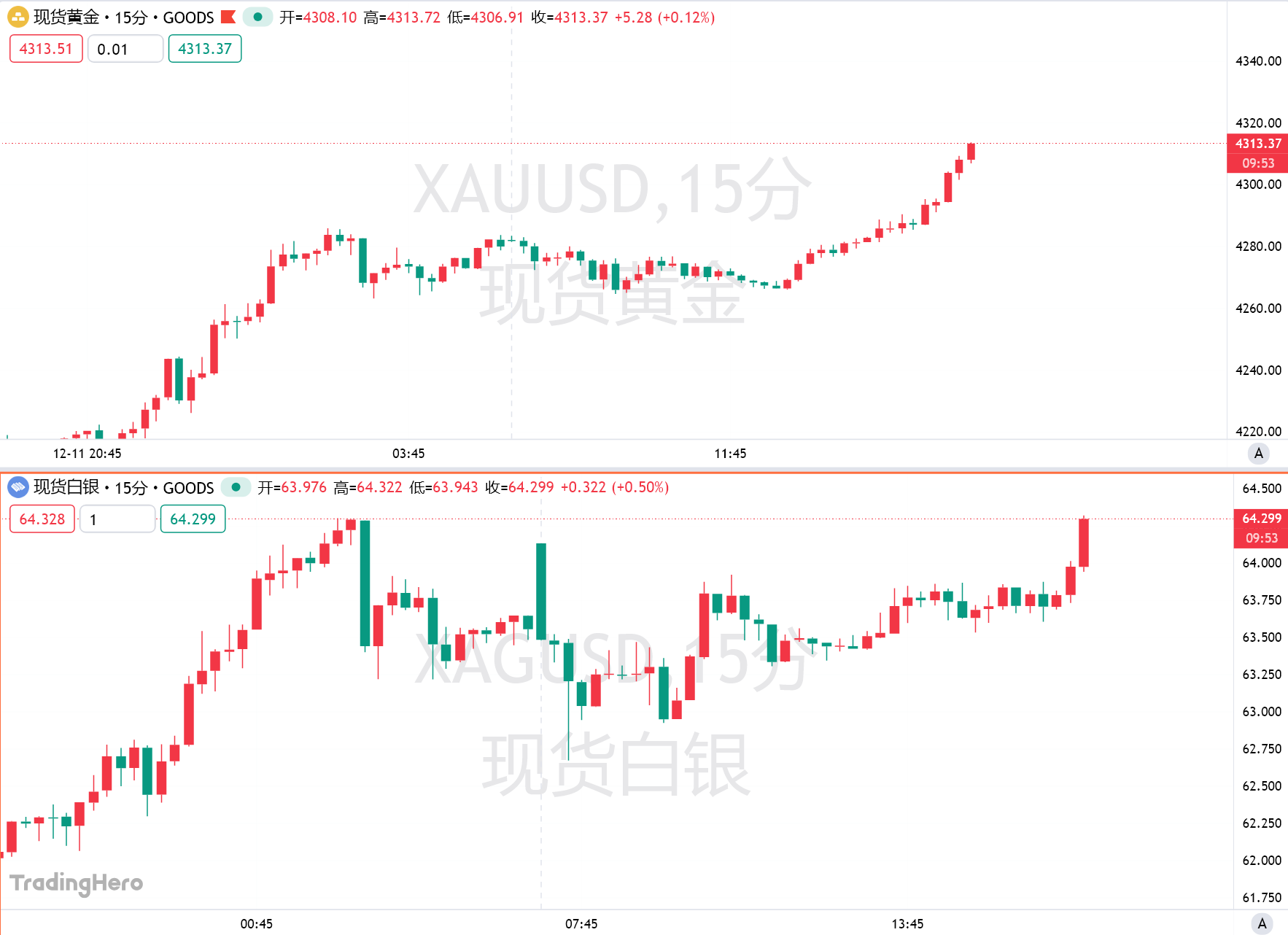
Gold surpasses the $4,310 mark—Is the "bull frenzy" returning?
Boosted by expectations of further easing from the Federal Reserve, gold has risen for four consecutive days. Technical indicators show strong bullish signals, but there remains one more hurdle before reaching a new all-time high.
Trend Research: Why Are We Still Bullish on ETH?
Against the backdrop of relatively accommodative expectations in both China and the US, which suppress asset downside volatility, and with extreme fear and capital sentiment not yet fully recovered, ETH remains in a favorable "buy zone."

Trending news
MoreCrypto prices
More





