
Citi Says Stablecoins and AI Could Drive Post-Trade Shakeup

The global post-trade industry is entering a new phase of transformation driven by digital assets and AI, according to Citi’s latest “Securities Services Evolution” whitepaper.
The bank’s fifth annual survey, which gathered input from 537 market participants including custodians, broker-dealers and asset managers, highlights how tokenization, accelerated settlements and AI-driven automation are reshaping trade processing.
Citi estimates that by 2030, 10% of market turnover could be conducted through tokenized assets. The report points to bank-issued stablecoins as the main enabler, helping with collateral efficiency and fund tokenization. Asia-Pacific is already leading adoption, thanks to strong retail interest in crypto and regulatory support for digital assets.
The use of AI will further drive post-trade efficiency, the report states. Some 86% of surveyed firms say they are testing the technology for client onboarding as the key use case for asset managers, custodians and broker-dealers. A further 57% indicated that their organizations are piloting the technology for post-trade specifically.
Speed and automation are a priority, Citi said, as the post-trade industry faces the cumulative workload of moving to T+1, a standard settlement cycle for securities transactions where the trade is settled one business day after the trade date.
“From accelerated settlements to automation in asset servicing, and increased shareholder participation and governance, the collective vision of firms worldwide is converging on the same core themes. The industry is at the cusp of significant change as market participants intensify their focus on T+1, accelerate the adoption of digital assets, and implement GenAI across their operations,” said Chris Cox, Head of Investor Services, Citi.
Disclaimer: The content of this article solely reflects the author's opinion and does not represent the platform in any capacity. This article is not intended to serve as a reference for making investment decisions.
You may also like
Economic Truth: AI Drives Growth Alone, Cryptocurrency Becomes a Political Asset
The article analyzes the current economic situation, pointing out that AI is the main driver of GDP growth, while other sectors such as the labor market and household finances are in decline. Market dynamics have become detached from fundamentals, with AI capital expenditure being key to avoiding a recession. The widening wealth gap and energy supply are becoming bottlenecks for AI development. In the future, AI and cryptocurrencies may become the focus of policy adjustments. Summary generated by Mars AI This summary was generated by the Mars AI model, and its accuracy and completeness are still in the process of iterative improvement.

AI unicorn Anthropic accelerates IPO push, taking on OpenAI head-to-head?
Anthropic is accelerating its expansion into the capital markets, initiating collaboration with top law firms, which is seen as an important signal toward going public. The company's valuation is approaching 300 billions USD, and investors are betting it could go public before OpenAI.
Did top universities also get burned? Harvard invested $500 million heavily in bitcoin right before the major plunge
Harvard University's endowment fund significantly increased its holdings in bitcoin ETFs to nearly 500 million USD in the previous quarter. However, in the current quarter, the price of bitcoin subsequently dropped by more than 20%, exposing the fund to significant timing risk.

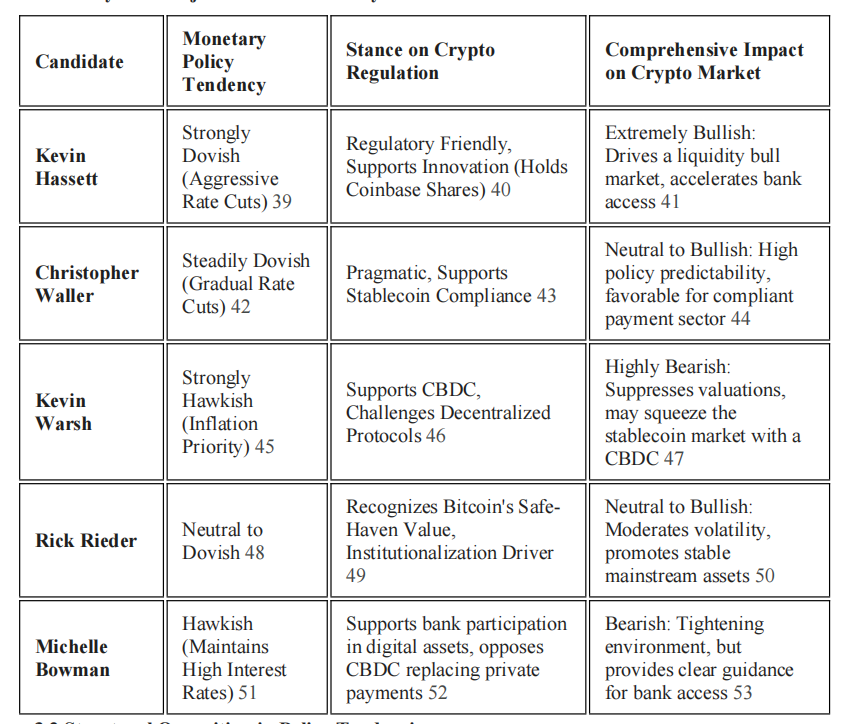
The Structural Impact of the Next Federal Reserve Chair on the Cryptocurrency Industry: Policy Shifts and Regulatory Reshaping
The change of the next Federal Reserve Chair is a decisive factor in reshaping the future macro environment of the cryptocurrency industry.
Trending news
MoreCrypto prices
More






