
South Korea’s FSC chief nominee faces backlash after calling crypto valueless

Quick Take South Korea’s FSC chief nominee Lee Eok-won said cryptocurrencies have no intrinsic value. He argued that due to high volatility, crypto cannot function as a store of value or medium of exchange. Lee’s remarks drew criticism from local industry players, who viewed them as regressive. However, the FSC chief nominee expressed support for the country’s ongoing local stablecoin initiative.

Lee Eok-won, the nominee to chair South Korea’s Financial Services Commission, stated that cryptocurrencies have no intrinsic value, a characteristic that distinguishes them from traditional financial products such as deposits and equities.
His comment appeared in a written response submitted ahead of his confirmation hearing as the prospective head of the country’s top financial regulator, according to local news agency News1.
Lee wrote that, due to their high price volatility, cryptocurrencies cannot fulfill the essential functions of a currency, such as serving as a store of value or a medium of exchange.
He also expressed skepticism about allowing pension and retirement funds to invest in crypto assets, citing concerns over the market’s volatility and speculative nature.
The FSC chair nominee also touched on the subject of local crypto exchange-traded funds (ETFs), which the FSC has been exploring a plan to allow local firms to launch spot crypto funds. While Lee stated that there are existing concerns around the funds, he said he will work with lawmakers to advance the project.
According to the News1 report, Lee's comment on cryptocurrencies sparked backlash from local industry players, who touted his comments as regressive, especially at a time when different governments and corporations are actively adopting crypto into their balance sheets and strategies.
Other blockchain experts reportedly argued that bitcoin and other crypto have sufficient practical value, in their "digital utility," such as security and transferability on the blockchain network, the report said.
Pro-stablecoin
Meanwhile, Lee expressed a different stance on stablecoins , stating he would seek to balance opportunities for innovation with appropriate safety measures.
Endorsed by President Lee Jae Myung , South Korea is advancing a plan to regulate a local currency-pegged stablecoin market. This move aligns with a broader global trend, as regions including Japan, Hong Kong, and China are also exploring local currency stablecoins to protect and promote their monetary sovereignty in the Web3 era.
The country's potential new Financial Services Commission chair appears to be following this same strategy, cautiously preparing to join the stablecoin movement but maintaining a skeptical view of other cryptocurrency innovations.
Disclaimer: The content of this article solely reflects the author's opinion and does not represent the platform in any capacity. This article is not intended to serve as a reference for making investment decisions.
You may also like
Five charts to help you understand: Where does the market go after each policy storm?
After this regulatory crackdown, is it a harbinger of an impending downturn, or the beginning of a new cycle where all negative news has been fully priced in? Let’s examine the trajectory after the storm through five key policy milestones.
Mars Morning News | The crypto market rebounds across the board, Bitcoin rises above $94,500; The "CLARITY Act" draft is expected to be released this week
The crypto market has fully rebounded, with bitcoin surpassing $94,500 and US crypto-related stocks rising across the board. The US Congress is advancing the CLARITY Act to regulate cryptocurrencies. The SEC chairman stated that many ICOs are not securities transactions. Whales are holding a large number of profitable ETH long positions. Summary generated by Mars AI. The accuracy and completeness of the content generated by the Mars AI model is still being iteratively updated.

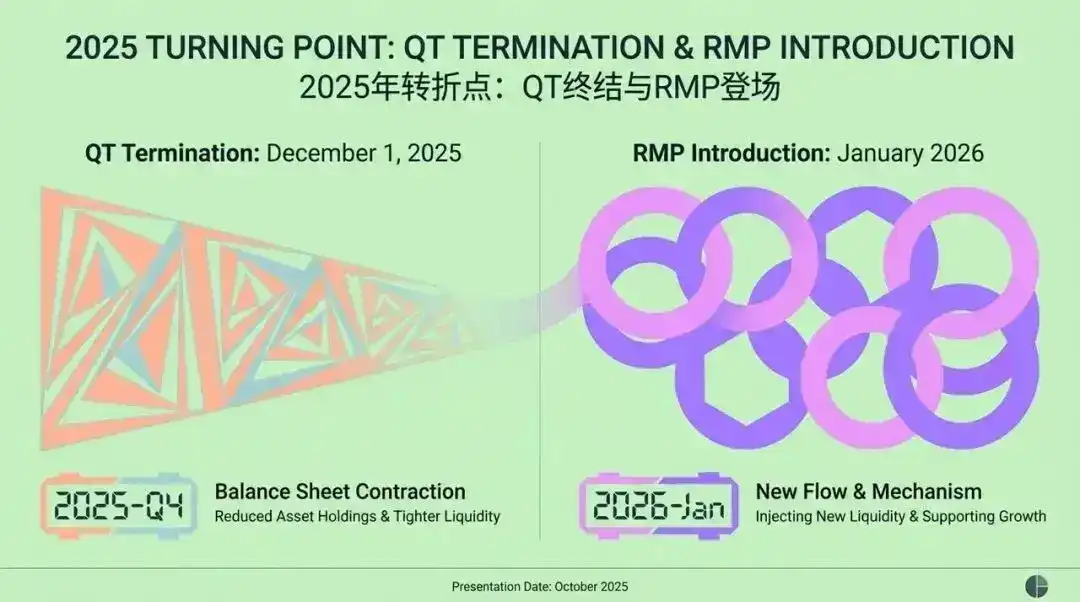
Federal Reserve’s Major Shift: From QT to RMP, How Will the Market Transform by 2026?
The article discusses the background, mechanism, and impact on financial markets of the Federal Reserve's introduction of the Reserve Management Purchases (RMP) strategy after ending Quantitative Tightening (QT) in 2025. RMP is regarded as a technical operation aimed at maintaining liquidity in the financial system, but the market interprets it as a covert easing policy. The article analyzes RMP's potential effects on risk assets, the regulatory framework, and fiscal policy, and provides strategic recommendations for institutional investors. Summary generated by Mars AI This summary was generated by the Mars AI model, and the accuracy and completeness of its content are still in the process of iterative improvement.
Rate Hike in Japan: Will Bitcoin Resist Better Than Expected?
Trending news
MoreCrypto prices
More





