
Luxxfolio’s $73M Capital Raise: A High-Risk, High-Reward Bet on Litecoin's Institutional Future
- Luxxfolio raises $73M to expand Litecoin treasury strategy, targeting 1M LTC by 2026. - LTC’s appeal stems from technical maturity, CFTC commodity classification, and potential ETF approvals. - Regulatory delays and competition from Solana/XRP ETFs pose risks to altcoin adoption. - Luxxfolio’s strategy combines treasury accumulation with liquidity services to strengthen LTC’s ecosystem. - Success hinges on regulatory clarity, technological differentiation, and macroeconomic conditions.
The recent $73 million capital raise by Luxxfolio, a Canadian crypto firm, to expand its Litecoin (LTC) treasury strategy represents a bold bet on the altcoin’s institutional future. By targeting the accumulation of one million LTC by 2026, Luxxfolio positions itself at the intersection of speculative innovation and regulatory evolution. This move reflects a broader shift in corporate treasuries from Bitcoin-centric strategies to altcoins like Litecoin, driven by the post-ETF market environment and evolving blockchain utility [1].
Litecoin’s appeal lies in its technical maturity and regulatory clarity. With a 14-year track record of reliable operation, fast block confirmations (2.5 minutes), and low fees, it offers a practical solution for cross-border payments and treasury diversification [1]. The U.S. Commodity Futures Trading Commission’s (CFTC) classification of Litecoin as a commodity, rather than a security, has further reduced compliance risks for institutions [2]. This regulatory distinction, coupled with the SEC’s July 2025 policy shift allowing in-kind creations and redemptions for non-Bitcoin ETFs, has created a framework for institutional adoption [3].
However, the viability of altcoin treasuries hinges on regulatory outcomes. While Grayscale and CoinShares have submitted spot Litecoin ETF proposals with an 80% approval probability, delays in SEC decisions have already caused price volatility in less liquid altcoins like PENGU [3]. Luxxfolio’s strategy assumes a favorable regulatory trajectory, but the broader market remains exposed to uncertainty. For instance, the pending approval of Solana (SOL) and XRP ETFs could redirect institutional capital away from Litecoin, creating competitive pressures [4].
The risks are compounded by liquidity challenges. Smaller altcoins face heightened volatility during regulatory delays, and even Litecoin’s $12.33 billion daily transaction volume pales in comparison to Bitcoin’s scale [2]. Yet, Luxxfolio’s approach—combining treasury accumulation with liquidity services and community initiatives—aims to mitigate these risks by strengthening the LTC ecosystem [1]. This mirrors strategies pioneered by firms like MicroStrategy and DeFi Dev Corp, which leverage staking and DeFi yields to enhance returns [4].
From a macroeconomic perspective, Litecoin’s role as a “digital reserve asset” is bolstered by its integration into platforms like CoinGate, where it ranks second in global adoption [2]. Its recent technical upgrades, including the MimbleWimble Extension Block (MWEB) for privacy, further enhance its utility [2]. Analysts project a potential price breakout to $183–$280 by 2026, contingent on ETF approvals and macroeconomic conditions [2].
The high-risk, high-reward nature of Luxxfolio’s bet underscores a critical question: Can altcoin treasuries sustain institutional interest in a post-ETF world? The answer depends on three factors: regulatory clarity, technological differentiation, and macroeconomic tailwinds. While Litecoin’s maturity and scalability position it favorably, the broader altcoin market remains a high-stakes gamble.
Source:
[1]
Why Luxxfolio Sees Litecoin as the 'Prime Real Estate' of Digital Finance
[2] Litecoin's Blockchain Maturity and Institutional Adoption
[3] Regulatory Hurdles and Market Impact in the Race for Altcoin ETFs
[4] New Spot Altcoin ETFs Could Unlock Compelling Directional Strategies
Disclaimer: The content of this article solely reflects the author's opinion and does not represent the platform in any capacity. This article is not intended to serve as a reference for making investment decisions.
You may also like
Mars Morning News | Ethereum Fusaka upgrade officially activated; ETH surpasses $3,200
The Ethereum Fusaka upgrade has been activated, enhancing L2 transaction capabilities and reducing fees; BlackRock predicts accelerated institutional adoption of cryptocurrencies; cryptocurrency ETF inflows have reached a 7-week high; Trump nominates crypto-friendly regulatory officials; Malaysia cracks down on illegal Bitcoin mining. Summary generated by Mars AI. The accuracy and completeness of this summary are still undergoing iterative updates.

Do you think stop-losses can save you? Taleb exposes the biggest misconception: all risks are packed into a single blow-up point.
Nassim Nicholas Taleb's latest paper, "Trading With a Stop," challenges traditional views on stop-loss orders, arguing that stop-losses do not reduce risk but instead compress and concentrate risk into fragile breaking points, altering market behavior patterns. Summary generated by Mars AI. The accuracy and completeness of this summary are still being iteratively improved by the Mars AI model.

With capital outflows from crypto ETFs, can issuers like BlackRock still make good profits?
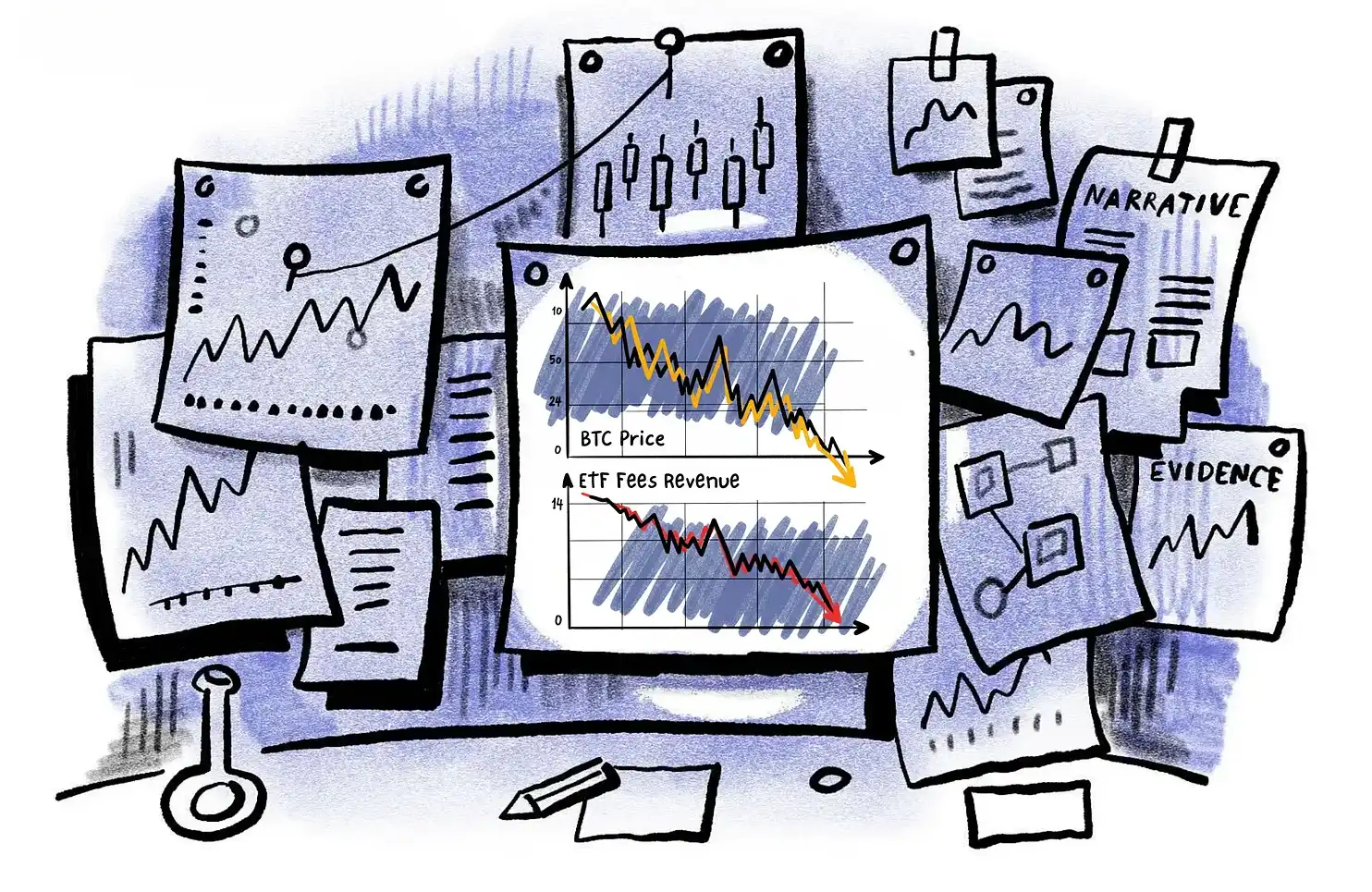
BlackRock's crypto ETF fee revenue has dropped by 38%, and its ETF business is struggling to escape the cyclical curse of the market.
Incubator MEETLabs today launched the large-scale 3D fishing blockchain game "DeFishing". As the first blockchain game on the GamingFi platform, it implements a dual-token P2E system with the IDOL token and the platform token GFT.
MEETLabs is an innovative lab focused on blockchain technology and the cryptocurrency sector, and also serves as the incubator for MEET48.

Trending news
MoreCrypto prices
More






