
LBTC: The Next Onchain Yield Frontier for Bitcoin on Solana
- Bitcoin is evolving from "digital gold" to a productive asset via LBTC, a liquid-staked token bridging Bitcoin's security with Solana's high-performance blockchain. - LBTC enables holders to earn yield and use Bitcoin as collateral in DeFi platforms like Jupiter and Kamino, enhancing capital efficiency without sacrificing liquidity. - Solana's $1.5B LBTC ecosystem and institutional adoption of Bitcoin-based yield products signal a $150B+ TVL potential if just 1% of Bitcoin enters DeFi. - Technological up
Bitcoin, long celebrated as “digital gold,” is undergoing a seismic shift. No longer confined to its role as a store of value, Bitcoin is rapidly evolving into a productive asset capable of generating yield, collateralizing loans, and fueling decentralized finance (DeFi) ecosystems. At the forefront of this transformation is LBTC, a liquid-staked Bitcoin token that bridges Bitcoin’s security with Solana’s high-performance blockchain. By enabling Bitcoin holders to earn yield and participate in DeFi, LBTC is redefining how the world’s largest cryptocurrency interacts with the broader financial system.
The Rise of LBTC: Staking Bitcoin, Solana-Style
LBTC, developed by Bitcoin DeFi firm Lombard Finance, is a liquid-staked Bitcoin token that generates yield through Babylon’s Bitcoin Staking Protocol. Unlike traditional staking, which locks assets for extended periods, LBTC allows users to retain liquidity while earning rewards. This innovation is now being deployed on Solana, a blockchain renowned for its speed, low fees, and thriving DeFi ecosystem.
By 2025, LBTC’s $1.5 billion circulating supply has been integrated into Solana’s largest decentralized applications (dApps), including Jupiter , Drift, Kamino, and Meteora. These platforms leverage LBTC as both a yield-bearing asset and collateral for loans, derivatives, and liquidity pools. For Bitcoin holders, this means their assets can now generate returns while maintaining cross-chain flexibility—a critical advantage in a market where capital efficiency is paramount [1].
Solana: The High-Throughput Engine for Bitcoin’s Productivity
Solana’s appeal lies in its ability to process thousands of transactions per second at minimal cost, making it an ideal platform for DeFi innovation. In 2025, the ecosystem has seen explosive growth in decentralized exchanges (DEXs) like Jupiter and Raydium, as well as lending protocols like Kamino Finance. These projects are capitalizing on Bitcoin’s increasing adoption in DeFi, driven by institutional interest and retail demand for yield [3].
The synergy between LBTC and Solana is not accidental. Solana’s infrastructure supports high-frequency trading, automated market makers (AMMs), and complex financial derivatives—use cases that align perfectly with LBTC’s dual role as a staking derivative and DeFi collateral. As Bitcoin holders seek to maximize returns, Solana’s ecosystem offers a scalable, cost-effective environment to do so [2].
Bitcoin’s Transition to Productive Collateral: A $Trillion-Plus Opportunity
Bitcoin’s DeFi ecosystem, or BTCFi, is still in its infancy but growing rapidly. As of early 2025, approximately $5–6 billion in Bitcoin is locked into DeFi protocols, with Babylon’s layer-2 solution alone accounting for $4.6 billion [1]. However, this represents just 0.3% of Bitcoin’s total market cap. Analysts estimate that if even 1% of Bitcoin’s supply is deployed into DeFi, the sector could expand by a factor of 300, reaching $150+ billion in total value locked (TVL) [1].
This growth is being driven by institutional adoption. Bitcoin-based ETFs, yield-generating ETPs in Europe, and corporate treasuries are all experimenting with ways to put Bitcoin to work. Meanwhile, technological advancements like Taproot upgrades and layer-2 solutions (e.g., RSK, Stacks) are enhancing Bitcoin’s programmability, enabling it to interact with DeFi protocols more seamlessly [2].
LBTC’s integration into Solana exemplifies this trend. By allowing Bitcoin to earn yield on-chain while retaining liquidity, it addresses a key limitation of traditional Bitcoin staking. For institutional investors, this means Bitcoin can now serve as both a hedge against inflation and a source of income—a dual utility that could accelerate its adoption in mainstream portfolios [3].
The Future of Bitcoin in DeFi: A Productive Asset Class
The transition from passive to productive collateral is not just a technical shift—it’s a philosophical one. Bitcoin’s original design prioritized security and scarcity, but its future may lie in its ability to generate value. LBTC on Solana is a testament to this evolution, demonstrating how Bitcoin can coexist with DeFi without compromising its core principles.
As the BTCFi market matures, we can expect to see more cross-chain solutions like LBTC, further blurring the lines between Bitcoin’s traditional role and its emerging utility. For investors, this presents a unique opportunity: to own a piece of Bitcoin’s future while participating in the next wave of onchain innovation.
Source:
[1] Bitcoin DeFi Market in 2025: Growth, Potential, and Key ...
[2] BTCFi Report: Why DeFi on Bitcoin is Inevitable?
[3] Top Solana Projects to Watch in 2025
Disclaimer: The content of this article solely reflects the author's opinion and does not represent the platform in any capacity. This article is not intended to serve as a reference for making investment decisions.
You may also like
A decade-long tug-of-war ends: "Crypto Market Structure Bill" sprints to the Senate
At the Blockchain Association Policy Summit, U.S. Senators Gillibrand and Lummis stated that the "Crypto Market Structure Bill" is expected to have its draft released by the end of this week, with revisions and hearings scheduled for next week. The bill aims to establish clear boundaries for digital assets by adopting a classification-based regulatory framework, clearly distinguishing between digital commodities and digital securities, and providing a pathway for exemptions for mature blockchains to ensure that regulation does not stifle technological progress. The bill also requires digital commodity trading platforms to register with the CFTC and establishes a joint advisory committee to prevent regulatory gaps or overlapping oversight. Summary generated by Mars AI. The accuracy and completeness of this summary, generated by the Mars AI model, is still being iteratively updated.

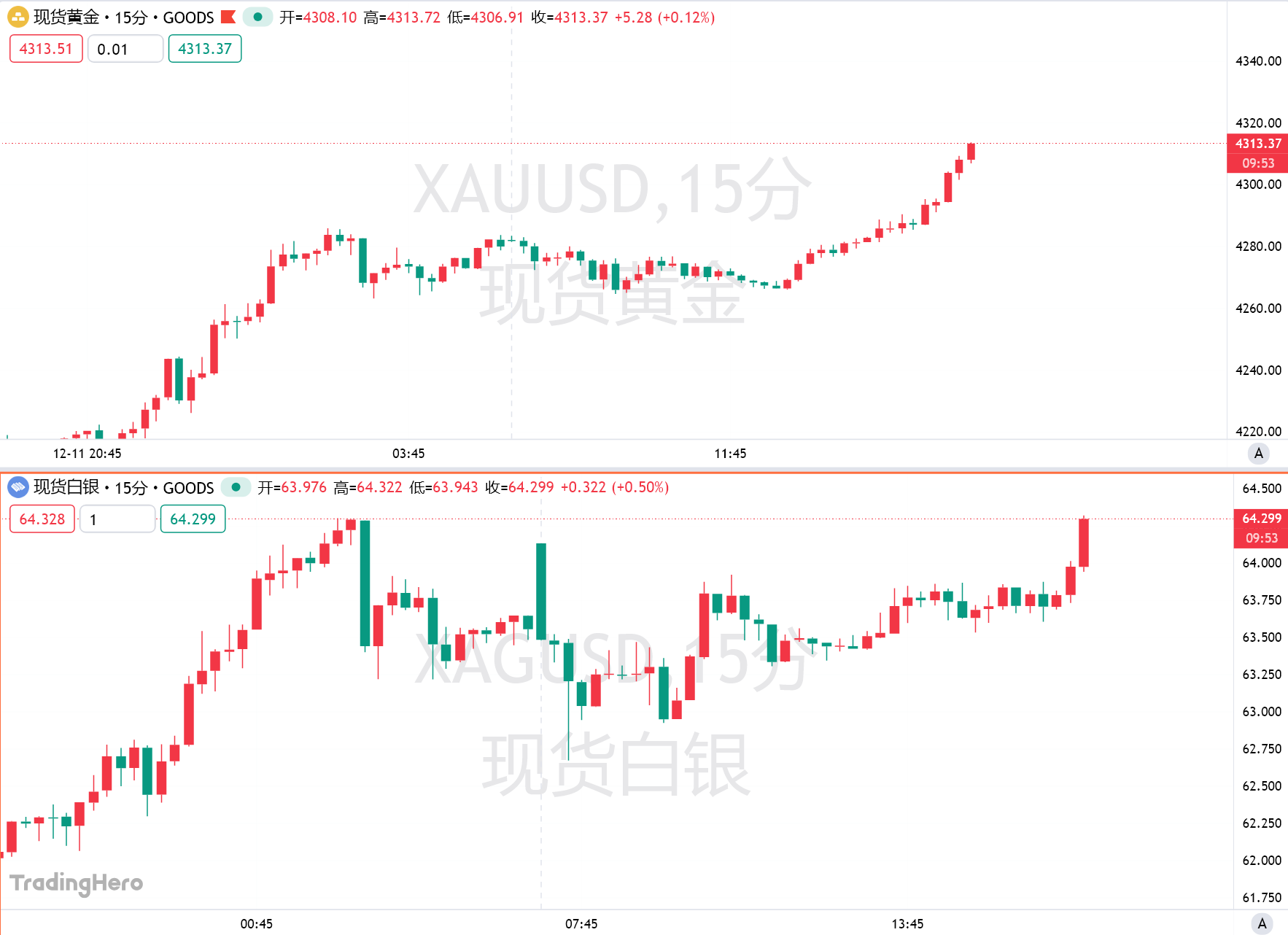
Gold surpasses the $4,310 mark—Is the "bull frenzy" returning?
Boosted by expectations of further easing from the Federal Reserve, gold has risen for four consecutive days. Technical indicators show strong bullish signals, but there remains one more hurdle before reaching a new all-time high.
Trend Research: Why Are We Still Bullish on ETH?
Against the backdrop of relatively accommodative expectations in both China and the US, which suppress asset downside volatility, and with extreme fear and capital sentiment not yet fully recovered, ETH remains in a favorable "buy zone."

Trending news
MoreCrypto prices
More





