
Ethereum's $4,700 Breakout: A Catalyst for Institutional Reentry and Long-Term Bullish Momentum
- Ethereum (ETH) dominated Q2 2025 institutional flows, with $28.5B in ETF inflows vs. Bitcoin's $1.17B outflows, driven by regulatory clarity and in-kind redemption mechanisms. - Corporate treasuries staked 2.73M ETH ($10.53B) and whale accumulation (22% supply control) signaled long-term confidence, while exchange-held ETH fell below 13M since 2016. - Derivatives open interest hit $43.569B (40% of crypto total), with stable contango and neutral funding rates reflecting spot-driven demand over speculation
The cryptocurrency market in Q2 2025 has witnessed a seismic shift in institutional capital flows, with Ethereum (ETH) emerging as the dominant beneficiary of this reallocation. A confluence of robust ETF inflows, declining exchange reserves, and bullish derivatives positioning has created a compelling case for a breakout above the $4,700 psychological threshold—a level that could unlock sustained upward momentum and institutional accumulation.
ETF Inflows: A New Era of Institutional Adoption
Ethereum's spot ETFs have attracted $28.5 billion in net inflows during Q2 2025, dwarfing Bitcoin's outflows of $1.17 billion. This surge is driven by regulatory clarity—the U.S. SEC's reclassification of Ethereum as a utility token under the GENIUS Act—and the launch of in-kind creation/redemption mechanisms, which reduced issuance costs and enhanced liquidity. BlackRock's ETHA and Fidelity's FETH have been the primary conduits, with ETHA alone securing $314.9 million in a single day of trading.
Public companies have further amplified this trend. BitMine Immersion Technologies (BMNR) now holds 300,657 ETH ($1.1 billion), while SharpLink Gaming (SBET) added 176,271 ETH ($463 million) to its treasury. These acquisitions reflect Ethereum's growing role as a yield-generating reserve asset, with staking yields of 4.5–5.2% and deflationary supply dynamics reducing circulating ETH by 1.32% annually.
On-Chain Scarcity and Whale Accumulation
Ethereum's exchange-held supply has plummeted to under 13 million ETH, a level not seen since 2016. This decline is driven by corporate treasuries staking 2.73 million ETH ($10.53 billion) and the rise of liquid staking protocols like Lido, which now manages $42.5 billion in TVL. Whale activity has also intensified, with wallets holding 10,000–100,000 ETH controlling 22% of the circulating supply, the highest since 2020. These entities are accumulating ETH at a weekly average of 800,000 ETH, signaling long-term confidence in Ethereum's utility-driven model.
The ETH/BTC ratio, a key institutional sentiment indicator, hit a 14-month high of 0.71:1 in Q2 2025, underscoring the shift in capital from Bitcoin to Ethereum. This trend is reinforced by the 60/30/10 allocation model, where 60% of institutional capital now flows into Ethereum-based products, compared to 30% for Bitcoin and 10% for altcoins.
Derivatives Positioning: A Structural Bull Case
Ethereum's derivatives market has reached unprecedented levels of institutional participation. Open interest in perpetual futures hit $108.922 billion by June 30, 2025, with Ethereum dominating 40% of total crypto open interest. This dwarfs Bitcoin's ETF outflows and reflects a stable contango structure, where futures prices trade at an 8% premium to spot prices.
Funding rates in Ethereum futures have stabilized, shifting from bearish to neutral. Negative rates observed during the $4,700–$4,400 pullback in late July–August have flattened, indicating a transition from leveraged speculation to spot-driven demand. This shift reduces volatility and supports long-term accumulation, as institutional investors prioritize Ethereum's utility and yield-generating properties.
Technical and Macro Catalysts for a $4,700 Breakout
Ethereum's price action near $4,700 has become a focal point for analysts. The level is described as “the level that decides everything,” as it represents a supply zone defined by prior cycle peaks and reinforced by a weekly downtrend on the RSI. A clean weekly close above $4,700, accompanied by a breakout of the RSI downtrend, would nullify bearish divergence and signal the start of a new bull phase.
On-chain metrics reinforce this narrative. Ethereum's RSI6 at 23.18 in Q3 2025 indicates oversold conditions historically linked to Q4 rebounds. The Pectra upgrade in late 2025 is expected to reduce gas fees by 70%, enhancing scalability and solidifying Ethereum's role as a foundational infrastructure asset.
Macro factors also favor Ethereum. The Federal Reserve's dovish pivot and global inflationary pressures—exacerbated by Trump-era tariffs and a 10% universal import tax—have positioned Ethereum as a hedge against currency devaluation. With a beta of 4.7 (compared to Bitcoin's 2.8), Ethereum is more sensitive to rate cuts, making it a prime beneficiary of monetary easing.
Strategic Entry Points and Risk Management
For investors positioning ahead of a potential multi-month rally, the $4,700 level offers a strategic entry point. Key support levels at $3,950–$4,000 provide a safety net, while a breakout above $4,700 could target $5,000 by mid-2026.
Risk management is critical. Traders should consider stop-loss orders below $4,400 to mitigate downside risk and diversify portfolios with Ethereum-based ETFs (e.g., ETHA, FETH) and Layer 2 solutions (e.g., Lido, EigenLayer). A 60/30/10 allocation model, with 60% in Ethereum-based ETPs, 30% in Bitcoin, and 10% in altcoins, balances exposure to Ethereum's growth while hedging against sector-wide volatility.
Conclusion: A Foundation for Institutional Portfolios
Ethereum's Q2 2025 performance has redefined its role in institutional portfolios. The convergence of ETF inflows, on-chain scarcity, and derivatives positioning creates a self-reinforcing cycle of demand and value accrual. As the market approaches the $4,700 inflection point , investors are advised to monitor key technical signals—weekly closes, RSI trends, and macroeconomic catalysts—while leveraging Ethereum's deflationary mechanics and utility-driven growth.
The $4,700 level is not just a price target; it is a threshold that could catalyze a new era of institutional reentry and long-term bullish momentum. For those prepared to navigate the risks, Ethereum's next chapter promises to be as transformative as its past.
Disclaimer: The content of this article solely reflects the author's opinion and does not represent the platform in any capacity. This article is not intended to serve as a reference for making investment decisions.
You may also like
"Validator's Pendle" Pye raises $5 million, enabling SOL staking yields to be tokenized
There are truly no creative bottlenecks in the financialization of Web3.

DiDi has become a digital banking giant in Latin America
DiDi has successfully transformed into a digital banking giant in Latin America by addressing the lack of local financial infrastructure, building an independent payment and credit system, and achieving a leap from a ride-hailing platform to a financial powerhouse. Summary generated by Mars AI. This summary was produced by the Mars AI model, and its accuracy and completeness are still being iteratively improved.

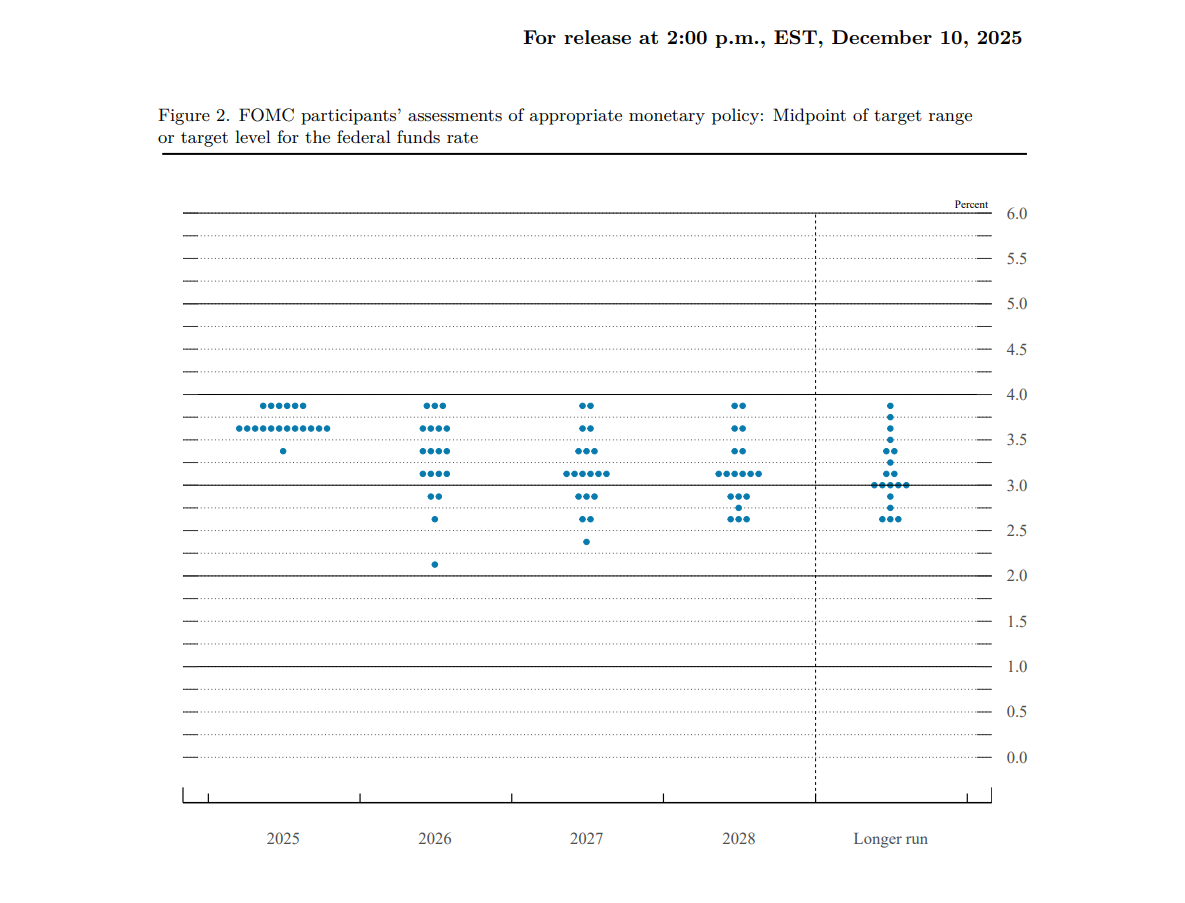
Fed rate cuts in conflict, but Bitcoin's "fragile zone" keeps BTC below $100,000
The Federal Reserve cut interest rates by 25 basis points, but the market interpreted the move as hawkish. Bitcoin is constrained by a structurally fragile range, making it difficult for the price to break through $100,000. Summary generated by Mars AI This summary was generated by the Mars AI model, and the accuracy and completeness of its content are still being iteratively updated.

Full text of the Federal Reserve decision: 25 basis point rate cut, purchase of $4 billion in Treasury bills within 30 days
The Federal Reserve cut interest rates by 25 basis points with a 9-3 vote. Two members supported keeping rates unchanged, while one supported a 50 basis point cut. In addition, the Federal Reserve has restarted bond purchases and will buy $40 billion in Treasury bills within 30 days to maintain adequate reserve supply.
Trending news
MoreCrypto prices
More





