
Scott Bessent ends Bitcoiners' dreams: The US government will not buy Bitcoin

The United States government has dampened the hopes of many Bitcoiners. Scott Bessent, Treasury Secretary, announced that there would be no bitcoin sales under the Trump era. But what about BTC purchases? An alternative that would have satisfied many supporters of the flagship crypto, like Senator Cynthia Lummis or famous investor Michael Saylor. Will the US government stay out of one of the most prominent investments of the moment?

In brief
- Scott Bessent announces a freeze on bitcoin purchases for the United States.
- The US Bitcoin reserve will only be fed by seized assets.
- The crypto market reacted sharply, with BTC falling below 119,000 USD.
- The United States prefers a strategy of reducing their deficit through tax revenues, not bitcoin.
The freeze on Bitcoin purchases: an unexpected strategic choice
On August 14, during his appearance on Fox Business, Scott Bessent confirmed what many feared: the US government will not make new bitcoin purchases. This announcement, made after several months of speculation and public statements, came as a surprise. Bitcoiners hoped a nationalized bitcoin reserve would emerge, like a traditional central bank with gold or dollar reserves.
However, Bessent specified that the US strategic BTC reserve will only be replenished by assets seized by the courts. “We will use seized assets and continue to accumulate them,” he added, explaining that bitcoin will no longer be purchased but only stored following legal seizures.
This decision puts an end to the ambitions of those who dreamed of a major government maneuver to increase the BTC reserve.
The crypto market reacted quickly: bitcoin, which had reached a historic peak of 124,457 USD, dropped below 119,000 USD within hours . The US government’s decision not only impacted the crypto market but also the perception of bitcoin as a reserve currency.
A budget strategy: when inflation meets digital reserves
The halt in bitcoin purchases does not mean the US government is completely disengaging from cryptos. According to Bessent, the United States will continue to use seized bitcoins to enlarge the national reserve. A reserve that is currently estimated between 15 and 20 billion USD.
This model resembles a passive accumulation strategy, where the government does not seek to speculate but to store these assets for crisis management purposes.
In an economic context where the US public debt has surpassed 37 trillion USD, bitcoin reserves could play a crucial role as a safe-haven asset.
Other players, like Michael Saylor, see bitcoin as an opportunity for nations to shield themselves against inflation. But US caution shows another side of financial management. While the US bitcoin reserve remains static, the administration is exploring alternatives like increasing tax revenues, notably through tariffs, expected to reach 300 billion USD in 2024.
Although this approach alleviates deficit pressure, it does not answer rampant inflation and currency devaluation risks. Despite the US administration’s cautious stance, influential voices continue to defend bitcoin as a solution to these global economic challenges.
Bitcoin in the geopolitical framework: An asset or a mirage for America?
In a world where cryptos are rapidly developing, could bitcoin become a geopolitical tool for the United States? The crypto industry is booming, and the US, although reticent on direct bitcoin purchases, already holds significant reserves of seized digital assets. The Donald Trump administration initially considered acquiring bitcoins through budget-neutral strategies, but the halt in purchases seems to mark a desire not to enter the race for large-scale digital reserves.
In this context, cryptocurrencies, especially bitcoin, become a major issue against rivals like China. Indeed, asset decentralization strategy could allow countries like the US to position themselves more strategically against geopolitical adversaries.
However, without an active purchase plan, bitcoin still seems to be perceived as a limited asset on the world stage.
Although bitcoin can offer an alternative to more traditional assets, like gold or fiat currencies, crypto market volatility represents a potential risk for the US. By avoiding massive BTC purchases, the government protects itself from unpredictable cryptocurrency fluctuations. Bitcoin, in this view, remains an unreliable asset for a country whose economic stability relies on solid and more traditional reserves.
Some key facts:
- The US government has stopped its bitcoin purchases to focus on seized assets;
- the bitcoin price reached a historic peak of 124,457 USD before dropping to 119,000 USD following Bessent’s statements;
- The US bitcoin reserve is estimated between 15 and 20 billion USD, but will no longer be fed by direct purchases;
- Tariffs should generate 300 billion USD in 2024, an alternative to bitcoin purchases for deficit reduction.
While the US opts for caution, other countries like El Salvador, Norway , and Pakistan are not hesitating to invest in bitcoin. The queen of cryptos thus establishes itself as an alternative to traditional currencies. These countries make crypto a pillar of their economic policy, while others, like France, remain more reserved.
Disclaimer: The content of this article solely reflects the author's opinion and does not represent the platform in any capacity. This article is not intended to serve as a reference for making investment decisions.
You may also like
Mars Morning News | The crypto market rebounds across the board, Bitcoin rises above $94,500; The "CLARITY Act" draft is expected to be released this week
The crypto market has fully rebounded, with bitcoin surpassing $94,500 and US crypto-related stocks rising across the board. The US Congress is advancing the CLARITY Act to regulate cryptocurrencies. The SEC chairman stated that many ICOs are not securities transactions. Whales are holding a large number of profitable ETH long positions. Summary generated by Mars AI. The accuracy and completeness of the content generated by the Mars AI model is still being iteratively updated.

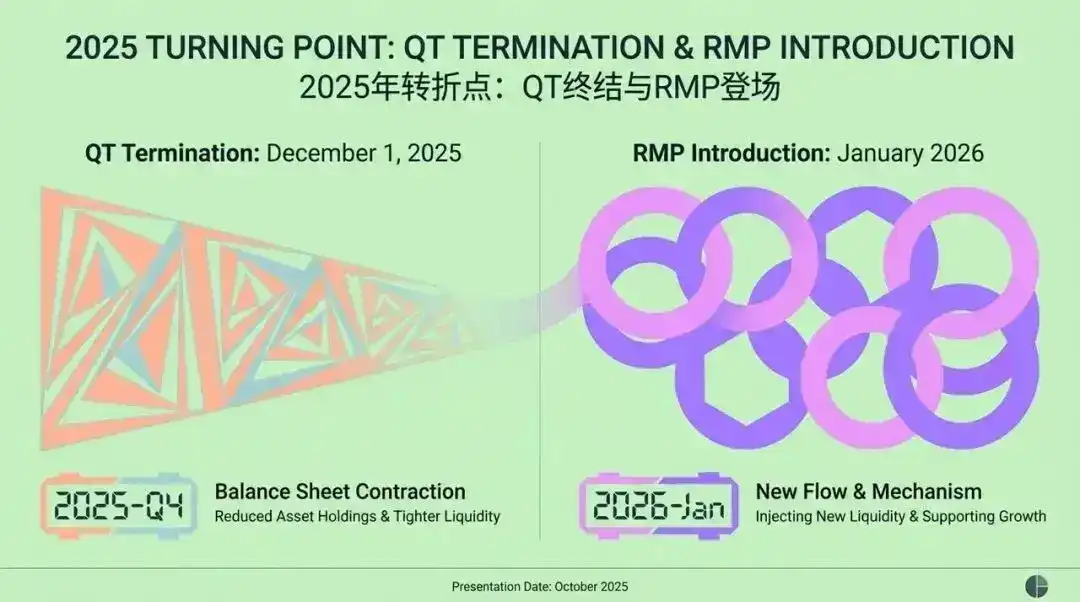
Federal Reserve’s Major Shift: From QT to RMP, How Will the Market Transform by 2026?
The article discusses the background, mechanism, and impact on financial markets of the Federal Reserve's introduction of the Reserve Management Purchases (RMP) strategy after ending Quantitative Tightening (QT) in 2025. RMP is regarded as a technical operation aimed at maintaining liquidity in the financial system, but the market interprets it as a covert easing policy. The article analyzes RMP's potential effects on risk assets, the regulatory framework, and fiscal policy, and provides strategic recommendations for institutional investors. Summary generated by Mars AI This summary was generated by the Mars AI model, and the accuracy and completeness of its content are still in the process of iterative improvement.
Rate Hike in Japan: Will Bitcoin Resist Better Than Expected?

Crucial Decision: Trump’s Final Interviews for Federal Reserve Chair Could Reshape Markets
Trending news
MoreCrypto prices
More





