
Trump-Linked WLFI Invests $10M in Falcon Stablecoin Push


- Falcon Finance raised $10M from WLFI to boost USDf and USD1 stablecoin integration.
- USD1 is now used as collateral within Falcon’s risk-adjusted stablecoin protocol.
- DWF Labs’ earlier $25M WLFI token buy deepens links between the two DeFi platforms.
Falcon Finance has announced a $10 million strategic investment from World Liberty Financial (WLFI), a decentralized finance platform linked to the USD1 stablecoin. The financing will improve technical integrations, enabling interoperability between Falcon’s USDf and WLFI’s USD1 stablecoin.
According to the announcement, the partnership will support smart contract modules, shared liquidity provisioning, and seamless cross-chain conversions. The investment comes shortly after Falcon surpassed $1 billion in circulating USDf supply, a milestone achieved within months of its public launch.
Falcon Finance is developing a synthetic dollar stablecoin, USDf, with a dynamic overcollateralization model that will accept a wide variety of collateral. Conversely, the USD1 issued by WLFI is fiat-backed and can be redeemed at 1:1 to U.S. dollars. These two stablecoin models are likely to complement each other, with more flexible options available to the institutional and retail users across DeFi protocols.
Andrei Grachev, Managing Partner at Falcon Finance, said the partnership affirms the project’s approach to digital dollar infrastructure. “WLFI’s network will accelerate adoption and strengthen our ability to serve the growing demand for efficient on-chain dollar instruments,” Grachev noted in a press statement.
USD1 Integration Strengthens Falcon’s Collateral System
One key goal of the collaboration is to introduce USD1 as a collateral channel into the Falcon ecosystem. This evolution has the potential to improve the risk profile of the USDf system by adding a fiat-backed asset to its synthetic protocol.
Zak Folkman, the co-founder of World Liberty Financial, has stressed the advantages of this alignment. “By combining Falcon’s innovative collateralization model with our fiat-backed design, we are building a more resilient and flexible digital dollar ecosystem,” Folkman stated.
Falcon Finance’s infrastructure will bridge capital, collateral, and liquidity between the on-chain and off-chain environments. The platform enables users to convert their assets, such as fiat-pegged and yield-bearing tokens, into marketable liquidity. Its modular architecture can accommodate the implementation of an extensive number of financial applications and deployment strategies.
USD1, issued by WLFI, is backed by reserves such as U.S. Treasury money market funds and dollar deposits. Its current market capitalization of $2.17 billion adds a layer of transparency and safety to Falcon’s collateral structure.
Related: Stablecoin USDf Rebounds, Falcon Details Risk Strategy
Controversial Backers and Rapid Growth Raise Scrutiny
Falcon Finance is affiliated with DWF Labs, a crypto investment company with aggressive trading strategies and no regulatory licensing. The USDf stablecoin, launched in February 2025, is backed by DWF’s capital and operations.
DWF Labs’ co-founder, Andrei Grachev, is also the founder of Falcon Finance. Previously, Grachev worked at Huobi Russia, where he arranged exclusive trading deals. DWF Labs also participated in WLFI’s investment process, spending $25 million in a private transaction on the project’s governance token in April 2025. Falcon’s new funding indicates an extension of that investment approach, with a focus on reciprocal growth within the DeFi ecosystem.
Despite WLFI’s ties to the family network of U.S. President Donald Trump, the platform presents itself as an open and non-centralized platform provider. It aims to increase institutional engagement in DeFi by offering compliant and collateral-backed stablecoin products.
The post Trump-Linked WLFI Invests $10M in Falcon Stablecoin Push appeared first on Cryptotale
Disclaimer: The content of this article solely reflects the author's opinion and does not represent the platform in any capacity. This article is not intended to serve as a reference for making investment decisions.
You may also like
A decade-long tug-of-war ends: "Crypto Market Structure Bill" sprints to the Senate
At the Blockchain Association Policy Summit, U.S. Senators Gillibrand and Lummis stated that the "Crypto Market Structure Bill" is expected to have its draft released by the end of this week, with revisions and hearings scheduled for next week. The bill aims to establish clear boundaries for digital assets by adopting a classification-based regulatory framework, clearly distinguishing between digital commodities and digital securities, and providing a pathway for exemptions for mature blockchains to ensure that regulation does not stifle technological progress. The bill also requires digital commodity trading platforms to register with the CFTC and establishes a joint advisory committee to prevent regulatory gaps or overlapping oversight. Summary generated by Mars AI. The accuracy and completeness of this summary, generated by the Mars AI model, is still being iteratively updated.
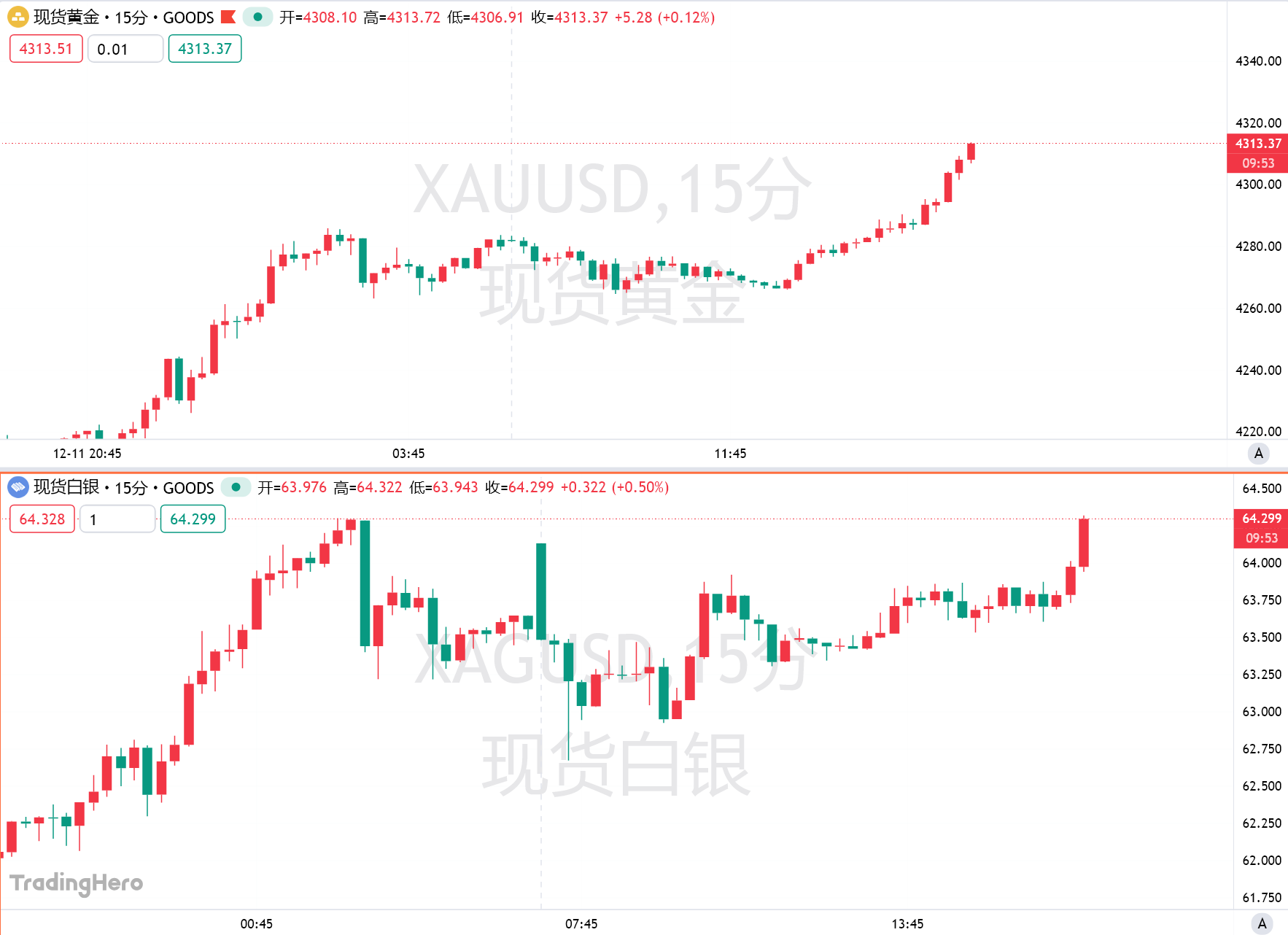
Gold surpasses the $4,310 mark—Is the "bull frenzy" returning?
Boosted by expectations of further easing from the Federal Reserve, gold has risen for four consecutive days. Technical indicators show strong bullish signals, but there remains one more hurdle before reaching a new all-time high.
Trend Research: Why Are We Still Bullish on ETH?
Against the backdrop of relatively accommodative expectations in both China and the US, which suppress asset downside volatility, and with extreme fear and capital sentiment not yet fully recovered, ETH remains in a favorable "buy zone."

Trending news
MoreCrypto prices
More





