
Tether’s blockchain sleuths help Brazil bust $5.7m cyber fraud ring

Brazilian authorities just pulled off a major crackdown on a sophisticated money laundering network with the help of Tether. The stablecoin giant’s real-time tracking tools led to the freeze of R$32 million in USDT, exposing how crypto forensics is outpacing traditional finance in hunting down dirty money.
On July 18, USDT issuer Tether announced its role in assisting Brazilian law enforcement to dismantle a sprawling cyber fraud operation, codenamed Operation Magna Fraus.
According to the press release, the São Paulo Public Prosecutor’s Office and Federal Police targeted a criminal syndicate accused of siphoning funds through Brazil’s PIX payment system before funneling them into USDT. Over two days of raids across Goiás and Pará, authorities seized R$5.5 million in crypto and froze another R$32 million ($5.7 million) in Tether, marking one of the country’s largest stablecoin-related busts to date.
How blockchain transparency is rewriting the rules of crime fighting
In addition to freezing R$32 million in USDT, Brazilian authorities also uncovered a private key linked to stolen crypto assets, a rare find in such operations. The key granted access to wallets holding illicit funds, which were promptly transferred into state custody.
According to São Paulo’s Public Prosecutor’s Office, these assets will be liquidated and placed under a judicial account managed by the Criminal Court Specialized in Tax Crimes, Criminal Organizations, and Money Laundering. This mechanism ensures any recovered value remains under the oversight of Brazil’s criminal justice system as proceedings move forward.
Tether’s involvement in Operation Magna Fraus is far from an outlier. Over the past year alone, the company has become a go-to ally for law enforcement agencies cracking down on illicit finance.
In June 2024, the U.S. Department of Justice credited Tether with helping seize $225 million in USDT tied to a high-profile fraud case. Months later, it aided the U.S. Secret Service in freezing $23 million linked to transactions on Garantex, a Russian exchange blacklisted for sanctions evasion, and another $9 million tied to the Bybit exchange hack.
To date, Tether has blocked over 5,000 wallets, with more than half of this figure in collaboration with U.S. authorities, signaling a seismic shift in how stablecoins are policed.
Disclaimer: The content of this article solely reflects the author's opinion and does not represent the platform in any capacity. This article is not intended to serve as a reference for making investment decisions.
You may also like
A decade-long tug-of-war ends: "Crypto Market Structure Bill" sprints to the Senate
At the Blockchain Association Policy Summit, U.S. Senators Gillibrand and Lummis stated that the "Crypto Market Structure Bill" is expected to have its draft released by the end of this week, with revisions and hearings scheduled for next week. The bill aims to establish clear boundaries for digital assets by adopting a classification-based regulatory framework, clearly distinguishing between digital commodities and digital securities, and providing a pathway for exemptions for mature blockchains to ensure that regulation does not stifle technological progress. The bill also requires digital commodity trading platforms to register with the CFTC and establishes a joint advisory committee to prevent regulatory gaps or overlapping oversight. Summary generated by Mars AI. The accuracy and completeness of this summary, generated by the Mars AI model, is still being iteratively updated.
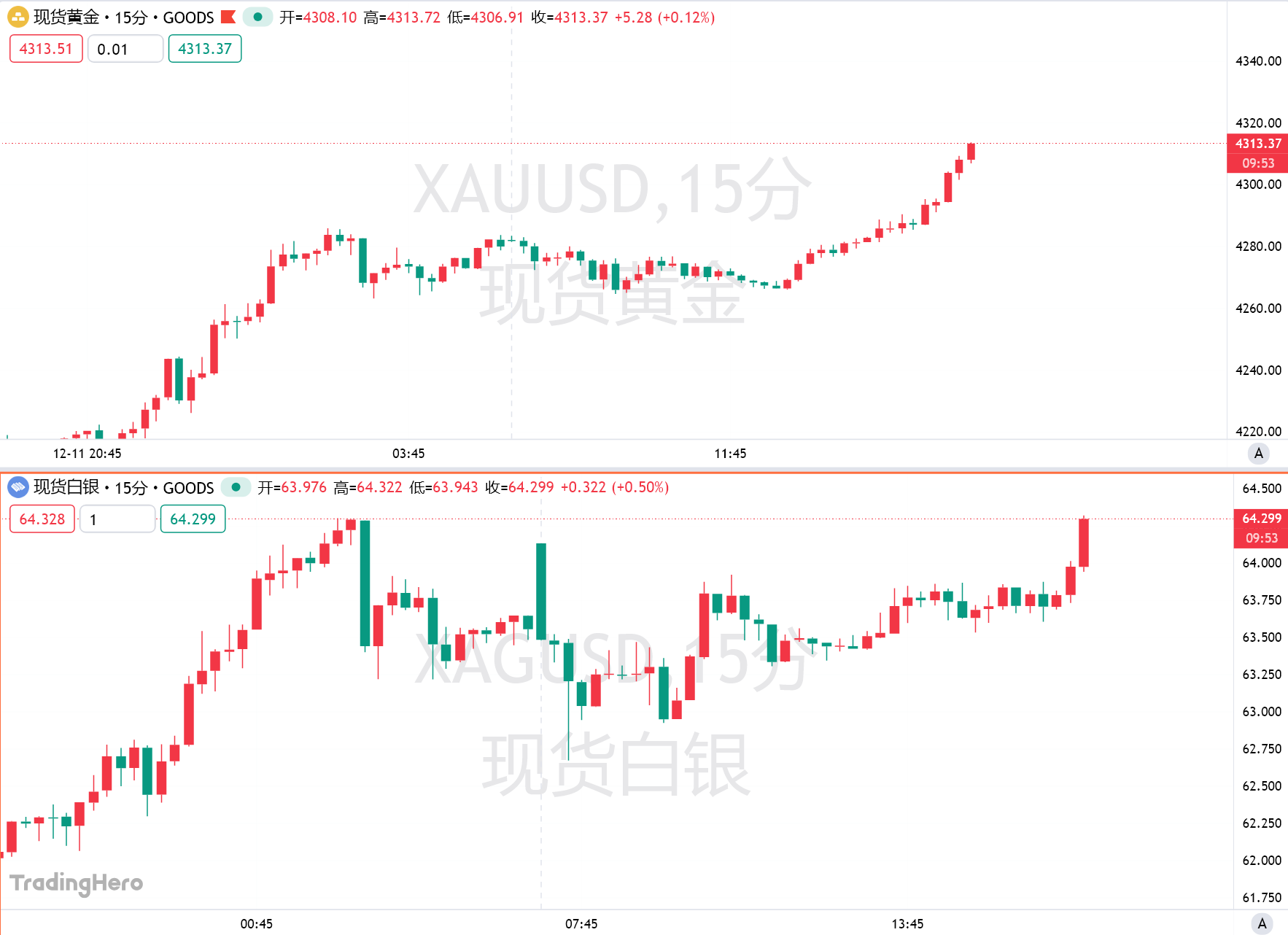
Gold surpasses the $4,310 mark—Is the "bull frenzy" returning?
Boosted by expectations of further easing from the Federal Reserve, gold has risen for four consecutive days. Technical indicators show strong bullish signals, but there remains one more hurdle before reaching a new all-time high.
Trend Research: Why Are We Still Bullish on ETH?
Against the backdrop of relatively accommodative expectations in both China and the US, which suppress asset downside volatility, and with extreme fear and capital sentiment not yet fully recovered, ETH remains in a favorable "buy zone."

Trending news
MoreCrypto prices
More





