
Rep. French Hill confident House has votes to pass three different crypto bills

Quick Take Rep. French Hill said he believes the House has the votes required to advance key crypto legislation, such as the Senate’s GENIUS Act, a market structure bill, and a measure that would limit the federal government’s ability to create a central bank digital currency. Hill’s comments follow President Trump saying the day before that there is enough support to pass the GENIUS Act.

Rep. French Hill said on Wednesday that he believes the House not only has the votes required to pass the stablecoin-centric GENIUS Act, but also other crypto-related legislation, such as a market structure bill and a measure that would limit the federal government's ability to create a central bank digital currency.
Hill's comments, made during an interview with CNBC , follow President Donald Trump's statement on Tuesday that there is enough support to pass the GENIUS Act, which had failed to move forward to a final vote in the House. The GENIUS Act, if passed, will establish rules like requiring stablecoins to be fully backed by U.S. dollars or similarly liquid assets, mandate annual audits for issuers with a market capitalization exceeding $50 billion, and form guidelines for foreign issuers.
"I believe that we do have the votes to advance the Senate GENIUS Act," Hill said Wednesday. "We also have the House's work on market structure, which we've worked through the House Ag committee and the House Financial Services committee; strong bipartisan support for that bill."
Hill then added: "Whip Tom Emmer of Minnesota ... has his bill that blocks the federal government from creating a central bank digital currency through the Fed unless it's done with the specific authorization through Congress ... I believe the House has the votes for those three measures."
In what has been billed as "Crypto Week," Congress has been tasked with potentially voting on and passing both the GENIUS Act and the Digital Asset Market Clarity Act, as well as considering a market structure bill that takes a whole-of-crypto approach and would create a clear regulatory framework for crypto.
The Clarity Act would designate how the U.S. Securities and Exchange Commission and the Commodity Futures Trading Commission will regulate crypto. The bill also requires digital asset firms to provide retail financial disclosures and segregate corporate and customer funds.
Disclaimer: The content of this article solely reflects the author's opinion and does not represent the platform in any capacity. This article is not intended to serve as a reference for making investment decisions.
You may also like
When "decentralization" is abused, Gavin Wood redefines the meaning of Web3 as Agency!

A decade-long tug-of-war ends: "Crypto Market Structure Bill" sprints to the Senate
At the Blockchain Association Policy Summit, U.S. Senators Gillibrand and Lummis stated that the "Crypto Market Structure Bill" is expected to have its draft released by the end of this week, with revisions and hearings scheduled for next week. The bill aims to establish clear boundaries for digital assets by adopting a classification-based regulatory framework, clearly distinguishing between digital commodities and digital securities, and providing a pathway for exemptions for mature blockchains to ensure that regulation does not stifle technological progress. The bill also requires digital commodity trading platforms to register with the CFTC and establishes a joint advisory committee to prevent regulatory gaps or overlapping oversight. Summary generated by Mars AI. The accuracy and completeness of this summary, generated by the Mars AI model, is still being iteratively updated.
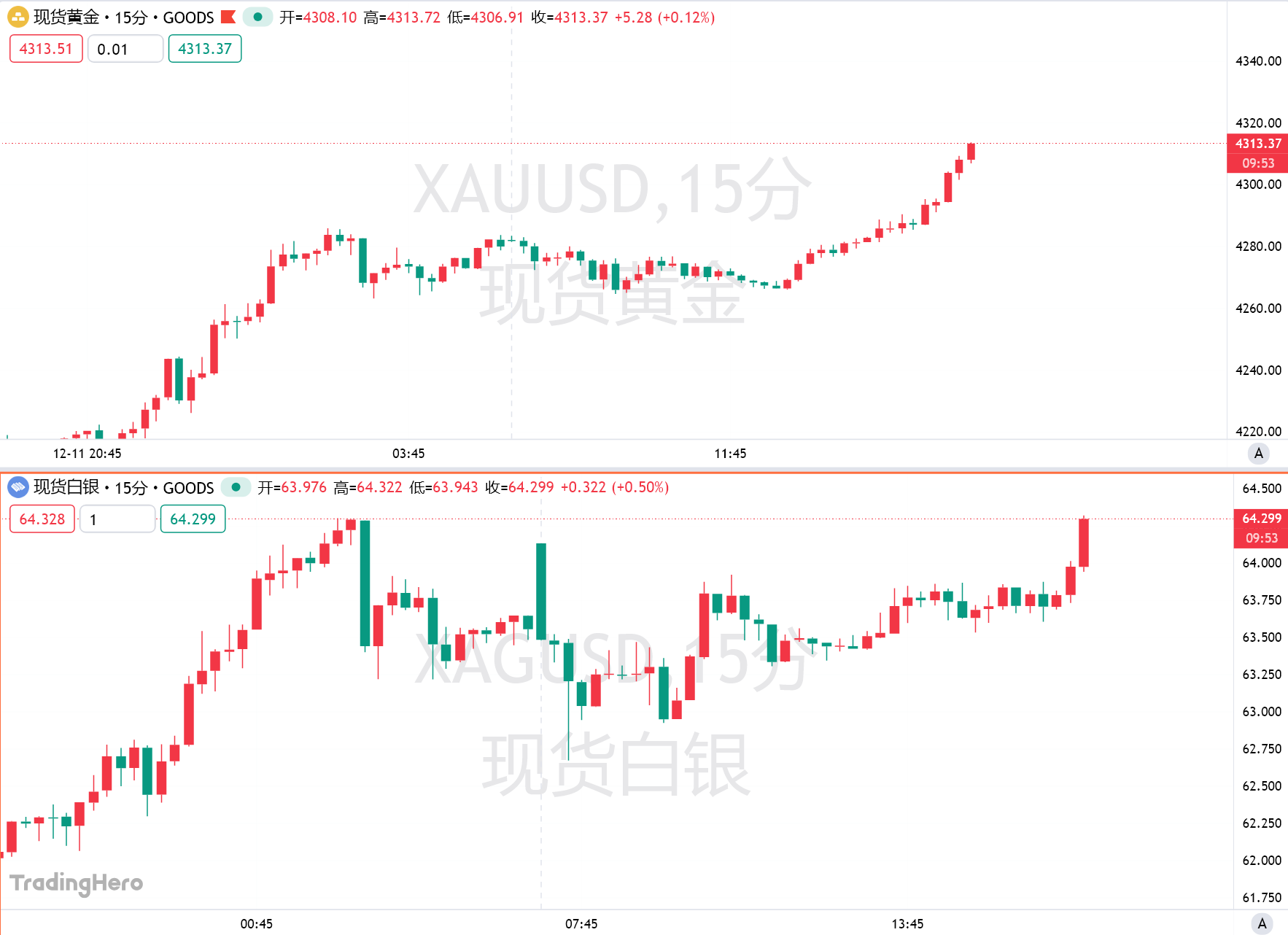
Gold surpasses the $4,310 mark—Is the "bull frenzy" returning?
Boosted by expectations of further easing from the Federal Reserve, gold has risen for four consecutive days. Technical indicators show strong bullish signals, but there remains one more hurdle before reaching a new all-time high.
Trending news
MoreCrypto prices
More





