
Inside the Mind of BloFin’s CEO: A Roadmap Beyond Crypto Speculation

When you first speak with Matt, CEO of BloFin, it’s immediately clear. This isn’t just another exchange founder chasing market cycles. His focus isn’t on hype, but on infrastructure. And not just any infrastructure, but the kind that redefines how value moves across the internet. “We’re not building just an exchange,” he tells me. “We’re …
When you first speak with Matt, CEO of BloFin, it’s immediately clear. This isn’t just another exchange founder chasing market cycles. His focus isn’t on hype, but on infrastructure. And not just any infrastructure, but the kind that redefines how value moves across the internet.
“We’re not building just an exchange,” he tells me. “We’re building infrastructure for the free movement of value.”
It’s a bold statement, but one that’s increasingly relevant in an industry where speculation often overshadows substance. For Matt, the real transformation isn’t in trading volumes or “memecoin” rallies.It’s really about how digital assets, especially stablecoins, are changing the whole way global finance works.
From Content to Capital: The Next Internet
Just as the early internet democratized access to information, Matt believes we’re now entering a new era. One where access to capital becomes equally open.
“The next internet isn’t about content. It’s about capital,” he says.
He draws a parallel between what blogs did to newspapers, and what stablecoins are now doing to the US dollar. Suddenly, a traditionally gatekept asset tied to banks, borders, and bureaucracy is becoming programmable, portable, and accessible to anyone with an internet connection.
“Stablecoins aren’t a product innovation, they’re a redefinition of who gets access to financial power.”
In this vision, stablecoins serve not only as on-ramps to crypto but as the foundation for a programmable financial system, one where sending money, earning yield, or paying for goods can all happen in a single, seamless experience.
Trading and Payments: No Longer Separate Worlds
Historically, trading was about speculation. Payments were about utility. One was high risk, the other mundane. But that division is rapidly collapsing.
Matt sees this shift not as an accident, but as a reflection of user expectations in a digitized world.
“People don’t want to think in silos like ‘investment’ vs. ‘remittance’ vs. ‘purchase.’ They just want things to work—fast, safe, and without friction.”
In this new paradigm, users: hold stablecoins, earn yield, swap into digital assets, send money abroad, pay with a tap.
All through a single interface. Behind the scenes, there’s liquidity, custody, compliance, and risk management, but to the user, it’s invisible. That, says Matt, is where the future is heading.
“The future of trading and payments isn’t about flashy interfaces. It’s about infrastructure that disappears into the background.”
Building the Infrastructure of the Next Decade
When asked what kind of infrastructure the industry needs, Matt doesn’t hesitate. He outlines a clear vision, one that’s ambitious, yet grounded:
- Stablecoin-native, not bank-native
- Cross-border by default, not exception
- Modular, compliant, and transparent—without compromising usability
- Inclusive of both traditional and decentralized assets, in a unified user experience
“This isn’t about replacing banks or regulators,” he explains. “It’s about building something parallel, more efficient, more trustworthy, and built for today’s user.”
Five Systems We Must Build
While much of the industry chases the next token narrative, Matt’s eyes are on a bigger prize. Over the next ten years, he believes these five systems will define whether crypto truly delivers:
- Global, high-trust trading platforms powered by stablecoins
- Borderless financial accounts—wallets with safe custodial layers
- Unified payment and settlement networks across fiat and crypto
- Stablecoin ecosystems that support real-world use like payroll and trade
- Crypto-native banking infrastructure for savings, credit, and asset management
“These aren’t buzzwords,” he says. “They’re survival tools, especially for people in markets the traditional system ignores.”
Principles in a Fragmented World
In an era where narratives change weekly and regulations tighten globally, Matt argues that what matters most is what companies stand for when things get hard.
“Compliance isn’t a constraint, it’s a moat,” he says. “Trust is the rarest asset in crypto. You either earn it every day, or you lose it forever.”
He talks candidly about internal culture, how real values show up under pressure, not in mission statements.
“Systems over slogans. Execution over announcements. That’s how you build something that lasts.”
A Final Word: Freedom Through Function
As our conversation winds down, Matt circles back to a core principle — freedom.
Crypto was born from a desire for freedom. But, as he notes, freedom without function is just theory. What we need now is infrastructure that enables people to do things easily, securely, and globally.
“We want to give people the freedom to trade without friction. To earn, send, and save without permission. To hold value in a system that doesn’t collapse when borders close.”
It’s a big vision. But if BloFin’s CEO is right, it’s also an inevitable one.
“That’s the system we’re building. And if you’re building it too—we’re already on the same team.”
Disclaimer: The content of this article solely reflects the author's opinion and does not represent the platform in any capacity. This article is not intended to serve as a reference for making investment decisions.
You may also like
ETFs are being launched in clusters, but coin prices are falling. Can ETF approval still be considered good news?
On one hand, Vanguard has opened Bitcoin ETF trading, while on the other hand, CoinShares has withdrawn its applications for XRP, Solana Staking, and Litecoin ETFs, highlighting a significant divergence in institutional attitudes toward ETFs for different cryptocurrencies.

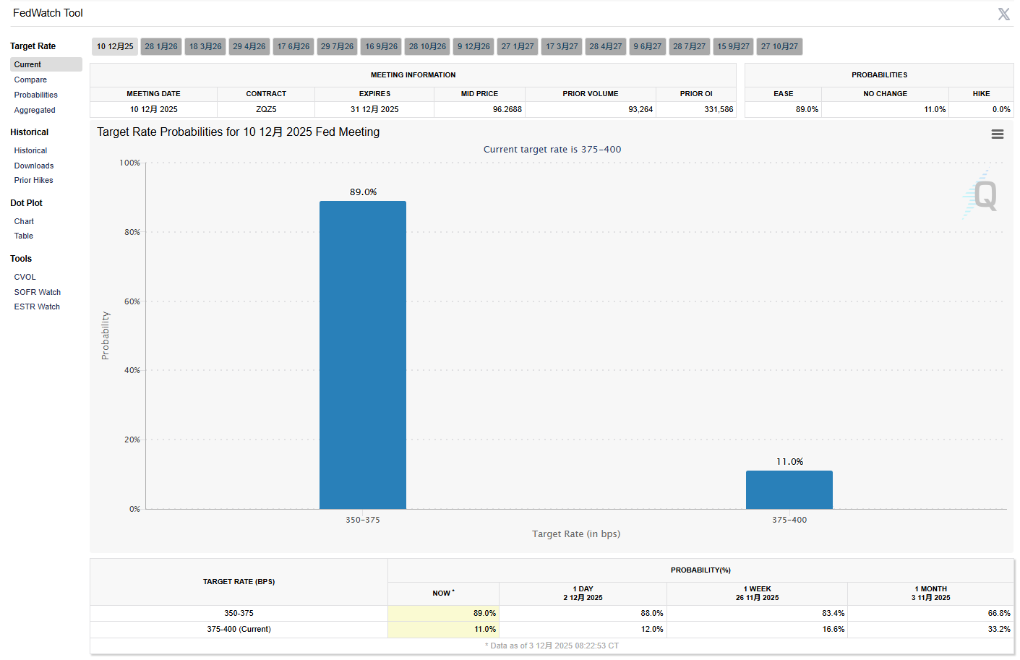
ADP employment data "unexpectedly weak", is a Federal Reserve rate cut imminent?
Glassnode Report: Current Structure Strikingly Similar to Pre-Crash 2022, Beware of a Key Range!

Coinglass report interprets Bitcoin's "life-or-death line": 96K becomes the battleground between bulls and bears—Is the ETF capital withdrawal an opportunity or a trap?
Bitcoin's price remains stable above the real market mean, but the market structure is similar to Q1 2022, with 25% of supply currently at a loss. The key support range is between $96.1K and $106K; breaking below this range will increase downside risk. ETF capital flows are negative, demand in both spot and derivatives markets is weakening, and volatility in the options market is underestimated. Summary generated by Mars AI. The accuracy and completeness of this summary are still being iteratively updated by the Mars AI model.

Trending news
MoreCrypto prices
More






