
How Much Will Each Investor Get From the Bankrupt Crypto Exchange Mt. Gox?
10 years after the collapse of Mt. Gox, the crypto exchange is again one of the most discussed topics in the crypto space.
As of 4:00 a.m. on the night of July 4-5, Mt. Gox’s portfolio had transferred over $2 billion, signaling the beginning of the investor compensation plan.
However, fear of a massive sell-off took over the market, leading to a significant drop in the price of Bitcoin . The $9 billion to be distributed by the bankrupt crypto exchange is one of the main factors behind the current panic. But are these fears justified? And the more important question – exactly how much will Mt. Gox investors be compensated?
Are investors right to fear a market crash?
Investors must choose between fiat and crypto payouts. All investors’ cash balances will be paid out 100%. However, those who wanted to sell may have already done so since the payout of fiat currencies began in April.
Therefore, those who will receive BTC are people who probably won’t sell them in advance because if they wanted to, they would have chosen to receive fiat.
On top of that, not all payments will be made at once as there are 2 types of payments: ELSP (they will get everything now) and FP (they will get a small percentage now and the rest in a few months/years).
ELSP payments will also not be distributed all at once; they will probably be made over several months (between July and October). Therefore, even if many people decide to sell, there will not be a huge pressure to sell.
Also, the payments will be spread across different exchanges, further alleviating the negative impact of potential sales.
How much money will Mt. Gox investors get?
The plaintiffs do NOT have as much profit as everyone thinks. Many people believe that those affected by Mt. Gox will receive huge profits and therefore sell and crash the market.
It doesn’t. When Mt.Gox ceased trading in February 2014, the price was $850. Anecdotally, people who will be refunded BTC tokens will only get about 15% of what they lost, which means 1 goxBTC = 0.15 BTC -> 1 BTC = 6.67 goxBTC. Therefore, the effective price at which their assets were blocked is ~$8,300.
In other words, the proportion of the compensation does not change regardless of the current price of Bitcoin.
Conclusion
However, this is not confirmed information and these percentages are subject to change. However, it is certain that if an investor had 10 BTC at the time of bankruptcy, they would not receive the equivalent amount (~$553,000) at current prices.
While some may feel that this compensation is unfair given the current price of cryptocurrency, the liquidators of Mt. Gox have come up with the best possible plan that benefits all parties. The investors’ money is there and anyone who has filed a claim for compensation will be compensated.
The CryptoDnes team contacted the law firm of Morri Hamada Matsumoto, which represents some of the Mt. Gox investors, but due to a conflict of interest they declined to comment on the situation.
We also attempted to contact attorney Nobuaki Kobayashi, who represents the exchange, but he had not commented on the compensation plan as of this writing.
Disclaimer: The content of this article solely reflects the author's opinion and does not represent the platform in any capacity. This article is not intended to serve as a reference for making investment decisions.
You may also like
A decade-long tug-of-war ends: "Crypto Market Structure Bill" sprints to the Senate
At the Blockchain Association Policy Summit, U.S. Senators Gillibrand and Lummis stated that the "Crypto Market Structure Bill" is expected to have its draft released by the end of this week, with revisions and hearings scheduled for next week. The bill aims to establish clear boundaries for digital assets by adopting a classification-based regulatory framework, clearly distinguishing between digital commodities and digital securities, and providing a pathway for exemptions for mature blockchains to ensure that regulation does not stifle technological progress. The bill also requires digital commodity trading platforms to register with the CFTC and establishes a joint advisory committee to prevent regulatory gaps or overlapping oversight. Summary generated by Mars AI. The accuracy and completeness of this summary, generated by the Mars AI model, is still being iteratively updated.
Gold surpasses the $4,310 mark—Is the "bull frenzy" returning?
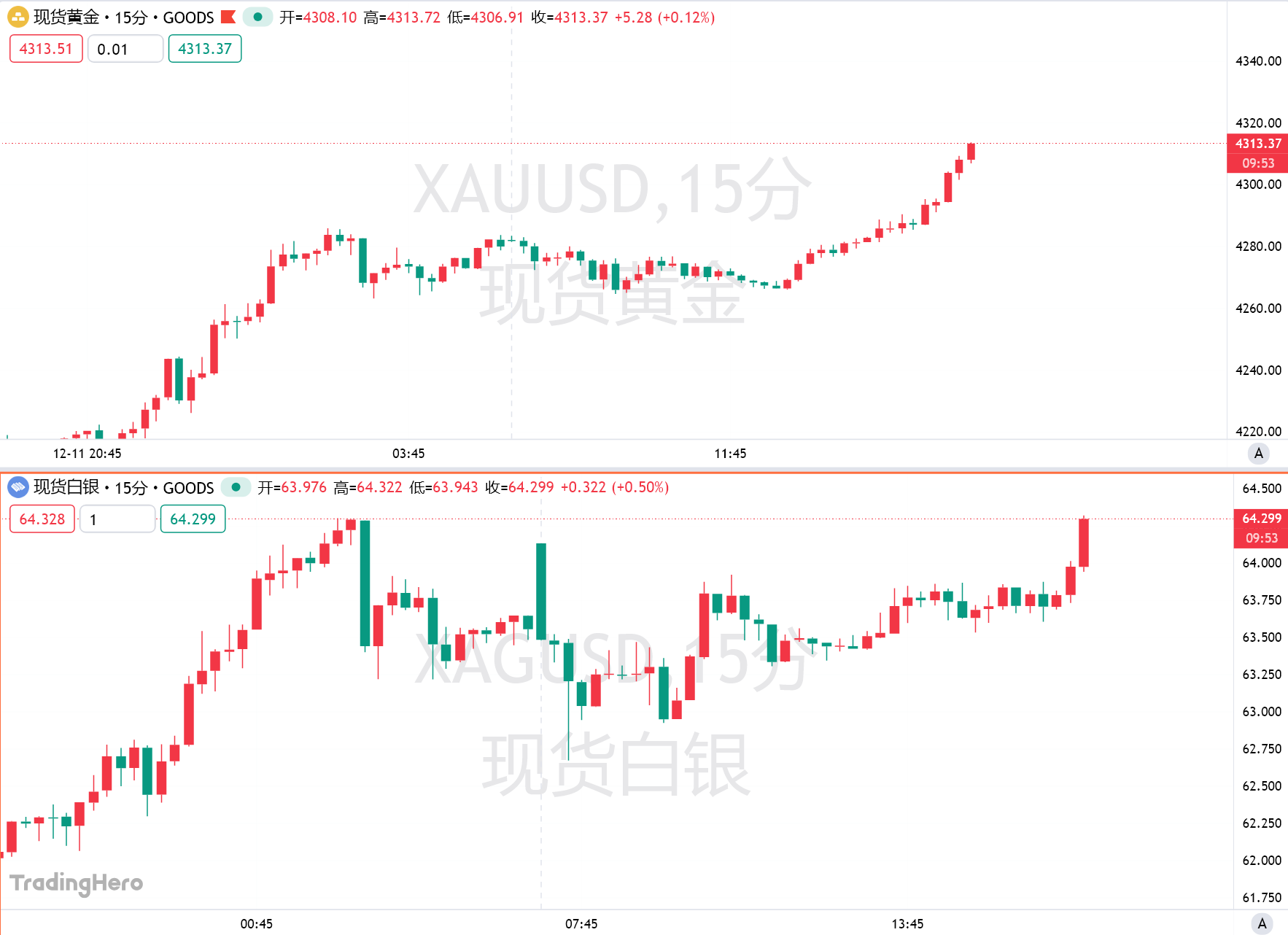
Boosted by expectations of further easing from the Federal Reserve, gold has risen for four consecutive days. Technical indicators show strong bullish signals, but there remains one more hurdle before reaching a new all-time high.
Trend Research: Why Are We Still Bullish on ETH?
Against the backdrop of relatively accommodative expectations in both China and the US, which suppress asset downside volatility, and with extreme fear and capital sentiment not yet fully recovered, ETH remains in a favorable "buy zone."

Trending news
MoreCrypto prices
More





