
OP Mainnet tests 'fault proofs' in bid to strengthen network security

OP Labs released fault proofs on the OP Sepolia testnet, planning future implementation on the OP Mainnet. Fault proofs serve as security mechanism for Layer 2 networks, enabling users to contest incorrect transactions.
“Open-source, feature-complete fault proofs are live on OP Sepolia. With permissionless validation, anyone can participate in the system without an allowlist,” the firm stated.
Fault proofs serve as security mechanism for Ethereum Layer 2 networks, enabling users to contest transactions that may be fraudulent or incorrect. They are critical in ensuring that off-chain transaction processing remains free from manipulation.
The OP Mainnet currently lacks fault proofs, a cause for concern regarding the network’s security and decentralization. This means that on the network, users must trust that the block producers submit correct Layer 1 state roots. Furthermore, the network relies on a security council of members for backups, which could become a central point of failure.
Now, the project is also moving toward implementing them, having already used them on its Sepolia testnet.
OP Mainnet uses scaling solution called optimistic rollups for its operation. This technology aggregates Ethereum transactions on a secondary off-chain layer and allows for cheaper transaction processing to address scalability concerns on Ethereum.
OP Labs, the developer of OP Mainnet, also operates a development software stack known as the OP Stack, which enables developers to launch their own Layer 2 blockchains. Crypto exchange giant Coinbase developed its blockchain, called Base , using the OP Stack.
Most optimistic rollup blockchains have yet to decentralize their networks with the help of incorporating fault proofs and maintaining decentralized contract upgrades. That said, OP Mainnet’s closest competitor, Arbitrum , already offers fault proofs.
Disclaimer: The content of this article solely reflects the author's opinion and does not represent the platform in any capacity. This article is not intended to serve as a reference for making investment decisions.
You may also like
A decade-long tug-of-war ends: "Crypto Market Structure Bill" sprints to the Senate
At the Blockchain Association Policy Summit, U.S. Senators Gillibrand and Lummis stated that the "Crypto Market Structure Bill" is expected to have its draft released by the end of this week, with revisions and hearings scheduled for next week. The bill aims to establish clear boundaries for digital assets by adopting a classification-based regulatory framework, clearly distinguishing between digital commodities and digital securities, and providing a pathway for exemptions for mature blockchains to ensure that regulation does not stifle technological progress. The bill also requires digital commodity trading platforms to register with the CFTC and establishes a joint advisory committee to prevent regulatory gaps or overlapping oversight. Summary generated by Mars AI. The accuracy and completeness of this summary, generated by the Mars AI model, is still being iteratively updated.
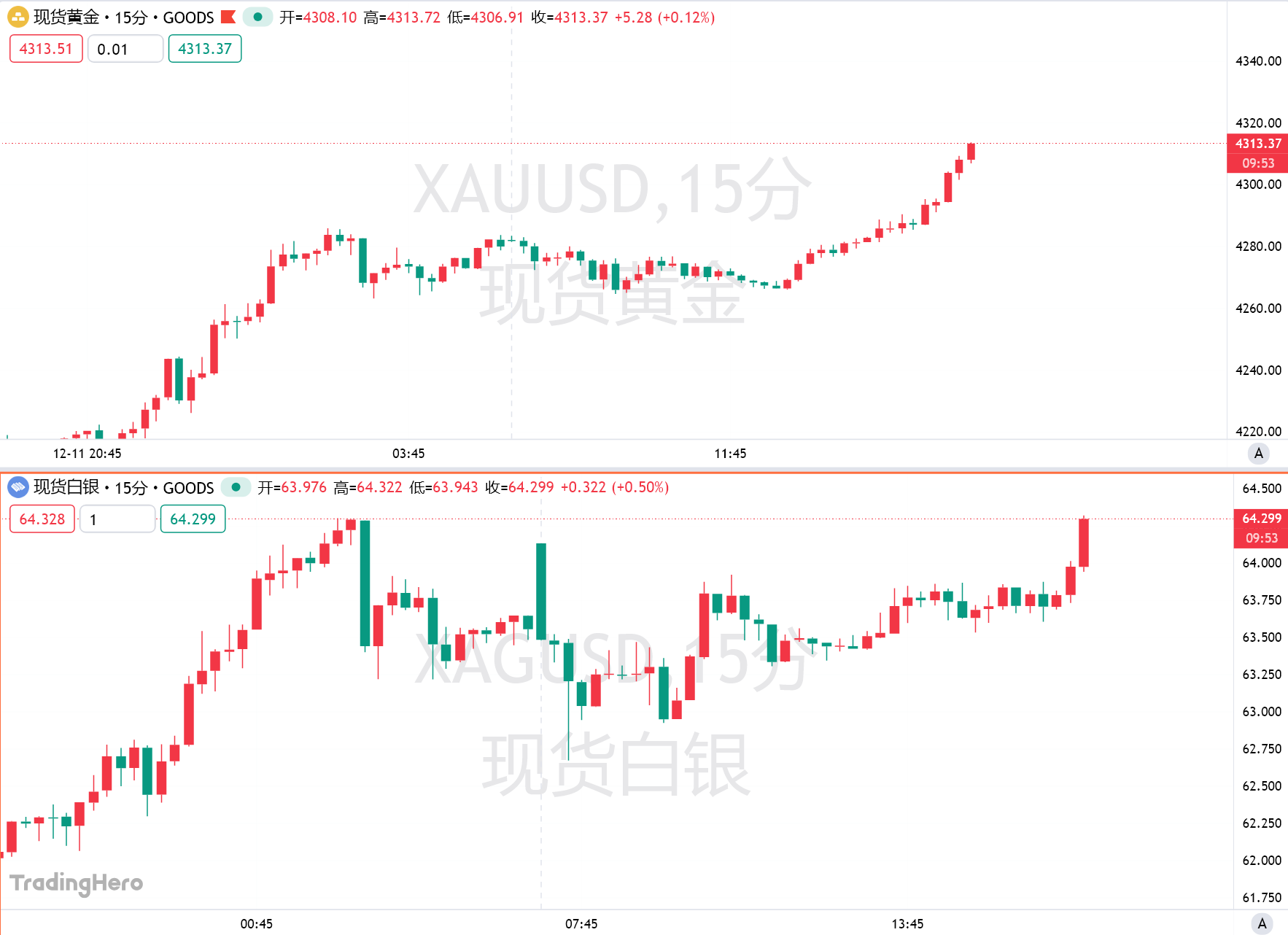
Gold surpasses the $4,310 mark—Is the "bull frenzy" returning?
Boosted by expectations of further easing from the Federal Reserve, gold has risen for four consecutive days. Technical indicators show strong bullish signals, but there remains one more hurdle before reaching a new all-time high.
Trend Research: Why Are We Still Bullish on ETH?
Against the backdrop of relatively accommodative expectations in both China and the US, which suppress asset downside volatility, and with extreme fear and capital sentiment not yet fully recovered, ETH remains in a favorable "buy zone."

Trending news
MoreCrypto prices
More





