
Gerber Kawasaki advisor says a lot of clients are interested in spot bitcoin ETFs

Many Gerber Kawasaki clients have demonstrated interest in the new spot bitcoin ETFs.Traditional financial institutions and wealth platforms are still reviewing spot bitcoin ETFs before approving and recommending to retail clients.
"A lot of them are interested," Sifling told The Block. "As long as they’re comfortable with that risk profile, I think it’s just another tool for the toolbox as far as portfolio management is concerned."
Since they began trading last month, spot bitcoin ETFs have generated about $40 billion in cumulative trading volume with the products offered by BlackRock and Fidelity leading the way in terms of capital inflows, according to CoinShares . Grayscale’s converted fund has registered the most total trading volume, but a significant amount of the trading has included investors cashing out .
With more than $2.3 billion in assets under management, Gerber Kawasaki recently made a modest investment in BlackRock’s IBIT spot bitcoin ETF through its AdvisorShares ETF , which is managed separately, according to Sifling. Gerber Kawasaki purchased 1,000 shares of BlackRock’s IBIT spot bitcoin ETF, worth about $28,000 as of Tuesday, according to BlackRock .
Ross Gerber, the firm’s co-founder, said by email that he chose to buy shares in BlackRock’s spot bitcoin ETF because it appeared to have "more liquidity" and charges 0.25%. BlackRock charges one of the lowest expense ratios among all rival spot bitcoin ETFs.
Ongoing approval process
On the client side, investing larger sums of client capital into the new spot bitcoin ETFs, is still somewhat contingent on getting the necessary approvals, said Sifling.
"With custodians, like we use LPL Financial or [Charles] Schwab, whenever there’s new ETFs on the market, generally they have to go through an approval process," said Sifling. "As far as LPL is concerned, and that’s one of our main custodians, they are also still going through a process of actually approving all these things based on the rules that they give. Some of it’s time-based, some of its assets-under-management-based."
Franklin Templeton, which on top of its core business of partnering with financial advisors and wealth platforms launched its own spot bitcoin ETF, recently echoed Sifling’s sentiments regarding the due diligence.
"You have a brand new product that has never existed before. These platforms are doing their fiduciary responsibilities to filter through those providers and find differentiations that end up making sure that their clients have the best long-term results … that’s the process that is occurring right now," Franklin Templeton Head of Digital Assets Roger Bayston told The Block.
How issuers hold bitcoin is important
Sifling also said he believes security will be a critical component to consider when deciding what spot bitcoin ETF to purchase. He said he wants to better understand how securely the issuers are holding the bitcoin they purchase.
"There’s probably going to be differences in security," he said. "We’ve all heard the term ‘Not your keys, not your crypto,' so that’s one thing I’m interested in, to see how these ETF companies are going to be securing [the bitcoin] and I haven’t found a lot of research on that yet."
As of last week, the nine new spot bitcoin ETFs, excluding Grayscale’s converted fund, had purchased over 200,000 BTC +5.21% .
Sifling said from what he's learned the settlement process once new capital flows into an ETF and then bitcoin is bought appears to be "pretty complicated."
"I’ve talked to a few wholesalers that are running ETF programs," he said. "[But] the security process is obviously a lot harder to get out of people … because the more they talk about their security to the public the easier it is to be taken advantage of."
Disclaimer: The content of this article solely reflects the author's opinion and does not represent the platform in any capacity. This article is not intended to serve as a reference for making investment decisions.
You may also like
A decade-long tug-of-war ends: "Crypto Market Structure Bill" sprints to the Senate
At the Blockchain Association Policy Summit, U.S. Senators Gillibrand and Lummis stated that the "Crypto Market Structure Bill" is expected to have its draft released by the end of this week, with revisions and hearings scheduled for next week. The bill aims to establish clear boundaries for digital assets by adopting a classification-based regulatory framework, clearly distinguishing between digital commodities and digital securities, and providing a pathway for exemptions for mature blockchains to ensure that regulation does not stifle technological progress. The bill also requires digital commodity trading platforms to register with the CFTC and establishes a joint advisory committee to prevent regulatory gaps or overlapping oversight. Summary generated by Mars AI. The accuracy and completeness of this summary, generated by the Mars AI model, is still being iteratively updated.
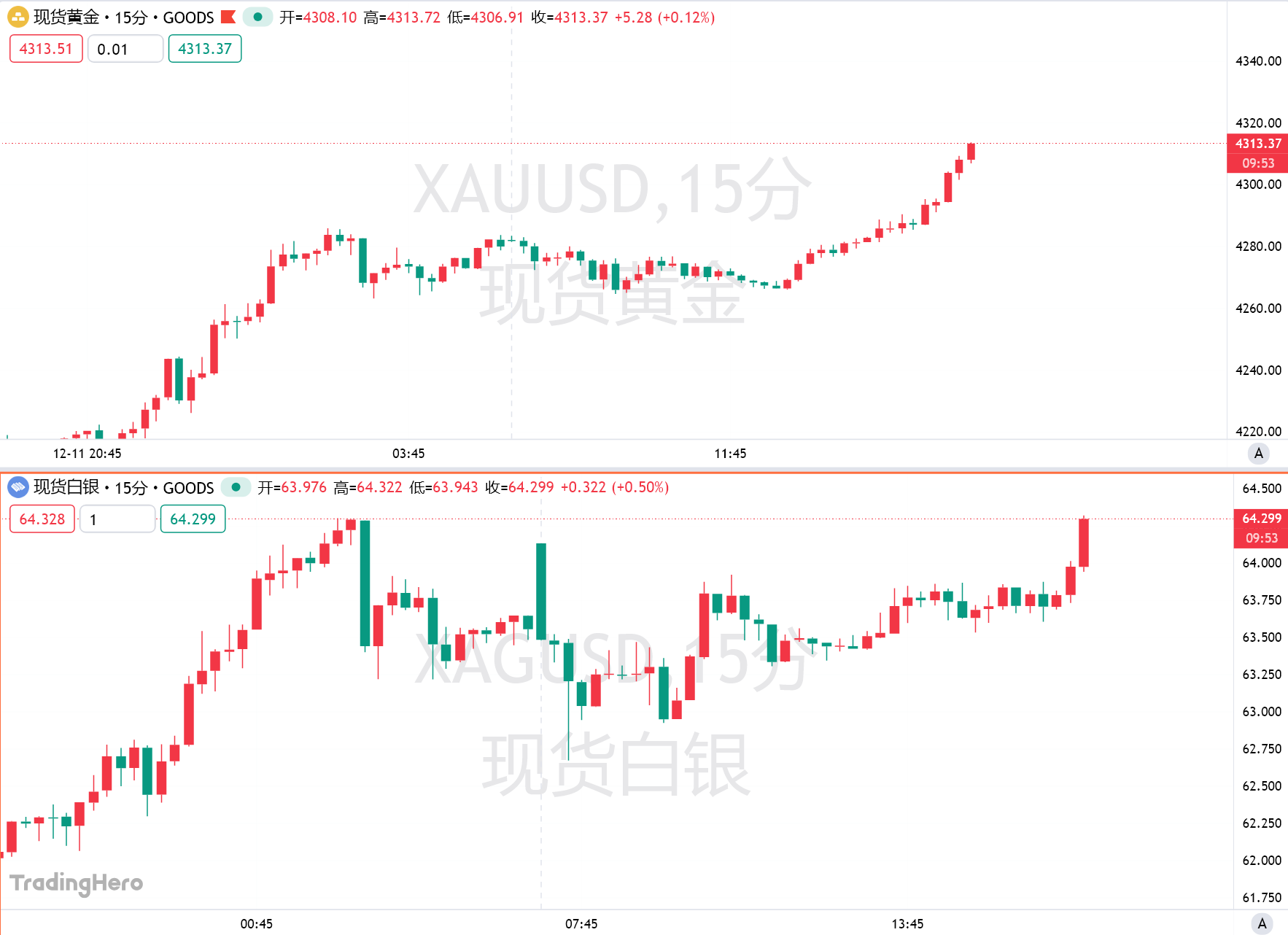
Gold surpasses the $4,310 mark—Is the "bull frenzy" returning?
Boosted by expectations of further easing from the Federal Reserve, gold has risen for four consecutive days. Technical indicators show strong bullish signals, but there remains one more hurdle before reaching a new all-time high.
Trend Research: Why Are We Still Bullish on ETH?
Against the backdrop of relatively accommodative expectations in both China and the US, which suppress asset downside volatility, and with extreme fear and capital sentiment not yet fully recovered, ETH remains in a favorable "buy zone."

Trending news
MoreCrypto prices
More





