Bitcoin Updates: Fed’s Softer Stance Supports Both Economic Expansion and Inflation—Positive Momentum for Crypto
- The U.S. Federal Reserve cut rates by 25 bps to 3.75%-4.00% on October 29, 2025, ending quantitative tightening by December 1, easing liquidity constraints. - Crypto markets initially dipped post-announcement but gained analyst support as lower rates and weaker dollar historically boost Bitcoin and Ethereum as hedges. - Institutional crypto demand remained strong with Coinbase reporting 2,772 BTC inflows and Bitcoin ETFs seeing net inflows, while Tether's USDT supply surpassed $183 billion. - The Fed's "
The U.S. Federal Reserve's move to lower interest rates by 25 basis points on October 29, 2025, had a significant impact on global financial markets, with digital assets such as
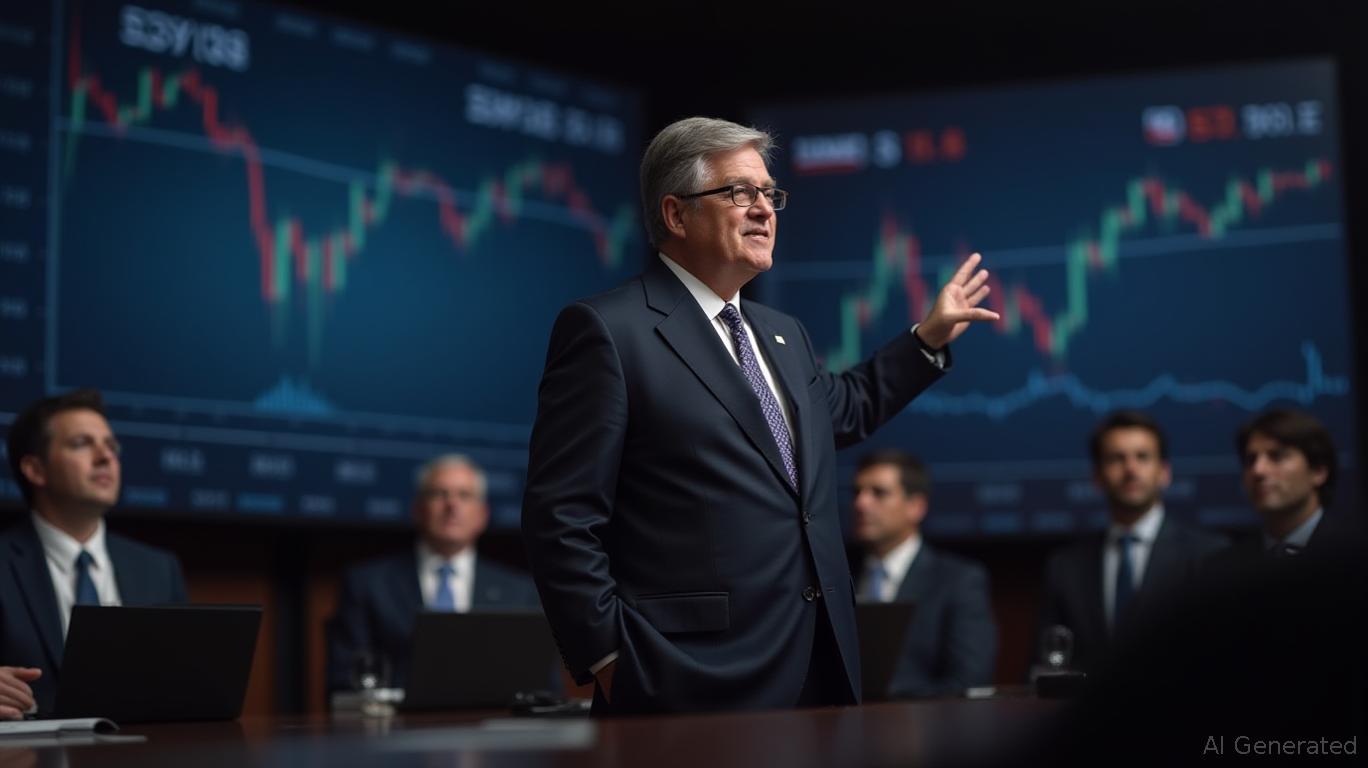
Prior to the announcement, crypto markets experienced heightened volatility and initially dropped as investors reacted by "selling the news," according to
The Fed's latest policy reflects mounting worries about a slowing job market and economic headwinds, even as inflation approaches the 2% target. With unemployment climbing to 4.3% and some economic indicators delayed due to a government shutdown, the central bank opted for a "measured and adaptable" easing strategy, according to analysts at
Institutional interest in cryptocurrencies remained strong.
Looking forward, investors will pay close attention to the Fed's December meeting for indications about the trajectory of further rate reductions. If a third cut occurs in 2025 alongside the official end of QT, it could further boost crypto through increased liquidity. Nevertheless, potential risks persist. A shift back to a more hawkish policy or unexpected inflation could spark renewed volatility, especially as geopolitical and regulatory uncertainties linger.
At present, the Fed's recent moves have strengthened the perception of a supportive policy environment, positioning crypto to benefit from lower yields and a weaker dollar. As one analyst remarked, "The Fed is no longer solely prioritizing inflation control but is now also addressing economic vulnerabilities—a change that may provide fresh momentum for Bitcoin and Ethereum."
Disclaimer: The content of this article solely reflects the author's opinion and does not represent the platform in any capacity. This article is not intended to serve as a reference for making investment decisions.
You may also like
Unlocking Potential: The Impact of Targeted Grants and Public-Private Partnerships on Transforming Medium-Sized Real Estate Markets in the U.S.
- U.S. mid-sized cities leverage infrastructure investment and PPPs to drive commercial real estate growth, outpacing large cities in value creation. - Federal programs like IIJA enable upgrades in transportation and broadband, reducing business costs while boosting property values in Tampa and Grand Rapids. - PPPs in cities like Montgomery County combine affordable housing incentives with CRE development, balancing equity and economic resilience through data-driven strategies. - Market projections show $2
Modern Monetary Theory and the Transformation of International Markets: Inflation Trends, Asset Movements, and Currency Shifts in 2025
- Modern Monetary Theory (MMT) reshapes fiscal-monetary coordination, linking government spending to inflation and resource constraints in post-pandemic economies. - Central banks face challenges anchoring inflation expectations as CPI lags asset market pressures, risking self-fulfilling inflationary spirals amid eroding public trust. - Currency valuations shift with fiscal stimulus (e.g., euro's 2025 rebound) and U.S. dollar uncertainty, compounded by gold reserve diversification and rising bond yields. -

Grasping the COAI Price Decline: Key Factors and What It Means for Investors
- COAI Index, a crypto AI benchmark, fell 88% in 2025 due to governance failures, regulatory ambiguity, and market panic. - C3.ai's $116M loss, founder resignation, and lawsuits exposed systemic governance risks in AI crypto firms. - Regulatory "gray zone" over AI tokens and conflicting agency rules deterred institutional investment in the sector. - Volatile COAI prices ($44.9 to $2-3) and suspicious trading patterns highlighted sector-wide trust erosion. - Investors now prioritize governance transparency

The Importance of Industrial Property in Webster, NY, in Light of $9.8 Million Infrastructure Investment
- Webster , NY, transformed a 300-acre brownfield into the NEAT industrial hub via $9.8M FAST NY funding, boosting economic growth and real estate value. - Infrastructure upgrades (roads, utilities) reduced industrial vacancy rates to 2%, attracting high-capacity industries like semiconductor manufacturing and food processing. - A $650M fairlife® dairy facility will create 250 jobs by 2025, while rezoning expanded 1,400 acres of contiguous industrial land with mixed-use development. - Residential property