
The Importance of Industrial Property in Webster, NY, in Light of $9.8 Million Infrastructure Investment
- Webster , NY, transformed a 300-acre brownfield into the NEAT industrial hub via $9.8M FAST NY funding, boosting economic growth and real estate value. - Infrastructure upgrades (roads, utilities) reduced industrial vacancy rates to 2%, attracting high-capacity industries like semiconductor manufacturing and food processing. - A $650M fairlife® dairy facility will create 250 jobs by 2025, while rezoning expanded 1,400 acres of contiguous industrial land with mixed-use development. - Residential property
Webster, NY: A Model for Industrial Real Estate Transformation
Webster, New York, stands out as a leading example of how targeted infrastructure spending and innovative rezoning can drive significant growth in industrial real estate. Thanks to a $9.8 million grant from the FAST NY initiative, the town is revitalizing a 300-acre former brownfield into the Northeast Area for Technology (NEAT), a cutting-edge industrial center that is reshaping the local economy. This overview examines how Webster’s recent zoning changes and infrastructure improvements are fueling investment, boosting property values, lowering vacancy rates, and mirroring national trends in advanced manufacturing.
Infrastructure Investment Fuels Industrial Expansion
The FAST NY funding has enabled essential upgrades, such as modernizing roads, expanding sewer capacity, and updating the electrical grid, all designed to make the NEAT site attractive to high-tech manufacturers and logistics companies. These enhancements have already driven industrial vacancy rates down to just 2%, far below the projected national average of 6.5% in 2025. By overcoming previous obstacles like outdated utilities and disjointed zoning, Webster has become a preferred destination for industries that require robust infrastructure, including semiconductor producers and food processors.
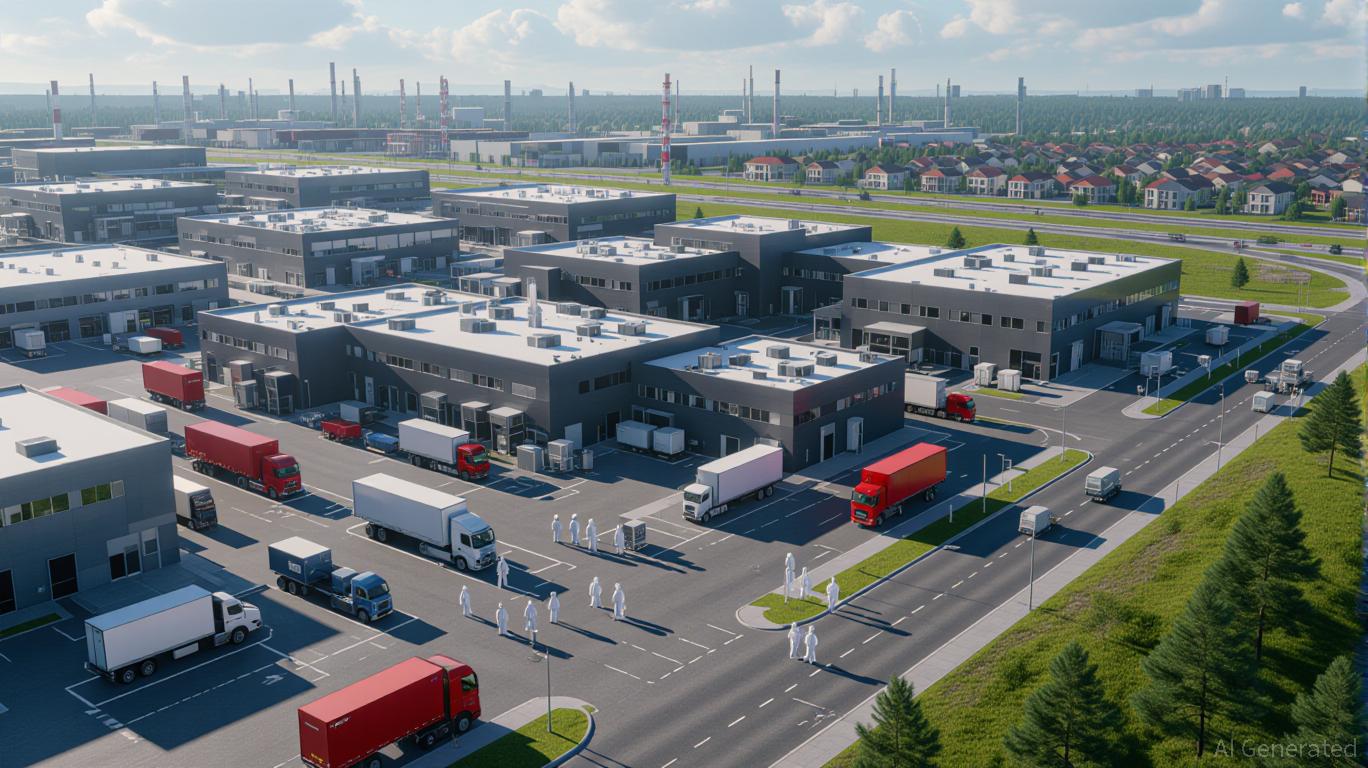
One of the flagship developments is the $650 million fairlife® dairy plant, expected to generate 250 well-paying jobs by 2025. This project highlights Webster’s ability to attract major investments from companies that depend on state-of-the-art infrastructure, further enhancing its reputation as a center for innovation. According to the Webster Economic Development Agency, the NEAT site should be fully operational by 2026, with additional projects likely to follow.
Rezoning Initiatives Unlock New Growth Opportunities
Through comprehensive rezoning, Webster has expanded its industrial area to 1,400 contiguous acres—making it one of the largest ready-to-develop sites in upstate New York. The Reimagine Webster Initiative has introduced flexible zoning that blends residential, commercial, and industrial uses, fostering a balanced environment that supports both workforce housing and business expansion. This strategy reflects a broader shift in industrial real estate, where companies increasingly seek locations with strong transportation links and access to skilled labor.
Webster’s location near I-390 and Rochester International Airport, combined with upgraded utilities, has established it as a key logistics hub in the Northeast. Data from CBRE for the third quarter of 2025 shows a 12% year-over-year rise in demand for top-tier logistics facilities in the region, with Webster capturing an increasing portion of this growth. These trends indicate that Webster’s industrial sector is not only attracting current investment but is also well-positioned for sustained demand in the years ahead.
Rising Property Values and Enduring Economic Impact
The positive effects of infrastructure and zoning improvements are evident in both residential and commercial property markets. Since 2023, home values in Webster have climbed by 10.1% annually, fueled by the arrival of high-paying jobs and enhanced quality of life. This pattern demonstrates how industrial development can stimulate broader economic vitality and residential appreciation.
Looking forward, forecasts suggest that Webster’s industrial property values could increase by 8–10% per year through 2030, surpassing the national average growth rate for industrial real estate. This outlook is bolstered by the town’s participation in New York State’s NY Forward Program, which has provided an additional $4.5 million for community improvements such as walkability and public spaces. These enhancements not only make Webster more attractive to businesses but also improve the overall living environment for residents.
Key Insights for Investors
- Prioritizing Infrastructure: Webster’s focus on upgrading infrastructure has shortened development timelines and reduced costs, making it appealing to capital-intensive industries.
- Flexible Zoning: The adoption of mixed-use zoning ensures that industrial growth is balanced with residential and commercial development, creating a sustainable local ecosystem.
- Leveraging Public Partnerships: By utilizing state and federal programs like FAST NY and NY Forward, Webster has been able to undertake large-scale projects without placing undue strain on local finances.
Despite these strengths, there are still risks. The NEAT site’s long-term success depends on the timely completion of infrastructure projects and the ability to attract major tenants such as fairlife®. Investors should keep an eye on job creation and occupancy rates to assess the market’s health.
Summary
Webster, NY, demonstrates how strategic investment in infrastructure and forward-thinking zoning policies can unlock lasting value in industrial real estate. By converting a brownfield into a modern industrial center, the town has sparked a cycle of economic growth, rising property values, and workforce development. For investors interested in post-industrial markets, Webster serves as a compelling example of how coordinated planning and public-private collaboration can deliver sustainable returns.
Disclaimer: The content of this article solely reflects the author's opinion and does not represent the platform in any capacity. This article is not intended to serve as a reference for making investment decisions.
You may also like
Hyperliquid (HYPE) Price Rally: The Role of DeFi Advancements and Investor Sentiment in Driving Recent Market Fluctuations
- Hyperliquid (HYPE) surged to $59.39 in 2025 before retreating, driven by DeFi innovations and volatile market sentiment. - Technical advancements like HyperBFT consensus and USDH stablecoin attracted 73% of decentralized trading volume, while institutional partnerships stabilized the ecosystem. - Despite short-term volatility near $36, bullish RSI patterns and $3 trillion trading volume suggest potential for a $59 rebound, though sustained momentum above $43 is critical. - Analysts project HYPE could rea

The Driving Forces Behind Economic Growth in Webster, NY
- Webster , NY, transformed a 300-acre Xerox brownfield into a high-tech industrial hub via a $9.8M FAST NY grant, boosting industrial and real estate growth. - Public-private partnerships enabled infrastructure upgrades, attracting $650M fairlife® dairy projects and 250 high-paying jobs by 2025. - Industrial vacancy rates dropped to 2%, while residential values rose 10.1% annually, highlighting synergies between infrastructure and economic development. - The model underscores secondary markets' potential
Unlocking Potential: The Impact of Targeted Grants and Public-Private Partnerships on Transforming Medium-Sized Real Estate Markets in the U.S.
- U.S. mid-sized cities leverage infrastructure investment and PPPs to drive commercial real estate growth, outpacing large cities in value creation. - Federal programs like IIJA enable upgrades in transportation and broadband, reducing business costs while boosting property values in Tampa and Grand Rapids. - PPPs in cities like Montgomery County combine affordable housing incentives with CRE development, balancing equity and economic resilience through data-driven strategies. - Market projections show $2
Modern Monetary Theory and the Transformation of International Markets: Inflation Trends, Asset Movements, and Currency Shifts in 2025
- Modern Monetary Theory (MMT) reshapes fiscal-monetary coordination, linking government spending to inflation and resource constraints in post-pandemic economies. - Central banks face challenges anchoring inflation expectations as CPI lags asset market pressures, risking self-fulfilling inflationary spirals amid eroding public trust. - Currency valuations shift with fiscal stimulus (e.g., euro's 2025 rebound) and U.S. dollar uncertainty, compounded by gold reserve diversification and rising bond yields. -






