Author: Poopman
Translation: TechFlow
Ansem declared the market top, and CT has labeled this cycle as “criminal.”
Projects with high FDV (Fully Diluted Valuation) and no real use cases have squeezed the last penny out of the crypto space. The bundling and selling of memecoins have tarnished the reputation of the crypto industry in the eyes of the public.
Worse still, almost no funds are being reinvested into the ecosystem.
On the other hand, almost all airdrops have turned into “pump and dump” scams. The only apparent purpose of Token Generation Events (TGE) seems to be providing exit liquidity for early participants and teams.
Diamond hands and long-term investors are suffering heavy losses, while most altcoins have never recovered.
The bubble is bursting, token prices are plummeting, and people are furious.
Does this mean it’s all over?

Tough times create strong people.
To be fair, 2025 hasn’t been a bad year.
We’ve witnessed the birth of many outstanding projects. Projects like Hyperliquid, MetaDAO, Pump.fun, Pendle, and FomoApp have proven that there are still real builders in this space working to push development in the right way.
This is a necessary “purge” to clear out bad actors.
We are reflecting and will continue to improve.
Now, to attract more capital and users, we need to showcase more real use cases, genuine business models, and revenue that can bring actual value to tokens. I believe this is the direction the industry should head in 2026.
2025: The Year of Stablecoins, PerpDex, and DAT
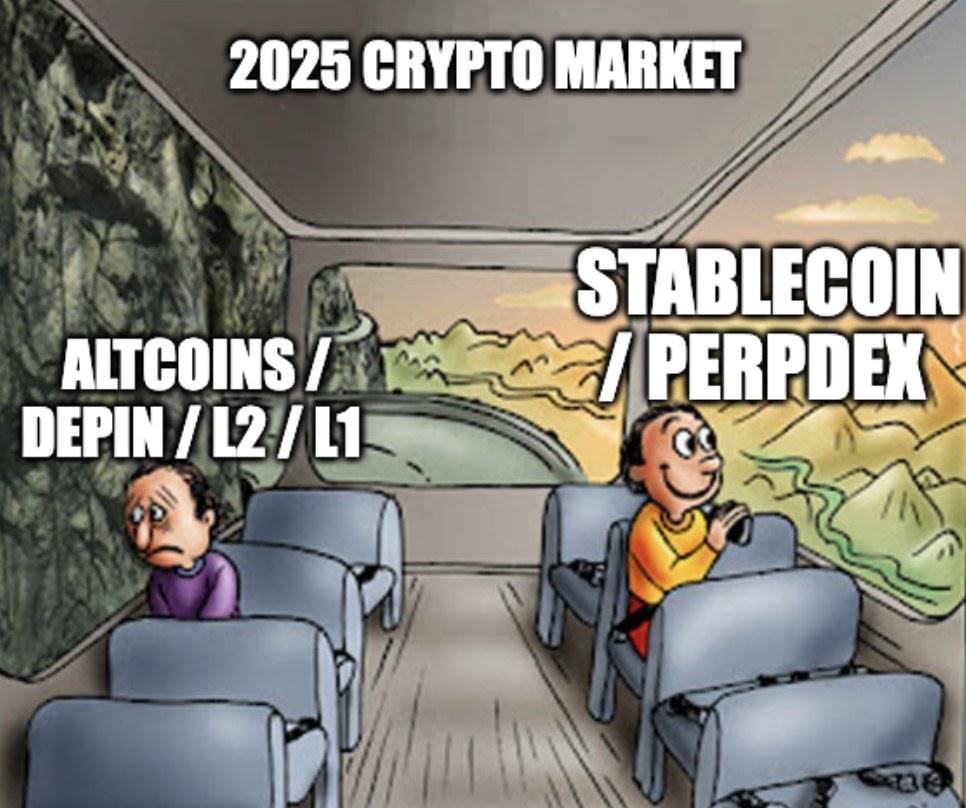
Stablecoins Become More Mature
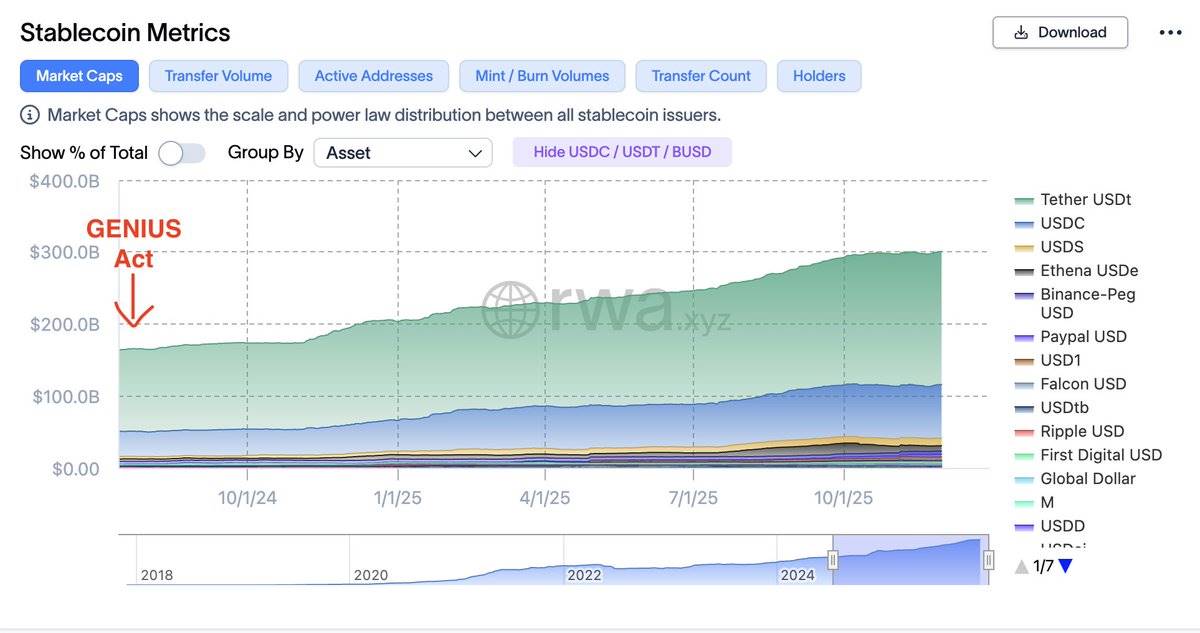
In July 2025, the “Genius Act” was officially signed, marking the birth of the first regulatory framework for payment stablecoins, requiring stablecoins to be backed 100% by cash or short-term government bonds.
Since then, TradFi’s interest in the stablecoin sector has grown daily, with net inflows into stablecoins exceeding $100 billions this year alone, making it the strongest year in stablecoin history.
RWA.xyz
Institutions are fond of stablecoins and see their huge potential to replace traditional payment systems, for reasons including:
-
Lower cost and more efficient cross-border transactions
-
Instant settlement
-
Low transaction fees
-
24/7 availability
-
Hedge against local currency volatility
-
On-chain transparency
We’ve witnessed major acquisitions by tech giants (such as Stripe acquiring Bridge and Privy), Circle’s IPO being oversubscribed, and several top banks collectively expressing interest in launching their own stablecoins.
All of this shows that over the past year, stablecoins have indeed been maturing.
Stablewatch
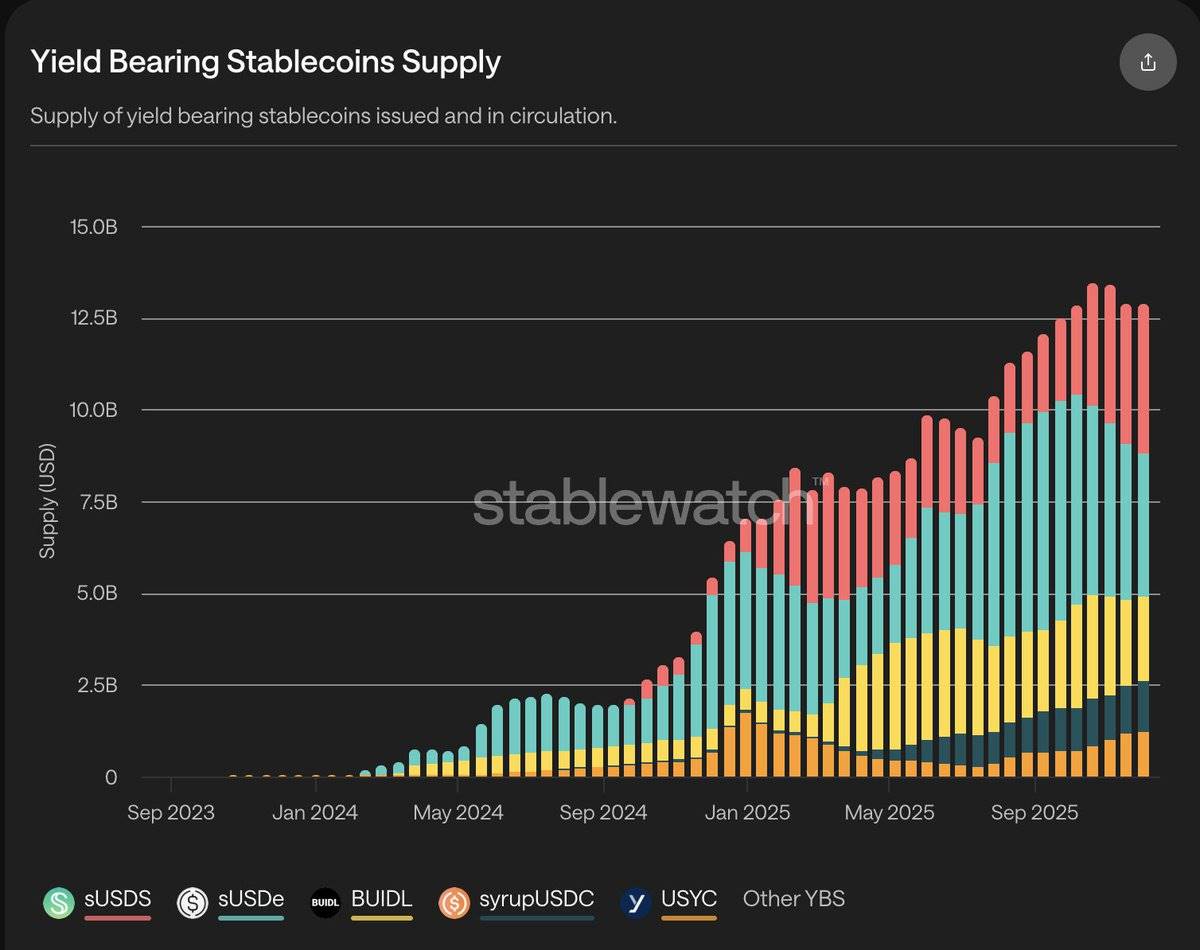
Beyond payments, another major use case for stablecoins is earning permissionless yield, which we call Yield Bearing Stablecoins (YBS).
This year, the total supply of YBS has actually doubled to $12.5 billions, driven mainly by yield providers like BlackRock BUIDL, Ethena, and sUSDs.
Despite the rapid growth, recent events like Stream Finance and the broader poor performance of the crypto market have affected sentiment and reduced yields for these products.
Nevertheless, stablecoins remain one of the few truly sustainable and growing businesses in crypto.
PerpDex (Perpetual Decentralized Exchanges):
PerpDex has been another star this year.
According to DeFiLlama, PerpDex open interest has grown on average 3–4x, from $3 billions to $11 billions, peaking at $23 billions.
Perpetual trading volume has also surged, skyrocketing 4x since the start of the year, from an impressive $80 billions weekly to over $300 billions weekly (with some of the growth driven by points mining), making it one of the fastest-growing sectors in crypto.
However, since the major market correction on October 10 and the subsequent slump, both metrics have started to slow down.
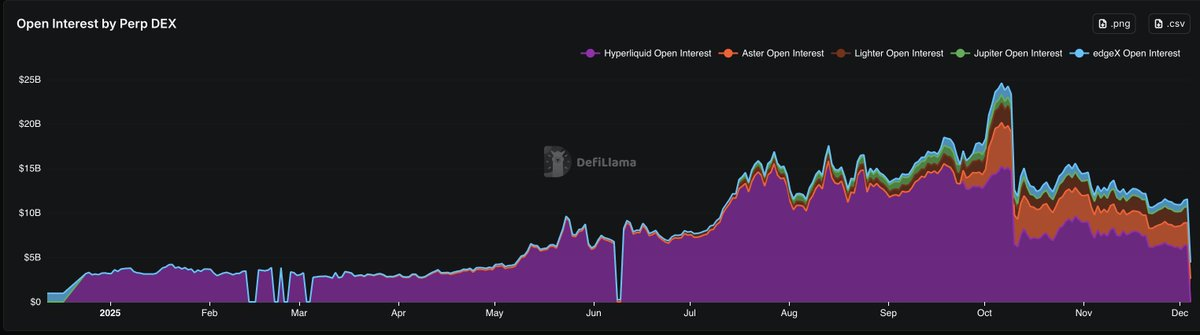
PerpDex Open Interest (OI), Source: DeFiLlama
The rapid growth of PerpDex poses a real threat to the dominance of centralized exchanges (CEX).
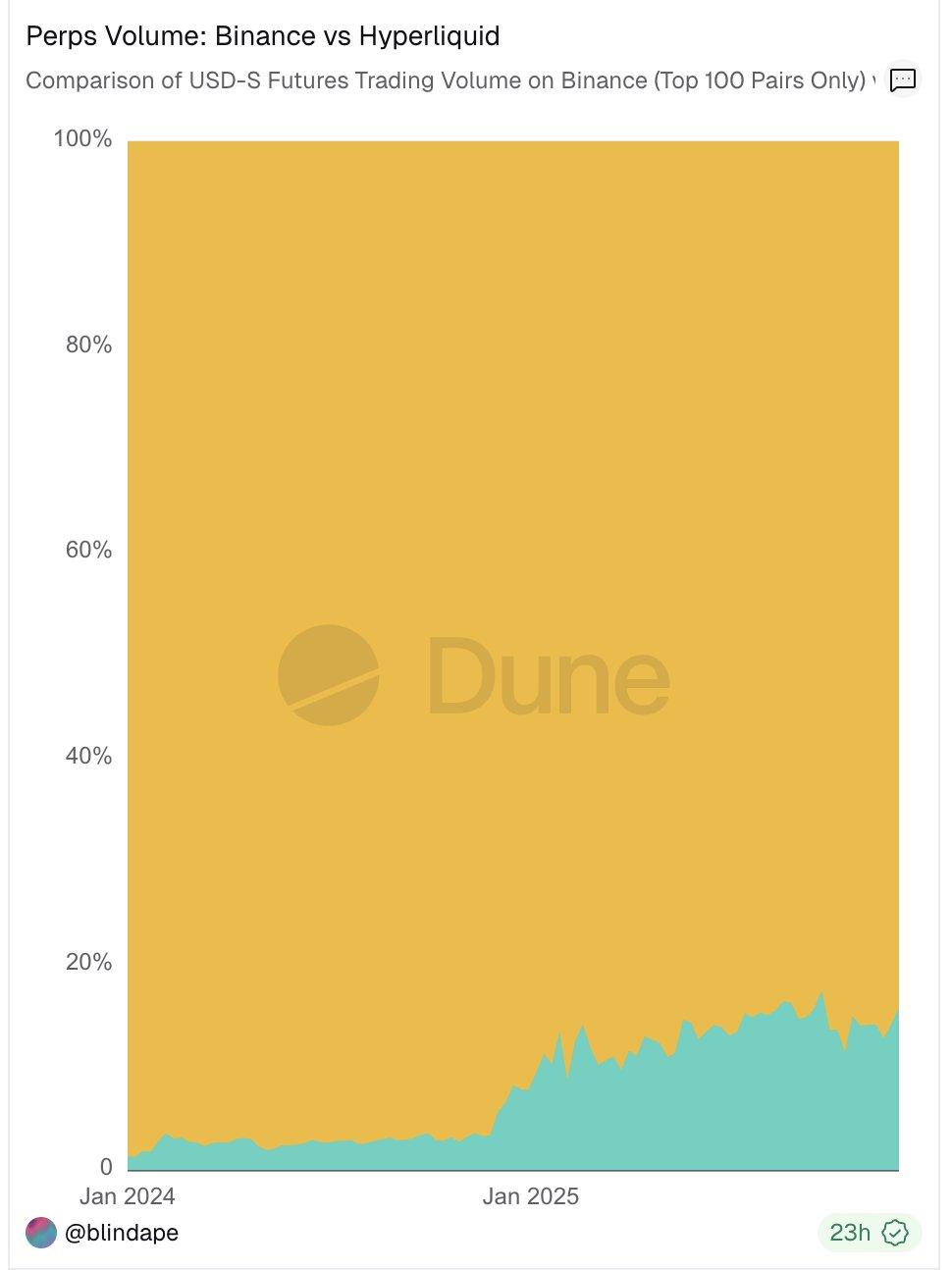
Take Hyperliquid for example: its perpetual trading volume has reached 10% of Binance’s, and the trend continues. This is not surprising, as traders can find some advantages on PerpDex that CEX perpetuals cannot offer:
-
No KYC (identity verification)
-
Decent liquidity, sometimes even comparable to CEX
-
Airdrop speculation opportunities
Valuation games are another key point.
Hyperliquid has demonstrated that PerpDex can reach extremely high valuation ceilings, attracting a new wave of competitors.
Some new competitors are backed by large VCs or CEXs (such as Lighter, Aster, etc.), while others try to differentiate through native mobile apps or loss compensation mechanisms (like Egdex, Variational, etc.).
Retail investors have high expectations for these projects’ high FDV at launch and are also excited about airdrop rewards, leading to the current “points war.”
While PerpDex can be highly profitable, Hyperliquid has chosen to use an “Assistance Fund” to buy back $HYPE, reinjecting profits into the token (with buybacks totaling 3.6% of total supply so far).
This buyback mechanism, by providing real value flowback, has become the main driver of the token’s success and effectively started the “buyback meta”—prompting investors to demand stronger value anchors rather than high FDV governance tokens with no real use.
DAT (Digital Asset Treasury):
Due to Trump’s pro-crypto stance, we have seen massive institutional and Wall Street capital inflows into crypto.
DAT, inspired by MicroStrategy’s strategy, has become one of the main ways for TradFi to gain indirect exposure to crypto assets.
Over the past year, about 76 new DATs have been created. Currently, DAT treasuries collectively hold $137 billions worth of crypto assets. Of these, over 82% is bitcoin (BTC), about 13% is ethereum (ETH), and the rest is spread across various altcoins.
See the chart below:

Bitmine (BMNR)
Bitmine (BMNR), launched by Tom Lee, has become one of the iconic highlights of this DAT boom and is the largest ETH buyer among all DAT participants.
However, despite early attention, most DAT stocks experienced “pump and dump” action within the first 10 days. Since October 10, capital inflows into DATs have plunged 90% from July levels, and most DATs’ mNAV (net asset value) has fallen below 1, indicating the premium has disappeared and the DAT boom is essentially over.
In this cycle, we’ve learned the following:
-
Blockchain needs more real-world applications.
-
The main use cases for crypto are still trading, yield, and payments.
-
Today, people prefer protocols with fee generation potential over pure decentralization (Source: @EbisuEthan).
-
Most tokens need stronger value anchors, tied to protocol fundamentals, to protect and reward long-term holders.
-
A more mature regulatory and legislative environment will give builders and talent greater confidence to join the space.
-
Information has become a tradable asset on the internet (Source: PM, Kaito).
-
New Layer 1/Layer 2 projects without clear positioning or competitive advantages will gradually be eliminated.
So, what happens next?
2026: The Year of Prediction Markets, More Stablecoins, More Mobile Apps, and More Real Revenue
I believe the crypto space in 2026 will develop in the following four directions:
-
Prediction Markets
-
More stablecoin payment services
-
Greater adoption of mobile DApps
-
More realization of real revenue

Still Prediction Markets
There’s no doubt that prediction markets have become one of the hottest tracks in crypto.
“Bet on anything”
“90% accuracy in predicting real-world outcomes”
“Participants bear their own risk”
These headlines have attracted a lot of attention, and the fundamentals of prediction markets are equally compelling.
As of this writing, the total weekly trading volume of prediction markets has already surpassed the peak during the election period (even including wash trading at that time).
Today, giants like Polymarket and Kalshi have completely dominated distribution channels and liquidity, leaving competitors without significant differentiation with almost no chance of gaining meaningful market share (except for Opinion Lab).
Institutions are also entering: Polymarket received investment from ICE at an $8 billions valuation, with its secondary market valuation reaching $12–15 billions. Meanwhile, Kalshi completed a Series E round at an $11 billions valuation.
This momentum is unstoppable.
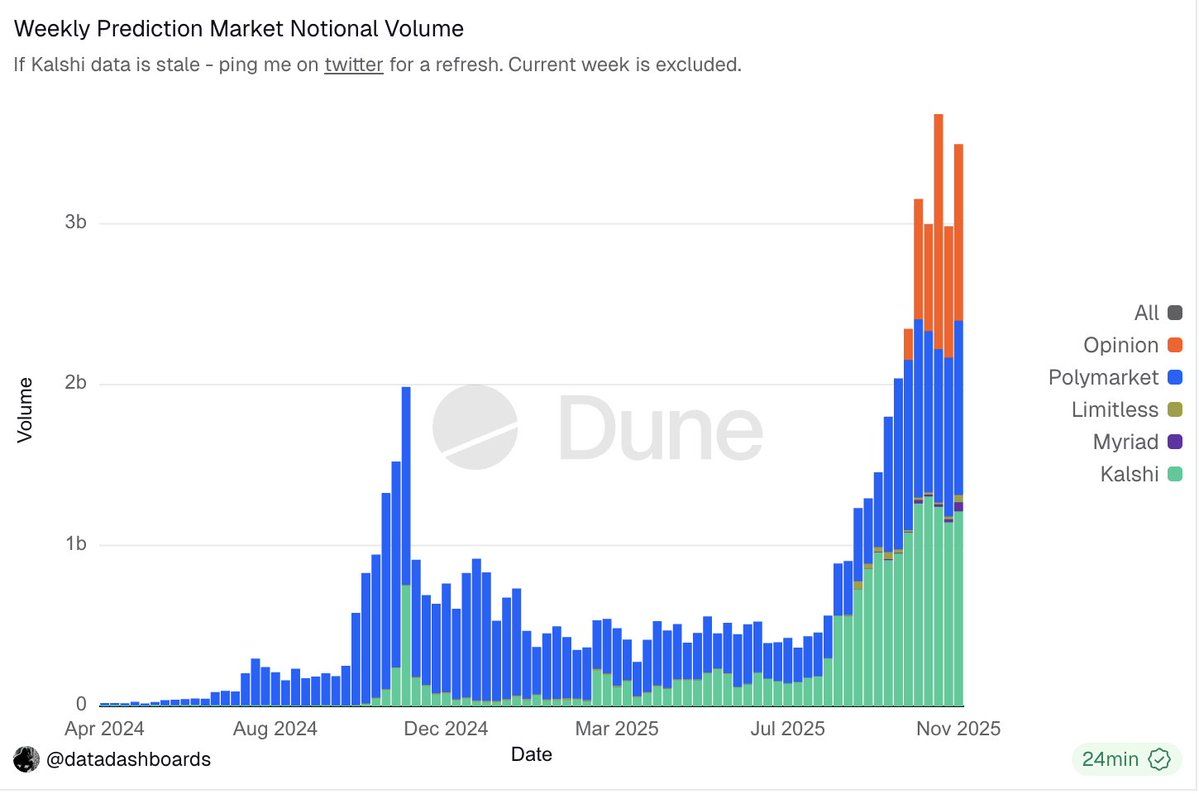
Moreover, with the upcoming $POLY token, the forthcoming IPO, and mainstream distribution channels through platforms like Robinhood and Google Search, prediction markets are likely to become one of the main narratives of 2026.
That said, there’s still plenty of room for improvement in prediction markets, such as optimizing outcome resolution and dispute mechanisms, developing ways to handle malicious traffic, and maintaining user engagement over long feedback cycles—all of which need further enhancement.
Aside from the dominant players, we can also expect new, more personalized prediction markets to emerge, such as @BentoDotFun and others.
Stablecoin Payment Sector
Following the Genius Act, increased institutional interest and activity in stablecoin payments have become one of the main drivers of its widespread adoption.
Over the past year, monthly stablecoin transaction volume has climbed to nearly $3 trillions, and the pace of adoption is accelerating rapidly. While this may not be a perfect metric, it clearly shows significant growth in stablecoin usage following the Genius Act and the European MiCA framework.
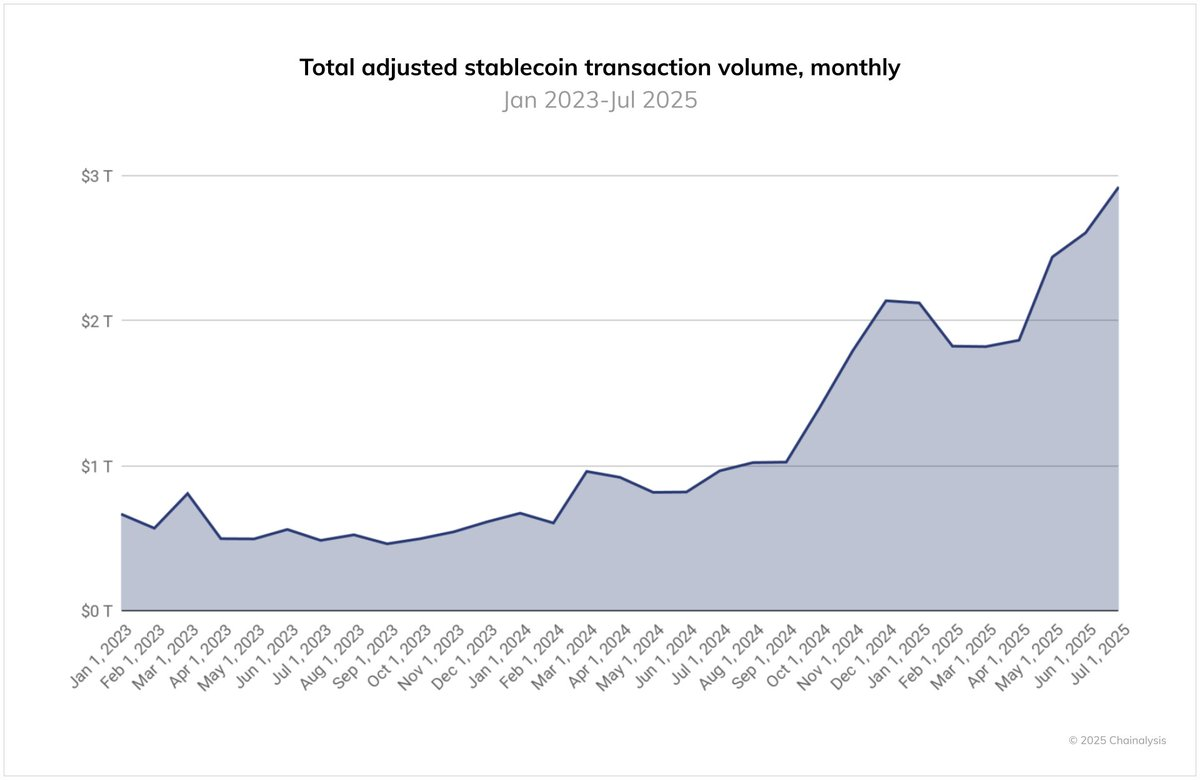
On the other hand, Visa, Mastercard, and Stripe are all actively embracing stablecoin payments, whether by supporting stablecoin spending through traditional payment networks or partnering with CEXs (such as Mastercard’s partnership with OKX Pay). Now, merchants can choose to accept stablecoin payments regardless of the customer’s payment method, demonstrating Web2 giants’ confidence and flexibility in this asset class.
Meanwhile, new crypto banking services like Etherfi and Argent (now rebranded as Ready) have begun offering card products, allowing users to spend stablecoins directly.
For example, Etherfi’s daily spending has steadily grown to over $1 million, with no sign of slowing down.
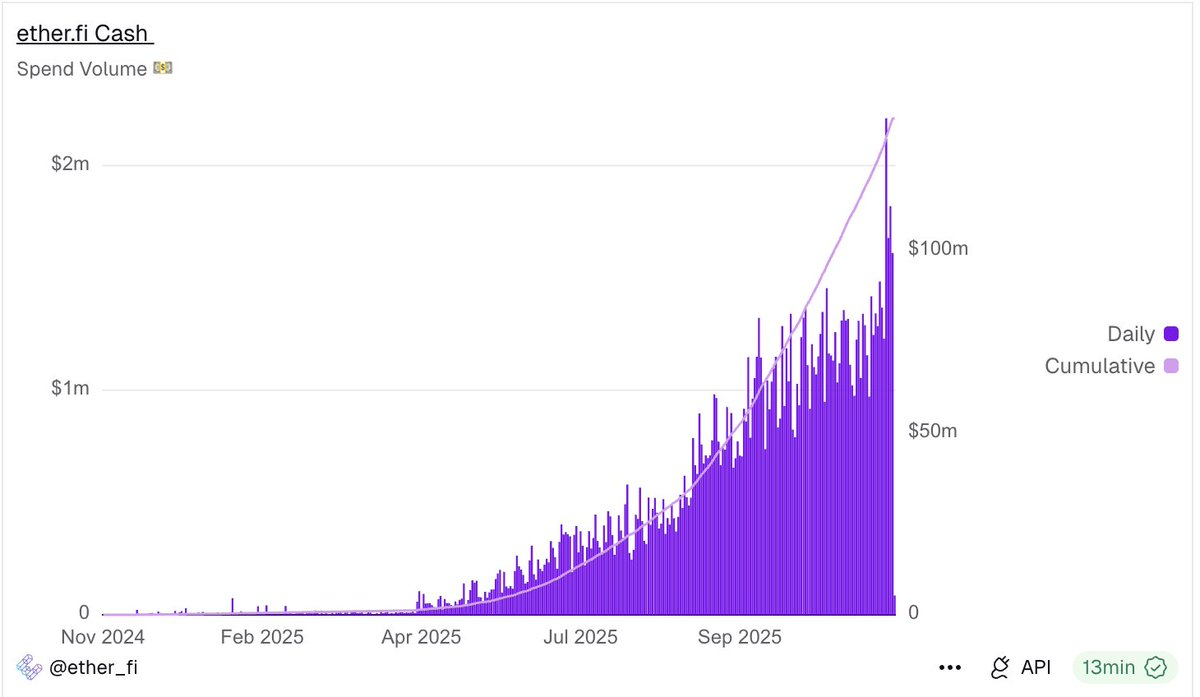
Etherfi
Nevertheless, we cannot ignore some challenges still facing new crypto banks, such as high customer acquisition costs (CAC) and the difficulty of profiting from deposit funds due to user self-custody.
Some potential solutions include offering in-app token swap features or repackaging yield products as financial services for users.
With payment-focused chains like @tempo and @Plasma gearing up, I expect the payments sector to grow significantly, especially with the distribution power and brand influence brought by Stripe and Paradigm.
The Rise of Mobile Apps
Smartphones are becoming increasingly popular worldwide, and the younger generation is driving the shift toward electronic payments.
As of now, nearly 10% of daily transactions globally are completed via mobile devices. Southeast Asia leads this trend due to its “mobile-first” culture.
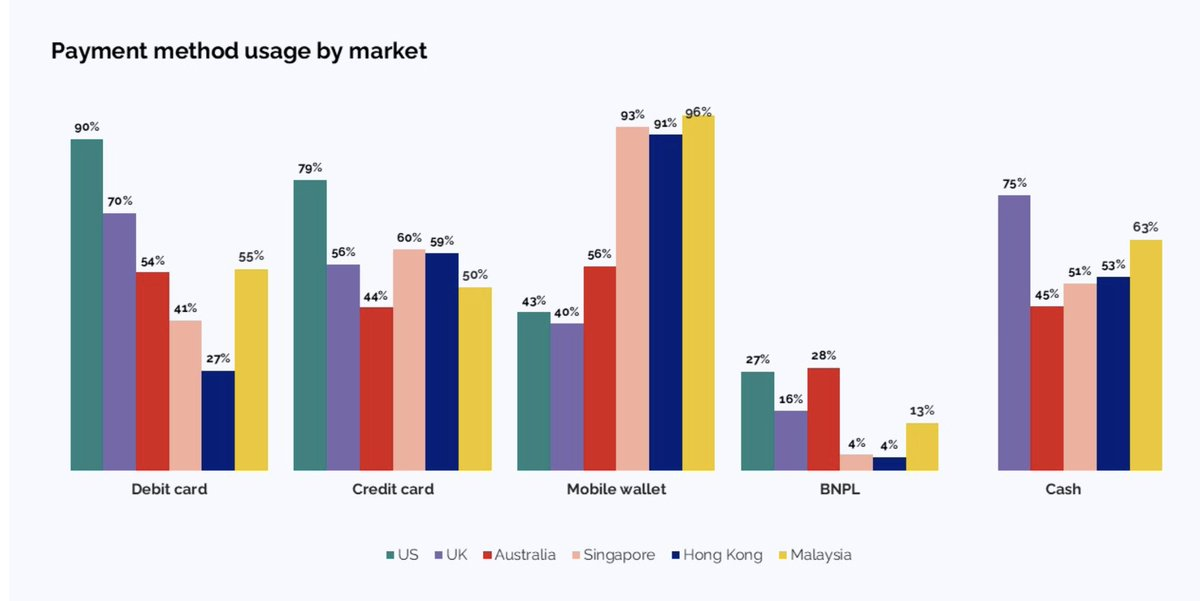
Payment method rankings by country
This represents a fundamental behavioral shift in traditional payment networks. I believe that as mobile transaction infrastructure has improved significantly compared to a few years ago, this shift will naturally extend to the crypto space.
Remember account abstraction, unified interfaces, and mobile SDKs in tools like Privy?
Today’s mobile onboarding experience is much smoother than two years ago.
According to a16z Crypto research, the number of crypto mobile wallet users has grown 23% year-over-year, and this trend shows no sign of slowing down.
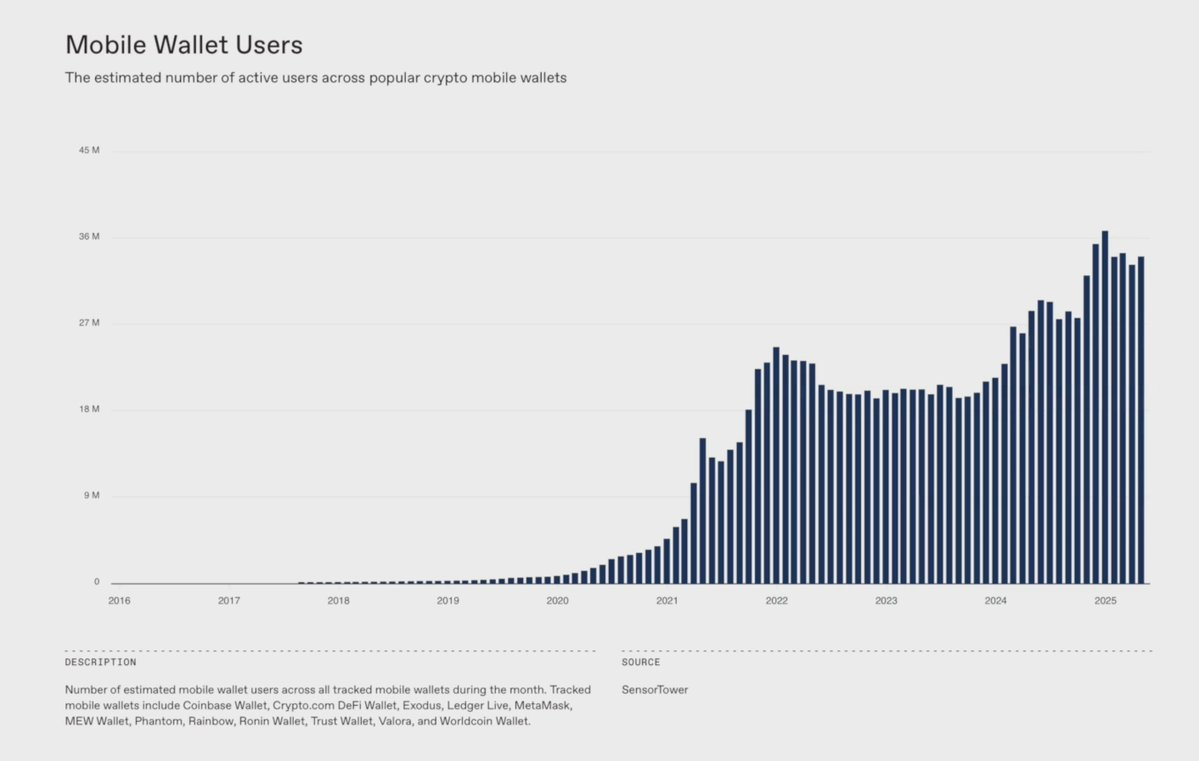
In addition to the evolving consumption habits of Gen Z, we’ve also seen more native mobile dApps emerge in 2025.
For example, Fomo App, a social trading application, has attracted a large number of new users with its intuitive and unified user experience, allowing anyone to easily participate in token trading even without prior knowledge.
Developed in just six months, the app has achieved an average daily trading volume of $3 million, peaking at $13 million in October.
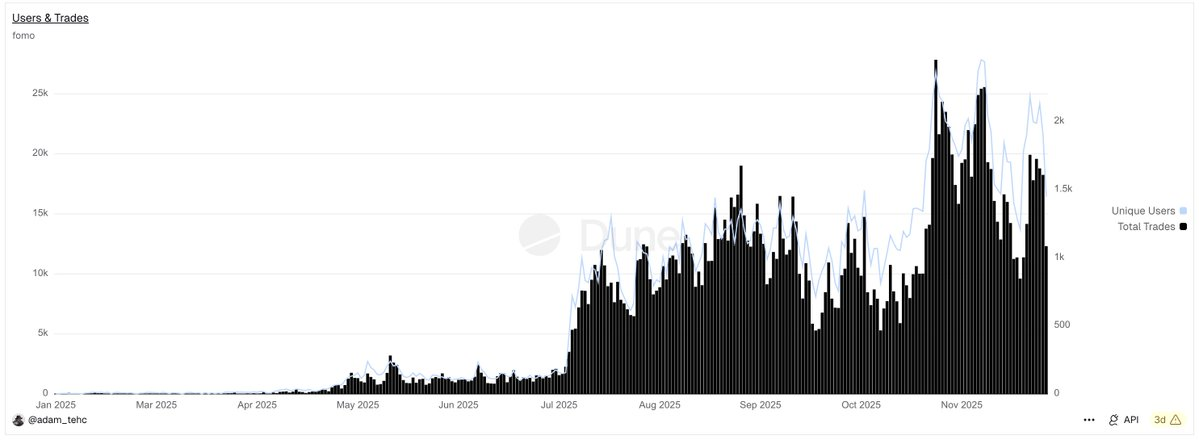
With the rise of Fomo, major players like Aave and Polymarket have also begun prioritizing mobile savings and betting experiences. Newcomers like @sproutfi_xyz are experimenting with mobile-first yield models.
With continued growth in mobile behavior, I expect mobile dApps to become one of the fastest expanding sectors in 2026.
Give Me More Revenue
One of the main reasons people find it hard to believe in this cycle is simple:
Most tokens listed on major exchanges still generate little to no meaningful revenue, and even when they do, there’s a lack of value anchoring to their tokens or “shares.” Once the narrative fades, these tokens fail to attract sustainable buyers, and the only direction left is down.
Clearly, the crypto industry is overly reliant on speculation and pays insufficient attention to real business fundamentals.
Most DeFi projects fall into the trap of designing “Ponzi schemes” to drive early adoption, but the result is always a post-TGE focus on dumping rather than building a lasting product.
So far, only 60 protocols have generated over $1 million in revenue in 30 days. In contrast, there are about 5,000–7,000 IT companies in Web2 with monthly revenues at this level.
Fortunately, thanks to Trump’s pro-crypto policies, a shift began in 2025. These policies made profit sharing possible and helped address the long-standing lack of value anchoring for tokens.
Projects like Hyperliquid, Pump, Uniswap, and Aave have proactively focused on product and revenue growth. They recognize that crypto is an ecosystem centered on asset holding, which naturally requires positive value flowback.
This is why buybacks became such a powerful value anchoring tool in 2025, as it is one of the clearest signals of alignment between teams and investors.
So, which businesses generate the strongest revenue?
The main use cases for crypto remain trading, yield, and payments.
However, due to fee compression at the blockchain infrastructure level, chain-level revenue is expected to fall by about 40% this year. In contrast, DEXs, exchanges, wallets, trading terminals, and applications have been the biggest winners, growing by 113%!
Bet more on applications and DEXs.
If you still don’t believe it, according to research by 1kx, we are actually experiencing the highest value flow to token holders in crypto history. See the data below:
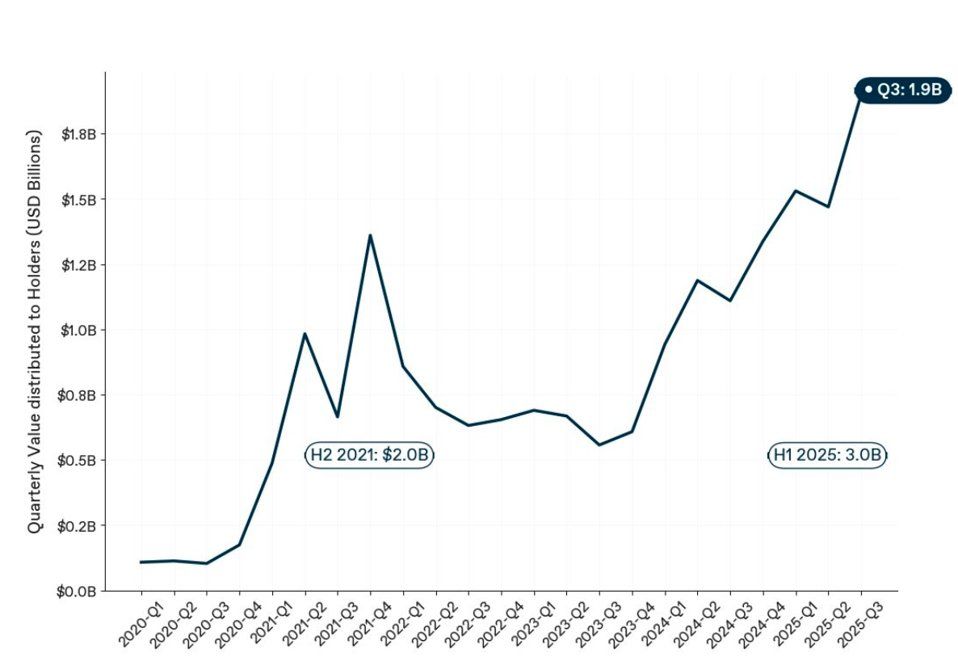
Conclusion
The crypto industry is not over; it is evolving. We are experiencing a necessary “purge” in the market, which will make the crypto ecosystem better than ever, potentially by a factor of ten.
Those projects that survive, achieve real-world applications, generate real revenue, and create tokens with actual utility or value flowback will ultimately be the biggest winners.
2026 will be a pivotal year.