
KITE Price Forecast Post-Listing: Does the Excitement Hold Up?
- Kite Realty (KRG) trades at $23.07, 11.3% below its $26 fair value estimate, amid strategic asset repositioning and share buybacks. - Market sentiment remains cautious as the stock drops 6.7% YTD, with technical indicators showing oversold conditions but bearish trends. - Institutional ownership splits sharply: Cerberus holds 28%, while STRS Ohio cuts stake by 93.7%, reflecting uncertainty over retail sector risks. - Elevated P/E (35.8x vs. 27.1x industry) and macro risks like the "One Big Beautiful Bill
Kite Realty Group Trust: Is the Recent Dip a Golden Opportunity?
The retail real estate market has always been unpredictable, and Kite Realty Group Trust (KRG) is no stranger to these fluctuations. With shares trading at $23.07 in late 2025—below the estimated fair value of $26—investors are questioning whether the recent decline signals a chance to buy or a reason for caution. Let’s examine the valuation, investor sentiment, and institutional activity to determine if KRG’s current buzz is warranted.
Valuation: Contradictory Signals
KRG’s valuation presents a complex picture. The stock appears undervalued by about 11.3% compared to analyst-derived fair value estimates, thanks in part to strategic moves like shedding risky tenants, selling off non-essential assets, and acquiring high-quality properties. These actions are expected to enhance earnings stability over time. However, the company’s price-to-earnings ratio stands at 35.8x, significantly higher than the US Retail REITs sector average of 27.1x. This elevated multiple suggests that the market is expecting robust growth from KRG. Should the company fail to deliver on these expectations, the disconnect between price and fundamentals could grow.
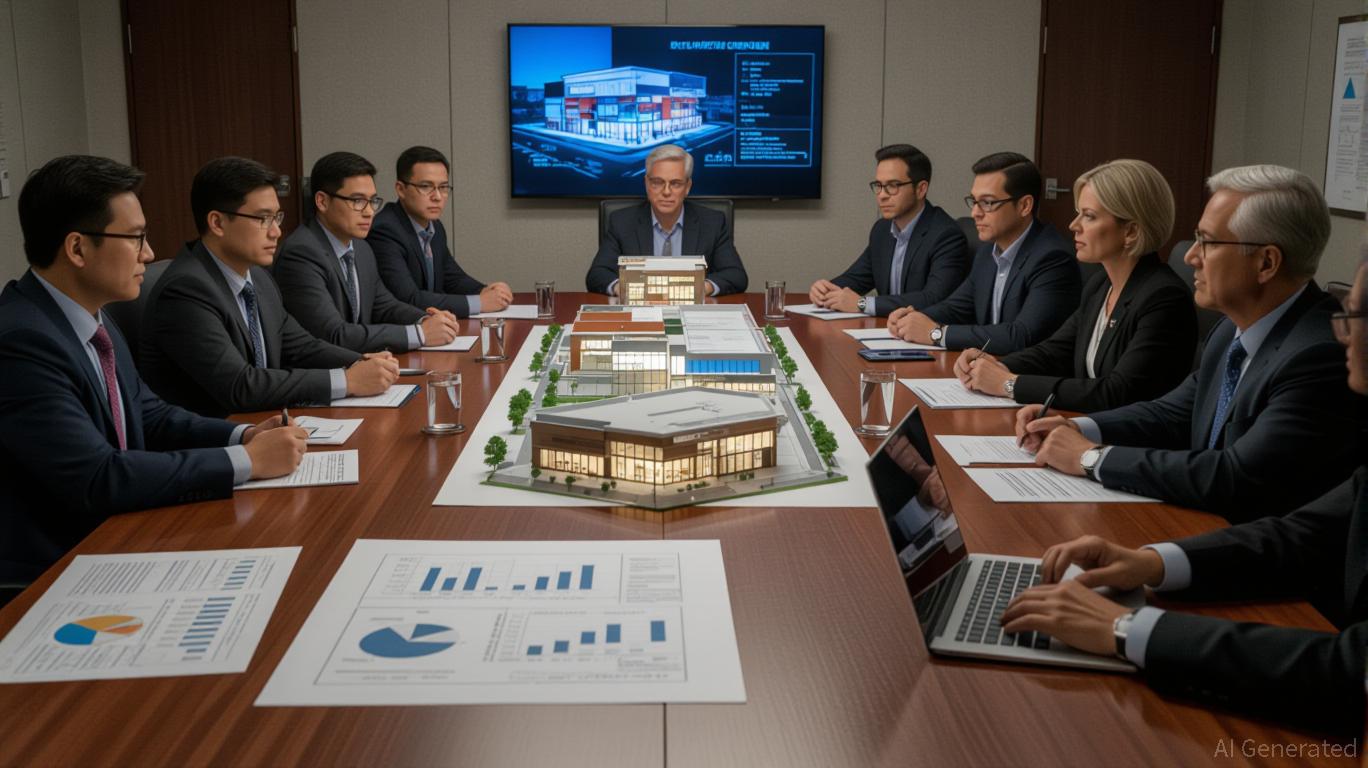
The third quarter of 2025 highlights this tension. KRG raised its full-year outlook and reported a 12.2% blended cash leasing spread, but also posted a $0.07 per-share loss, reflecting the difficulties of re-leasing in a turbulent retail landscape. Management’s decision to repurchase $74.9 million in shares at an average price of $22.35 demonstrates their confidence in the company’s intrinsic value. However, these buybacks may not fully counteract long-term risks such as tenant bankruptcies or broader economic challenges, including the fiscal consequences of the “One Big Beautiful Bill Act.”
Investor Sentiment: Wariness Prevails
Market sentiment toward KRG has grown more cautious. By December 2025, the stock had fallen 6.7% year-to-date, a sharp contrast to its impressive five-year total shareholder return of over 96%. This shift underscores the sector’s vulnerability to economic changes. Retail REITs, and especially those like KRG that focus on open-air shopping centers, are particularly exposed to tenant failures and evolving consumer preferences.
Technical analysis adds to the uncertainty. The Relative Strength Index (RSI) indicates the stock may be oversold, having stayed below 30 for extended periods. Yet, KRG’s price remains under its 50-day exponential moving average, pointing to ongoing bearish momentum. Without a clear positive trigger—such as a surge in leasing activity or a broader market rally—investors may remain hesitant to re-enter.
Institutional Activity: Divided Perspectives
Institutional investors are split on KRG’s prospects. As of late 2025, institutions control 71.35% of the company’s shares, with Cerberus Capital Management (28%), BlackRock (7.5%), and Vanguard (6.2%) among the largest holders. Recent quarters have seen significant shifts: Land & Buildings Investment Management exited its entire position by selling 800,000 shares, and STRS Ohio reduced its stake by 93.7%. On the other hand, Inspire Advisors LLC acquired 17,637 shares, and the Teacher Retirement System of Texas increased its holdings by 7.5%.
This divergence among institutional investors reflects the broader market’s uncertainty. While recent interest rate cuts by the Federal Reserve have offered some relief to REITs, ongoing macroeconomic concerns—such as inflation and the fiscal implications of the “One Big Beautiful Bill Act”—continue to cast a shadow. The lack of consensus among major shareholders suggests KRG remains a high-risk, high-reward investment.
Conclusion: Weighing the Risks and Rewards
KRG’s journey since listing exemplifies the “buy the rumor, sell the news” phenomenon. The company’s strategic initiatives—share buybacks, property upgrades, and dividend increases—demonstrate resilience. However, the fragile state of the retail sector and KRG’s lofty valuation mean that investors should proceed with caution.
- Long-term investors may find the current undervaluation and solid leasing performance appealing for a cautious entry.
- Short-term traders should look for technical signals, such as a move above the 50-day EMA or a sustained RSI above 50, before considering a position.
Until these confirmations emerge, the excitement surrounding KRG may remain just that—excitement without substance.
Disclaimer: The content of this article solely reflects the author's opinion and does not represent the platform in any capacity. This article is not intended to serve as a reference for making investment decisions.
You may also like
Bitcoin Price Rally During Macroeconomic Instability: Investor Confidence and Institutional Integration in the Fourth Quarter of 2025
- Bitcoin surged 86.76% in Q4 2025 amid macroeconomic uncertainty, driven by institutional adoption and regulatory clarity. - 86% of institutional investors now allocate to crypto, with $1.65T market cap supported by 65% institutional demand via ETFs/ETPs. - Macroeconomic factors like inflation hedging and MMT-driven valuation models reshaped Bitcoin's role as a store of value. - Supply-demand imbalances and $4T potential institutional demand outpace Bitcoin's limited supply, creating upward price pressure

LUNA surges 36.7% as Network Enhancement and Legal Progress Boost Confidence
- LUNA surged 36.7% in 24 hours, driven by a Binance-backed network upgrade and Do Kwon's sentencing on Dec 11. - The v2.18 upgrade boosted technical confidence, breaking key resistance with strong volume and momentum indicators. - Kwon's legal resolution is seen as critical for Terra's credibility, though post-sentencing volatility remains a risk. - RSI and MACD suggest sustained buying pressure, but traders are urged to remain cautious amid evolving market dynamics.
LUNA Rises 21.88% Following Network Updates and Kwon’s Sentencing
- LUNA surged 21.88% in 24 hours on Dec 9, 2025, driven by Do Kwon's upcoming sentencing and Terra's v2.18 network upgrade. - Kwon's Dec 11 sentencing is seen as a potential turning point, ending legal uncertainty from the 2022 Terra/UST collapse. - The v2.18 upgrade, backed by Binance, aims to improve security and scalability, boosting institutional interest in Terra. - Technical indicators show strong bullish momentum, though post-sentence legal outcomes remain critical for long-term market stability.

BCH rises 0.92% over 24 hours as network improvements and hash rate steady
- Bitcoin Cash (BCH) rose 0.92% in 24 hours to $587, driven by network upgrades and stable hash rate growth. - Hash rate increased 8.06% monthly, reflecting stronger miner confidence and improved transaction efficiency post-upgrades. - Developer activity surged with modular architecture enabling flexible smart contracts while maintaining BCH's core principles. - Merchant adoption expanded as e-commerce platforms integrated BCH, supported by multi-currency payment gateways. - On-chain governance approved a

Trending news
MoreCrypto prices
More






