
Exploring the Challenges and Potential in Financial Markets After a Crisis
- IMF's 2025 report highlights global financial risks from stretched asset valuations, sovereign bond pressures, and interconnected market vulnerabilities. - Emerging markets face contagion risks via currency mismatches and narrow investor bases, exemplified by debt challenges in Turkey and Argentina. - Strategic asset allocation shifts recommend value equities, short-duration bonds, and alternatives like commodities to hedge volatility and inflation. - Fiscal sustainability and regulatory vigilance are cr
Global Finance: Navigating Post-Shock Challenges
In the wake of major disruptions, the international financial system continues to display significant imbalances. Although the International Monetary Fund (IMF) has acknowledged the robustness of some markets, it has also highlighted persistent weaknesses that could heighten instability. For investors, the main task is to strike a balance between vigilance and seizing opportunities—a process that requires a deep understanding of evolving policies, the potential for contagion, and the mechanisms driving recovery.
Policy Shifts: An Unsteady Ground
The IMF’s 2025 Global Financial Stability Report draws attention to a delicate situation: asset prices remain elevated, and stress in government bond markets is adding to broader economic uncertainty. These issues are especially pronounced in currency markets, where mismatches and a concentration of trading activity make the system more susceptible to shocks. To address these concerns, policymakers are urged to tighten prudential regulations, increase oversight of nonbank financial entities, and strengthen financial safety nets. For investors, this environment calls for careful monitoring of regulatory changes, as new rules—such as stricter capital requirements or fiscal measures—could significantly impact market valuations and liquidity.
Contagion Threats: The Double-Edged Nature of Connectivity
The IMF has cautioned that the growing links between banks and nonbank financial institutions are raising the likelihood of abrupt, widespread market corrections. This interconnectedness means that disturbances in one asset class can quickly spread to others, tightening financial conditions across the board. Emerging economies are particularly vulnerable, as their dependence on external borrowing and limited investor bases make them prone to sudden capital flight during periods of stress. Countries like Turkey and Argentina, which are working through debt-related challenges, exemplify how structural changes can intensify contagion risks. Investors need to account for these cross-border effects, especially as central banks pursue divergent monetary and fiscal strategies.
Adapting Investment Strategies: Rethinking Diversification
The classic 60/40 mix of stocks and bonds is losing its effectiveness as a diversification tool. Forces such as persistent inflation and fiscal imbalances have weakened the traditional inverse relationship between equities and bonds, sometimes even turning it positive. In response, both the IMF and market experts recommend a new approach to portfolio construction:
- Reducing reliance on domestic growth stocks: With valuations stretched in sectors like technology and artificial intelligence, shifting toward value stocks and emerging markets may offer better risk-adjusted returns.
- Shortening bond maturities: Bonds with maturities of three to seven years currently provide attractive yields with less exposure to interest rate risk, making them a smart choice for income-focused investors.
- Incorporating alternative assets: Investments in liquid alternatives, commodities, and digital assets are becoming more popular as ways to manage volatility and achieve returns that are less correlated with traditional markets. Real assets, such as global infrastructure, also serve as effective hedges against inflation.
Pathways to Recovery: The Importance of Fiscal and Structural Reform
Economic recovery after a crisis depends heavily on sound fiscal management and meaningful structural changes. The IMF stresses the value of counter-cyclical fiscal policies that support both stability and long-term growth. For example, Canada’s balanced approach to fiscal support and yield curve management has been cited as a model for maintaining stability amid external shocks. Investors should pay attention to how governments allocate public funds, especially in sectors driven by technological innovation, as these investments can boost productivity. However, the rise of unregulated lending channels, such as shadow banking, remains a concern and highlights the ongoing need for strong regulatory oversight.
Final Thoughts: Staying Resilient Amid Uncertainty
Successfully navigating the uncertain financial environment ahead requires a disciplined and flexible investment approach. While the IMF’s warnings about systemic risks are sobering, they also point to opportunities for those who focus on building resilient portfolios. By shifting toward value-oriented stocks, shorter-duration bonds, and tangible assets, and by diversifying with alternatives, investors can better withstand the volatility expected in 2025. Ultimately, as emphasized in the IMF’s Global Financial Stability Report, long-term success depends not on chasing the highest returns, but on effectively managing risk.
Disclaimer: The content of this article solely reflects the author's opinion and does not represent the platform in any capacity. This article is not intended to serve as a reference for making investment decisions.
You may also like
The Growing Opportunities for Investment in Education Platforms Powered by Technology
- Global higher education EdTech market reached $85.43B in 2025, projected to hit $169.72B by 2028 at 10.3% CAGR, driven by AI, SaaS, and ROI-focused strategies. - AI tools like Georgia State's "Pounce" chatbot and SaaS platforms (Microsoft 365, Google Workspace) improve efficiency, reduce administrative costs, and enhance student engagement. - Institutions prioritize EdTech investments with measurable ROI, forming partnerships with vendors like CDW to streamline procurement and quantify cost savings. - Ve

COAI Price Decline and Its Impact on AI-Powered Technology Shares: Strategic Risk Evaluation in Developing Tech Industries
- ChainOpera AI's 88% token price collapse exposed systemic risks in AI-blockchain convergence, driven by governance failures, token concentration, and regulatory ambiguity. - The crisis triggered sector-wide volatility in AI-linked commodities and shifted investor preferences toward pure AI startups over blockchain-integrated projects. - Global regulators are tightening oversight of AI/finance integration, while experts warn of overvalued AI markets and advocate diversified, factor-based investment strate

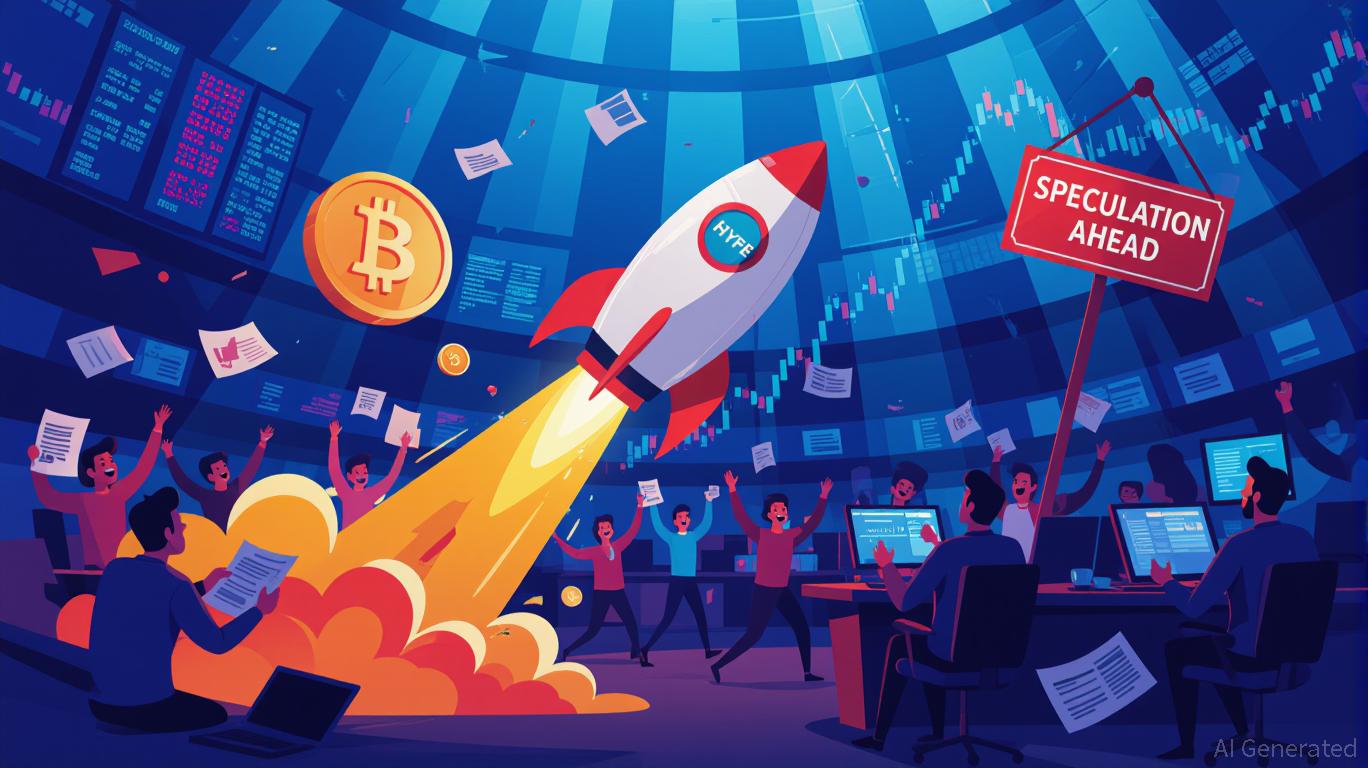
HYPE Token Experiences Rapid Rise: Is It Driven by Speculation or Genuine Long-Term Potential?
- HYPE token surged to $41.28 in November 2025 due to social media hype and FOMO-driven trading, then plummeted to a seven-month low near $27.43. - Ecosystem developments like Hyperion DeFi's token allocations and USDH partnerships provided limited utility validation, overshadowed by speculative retail trading dynamics. - Price collapse was accelerated by bearish technical indicators and lack of major exchange listings, exposing risks of retail-driven volatility without fundamental upgrades. - Investors de
Tether USDT Receives Regulatory Approval Across Multiple Major Blockchains in Abu Dhabi Global Market
Trending news
MoreCrypto prices
More





