
Saylor’s ‘Orange Dot’ Drives Bitcoin From $87K to $91K

One enigmatic post from Michael Saylor propelled Bitcoin to over $4,000 in less than three hours early Monday morning in Asia. His “₿ack to Orange Dots?” message sparked speculation about MicroStrategy’s accumulation strategy, pushing the digital asset from just below $88,000 to above $91,000. This response highlights how the executive chairman’s communications can strongly influence
One enigmatic post from Michael Saylor propelled Bitcoin to over $4,000 in less than three hours early Monday morning in Asia. His “₿ack to Orange Dots?” message sparked speculation about MicroStrategy’s accumulation strategy, pushing the digital asset from just below $88,000 to above $91,000.
This response highlights how the executive chairman’s communications can strongly influence market sentiment, even while the overall market sentiment remains gripped by extreme fear.
Decoding the Orange and Green Dot System
Michael Saylor’s color-coded system wields major market influence. The “orange dots” denote each Bitcoin purchase event by MicroStrategy, visible on the company’s StrategyTracker.com portfolio chart. Each marker represents another step in the company’s robust Bitcoin accumulation plan.
The chart’s green line displays the average purchase price of all acquisitions, serving as a performance benchmark. As of Dec 8, MicroStrategy held 650,000 BTC valued at $57.80 billion, with an average cost of $74,436 per coin. This position reflected a gain of 19.47%, translating to about $9.42 billion in unrealized profits.
₿ack to Orange Dots?
— Michael Saylor (@saylor) December 7, 2025
Recently, Saylor added a new twist to this visual vocabulary. His cryptic “green dots” have spurred speculation about potential strategy changes. The green dashed line—tracking the average cost—has taken center stage. Some analysts believe higher buying activity could move this metric upward.
Within hours of Saylor’s update, the price soared above $91,000. The day’s range stretched from $87,887 to $91,673, highlighting marked volatility around the signal.
Market Dynamics and Trader Positioning
Despite the rally, market sentiment remained fragile. The Fear and Greed Index signaled continued anxiety, but long-short ratios showed bullish trader positioning. As fear and profit transitioned, market psychology remained complex.
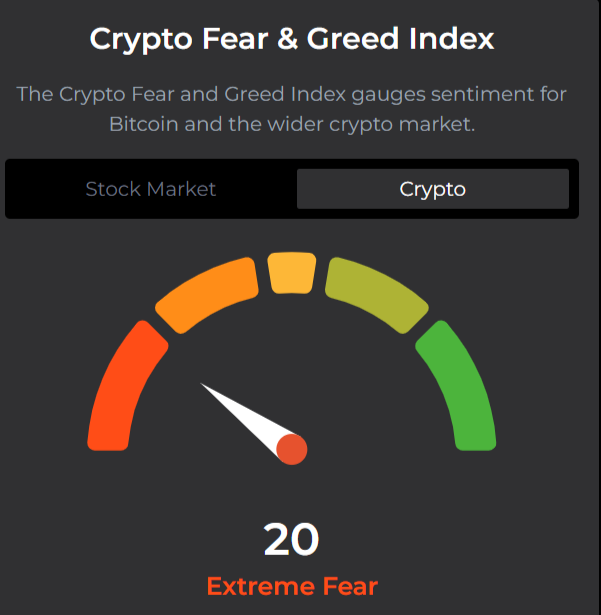 Source: feargreedmeter.com
Data from CoinGlass revealed Binance and OKX reported 52.22% long positions versus 47.78% short, while Bybit’s bullish skew was even stronger at 54.22% long and 45.78% short. The latest four-hour futures volume showed $106.77 million (56.23%) long against $83.11 million (43.77%) short. Traders seemed optimistic despite fearful sentiment metrics.
The split between sentiment indicators and trader positioning highlights today’s market complexity. Many are willing to wager on sustained momentum, especially after influential signals from major holders, though fear persists in the background.
MicroStrategy’s influence extends further. The company recently built a $1.44 billion cash reserve to cover dividends and provide 21 months of liquidity. On December 1, it acquired 130 BTC for about $11.7 million at $89,960 per coin, bringing total holdings to 650,000 BTC.
Strategic Evolution and Market Implications
The corporate approach has shifted in recent weeks. CEO Phong Le recently admitted MicroStrategy could sell Bitcoin if the stock drops below 1x modified Net Asset Value—should equity or debt not be raised. In November, the mNAV touched 0.95, bringing this scenario closer to reality.
This marks a move away from the former “never sell” stance. Annual dividend requirements of $750 million to $800 million have forced the firm to consider new liquidity, making its market role resemble a leveraged Bitcoin ETF. Shares have lost over 60% from highs, raising questions about continued accumulation in volatile times.
Disclaimer: The content of this article solely reflects the author's opinion and does not represent the platform in any capacity. This article is not intended to serve as a reference for making investment decisions.
You may also like
The CFTC-Sanctioned Transformation in Clean Energy Trading
- CFTC's 2025 withdrawal of carbon credit derivatives guidance creates regulatory uncertainty but sparks innovation in blockchain/AI solutions. - OBBBA's 2026 construction deadline accelerates solar/wind project cancellations while preserving tax credit transferability mechanisms. - Battery storage, geothermal, and hydrogen emerge as resilient sectors amid market shifts, supported by IRA tax credits and OZ modernization. - Investors prioritizing domestic supply chains and third-party certified projects gai

Aligning university programs with new technology sectors to pinpoint areas with strong investment potential
- Higher education is redefining curricula to align with AI, quantum computing, green energy, and biotech sectors, addressing urgent talent gaps. - Green energy apprenticeships (e.g., ACE Network) and biotech-AI hybrid training programs are scaling rapidly to meet workforce demands. - Quantum computing initiatives like Connecticut's $1B QuantumCT plan highlight trillion-dollar investment potential in talent development and infrastructure. - AI ethics integration and edtech platforms for real-time labor mar

Tight Range Emerges: PEPE Trades at $0.054368 With 4.1% Weekly Decline and Key Levels in Focus

XRP Holds Steady Near $2.02 as 5-Day Chart Points to a Repeating Candle Structure

Trending news
MoreCrypto prices
More





