
The Rise in DASH Value: Is This the Beginning of a New Chapter for Decentralized Finance?
- DASH surged 150% in June 2025 to $50, reaching $87.91 by November amid institutional adoption and tech upgrades. - Institutional investments like AGF's $7.79M and DoorDash's $450M partnership boosted DASH's legitimacy and ownership to 90.64%. - Dash Platform 2.0 enhanced utility with dApps, privacy features, and AI-driven analytics, aligning with DeFi growth and macroeconomic trends. - DASH's 0.85 Bitcoin correlation and $4T crypto market cap highlight its role in transitioning from speculation to utilit
DASH’s Meteoric Rise: Unpacking the Forces Behind Its 2025 Breakout
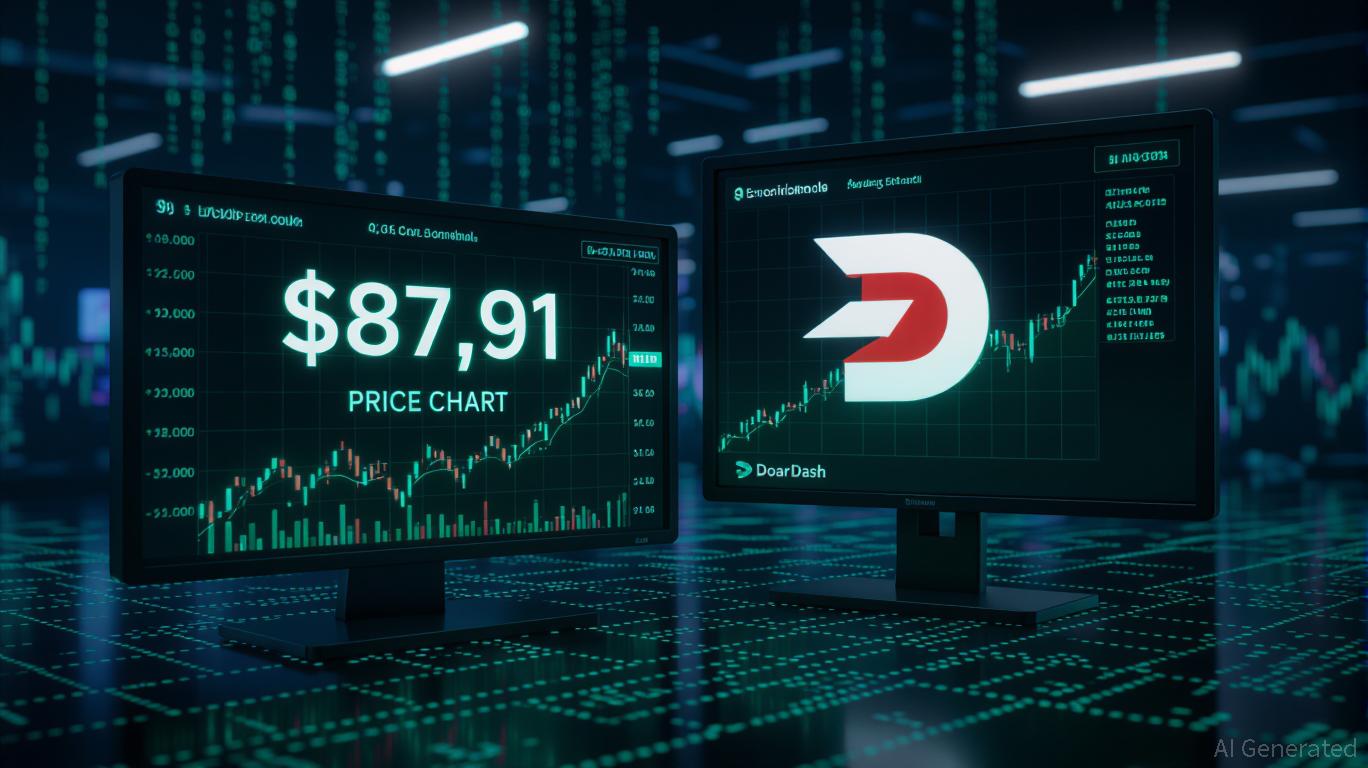
The cryptocurrency landscape is no stranger to dramatic price swings, but DASH’s remarkable 150% rally in June 2025—from $20 to $50—has signaled a significant turning point for decentralized finance. By November 2025, DASH had soared to $87.91, and experts suggested that if the current momentum holds, the price could reach between $120 and $140. This extraordinary growth prompts important questions: What has fueled this surge, and is it sustainable? To understand, we must examine the convergence of institutional investment, technological progress, and favorable macroeconomic conditions that have propelled DASH into the limelight.
Institutional Investment: Building Credibility
A major driver behind DASH’s resurgence is its increasing acceptance among institutional investors. In 2025, AGF Management made a notable $7.79 million investment in DASH, while a substantial $450 million partnership with DoorDash—whose ticker symbol matches the cryptocurrency—highlighted a strategic connection between blockchain technology and mainstream commerce. These developments pushed institutional ownership of DASH to an impressive 90.64%, marking its evolution from a speculative asset to a recognized investment vehicle. This shift reflects a broader trend in financial markets, where capital is flowing toward assets that bridge traditional finance and decentralized systems.
Technological Advancements: Expanding Capabilities
The release of Dash Platform 2.0 in 2025 has been pivotal in enhancing DASH’s functionality. The upgrade introduced support for tokens, enabled the creation of decentralized applications, and improved scalability. These enhancements have attracted both fintech companies and developers looking for a blockchain that offers speed and privacy. Features such as InstantSend and ChainLocks provide near-instant transactions and robust security, making DASH a strong contender against established payment networks. Additionally, the introduction of confidential transactions and plans for a privacy-focused virtual machine demonstrate a commitment to serving users who value privacy in an increasingly monitored digital world.
The integration of artificial intelligence has further elevated DASH’s appeal. AI-powered analytics now process DASH’s price movements, trading volumes, and macroeconomic data at unprecedented speeds, providing investors with actionable insights. Meanwhile, DoorDash’s use of AI for optimizing delivery logistics—though separate from the cryptocurrency—underscores the broader ecosystem’s dedication to technological innovation. These advancements in real-world applications reinforce DASH’s narrative as a blockchain with tangible utility.
DeFi Expansion and Macroeconomic Momentum
DASH’s role in decentralized finance has grown, expanding its use cases beyond simple payments. The blockchain now supports decentralized trading and smart contracts, with further improvements on the horizon. This has attracted developers seeking privacy-oriented alternatives to platforms like Ethereum. The trend is amplified by global uncertainties and supportive government policies, such as the U.S. executive order on Bitcoin reserves, which have increased interest in privacy coins like DASH as safeguards against economic instability.
On a broader scale, DASH’s price movements have closely mirrored those of major cryptocurrencies, with a 30-day correlation coefficient of 0.85 with Bitcoin and 0.80 with TRON. This suggests that institutional investments and positive regulatory developments are influencing the market as a whole. As the total cryptocurrency market capitalization surpassed $4 trillion in 2025, DASH’s performance has contributed to a wider surge among alternative coins, signaling a shift from speculative trading to growth driven by real-world utility.
Assessing Long-Term Viability
The sustainability of DASH’s rally depends on its ability to maintain technological leadership and retain institutional support. DoorDash’s financial results—$10.72 billion in revenue for Q3 2025 and a 49.2% gross margin—provide a solid foundation for ongoing innovation, though a pre-tax profit margin of -3.7% points to profitability challenges. Nevertheless, a low debt-to-equity ratio and strategic acquisitions, such as the purchase of Deliveroo, indicate a strong capacity for future investment.
For DASH, the cryptocurrency, continued growth will rely on the successful rollout of planned upgrades, including improved merchant payment solutions and decentralized trading features. Market analysts remain optimistic, forecasting that DASH could reach $158.60 by the end of 2025 and continue its upward trajectory into 2026 and 2027, provided it maintains its breakout from long-term downtrends.
Final Thoughts: Lasting Transformation or Temporary Surge?
DASH’s impressive price increase is the result of a powerful combination of institutional endorsement, technological innovation, and supportive macroeconomic trends. While challenges such as regulatory changes and market volatility persist, DASH’s emphasis on practical use cases and privacy makes it a noteworthy example of the maturing DeFi sector. For investors, the message is clear: DASH’s evolution is ongoing, and its adaptability will determine whether this surge marks the beginning of a new era or simply a brief moment in the ever-changing world of cryptocurrency.
Disclaimer: The content of this article solely reflects the author's opinion and does not represent the platform in any capacity. This article is not intended to serve as a reference for making investment decisions.
You may also like
Timeless Strategies for Investing in Today’s Market
- 2025 financial markets face AI-driven disruptions and volatility, yet timeless principles from R.W. McNeel and Warren Buffett remain relevant for navigating uncertainty. - Both emphasize intrinsic value (Buffett's "price vs. value" mantra) and emotional discipline, exemplified by Buffett's 2008 Goldman Sachs investment and 2025 AI-focused portfolio adjustments. - Their strategies prioritize compounding through retained earnings (e.g., Coca-Cola , Apple) and confidence in U.S. economic resilience, alignin

Investing in STEM and Digital Skills: Shaping the Future of Higher Education and Workforce Integration
- Global EdTech market grows at 20.5% CAGR to $790B by 2034, driven by STEM/digital literacy demand. - AI/cybersecurity programs surge as universities launch accelerated degrees to address talent shortages. - Investors target EdTech's growth potential despite challenges like unstable pricing models and uneven infrastructure. - Platforms like Coursera and Udacity leverage AI for personalized learning, aligning education with workforce needs.

Zcash (ZEC) Value Soars: The Intersection of Privacy Advancements and Mainstream Institutional Embrace in 2025
- Zcash (ZEC) surged in late 2025 due to privacy innovations, institutional adoption, and robust on-chain activity. - Grayscale's Zcash ETF filing and Cypherpunk/Reliance's strategic holdings highlight growing institutional confidence in privacy-centric crypto. - Orchard protocol adoption (30% of ZEC transactions) and Zerdinals inscriptions drove 1,300%+ transaction growth, outpacing Ethereum/Solana in fee production. - Zcash's hybrid privacy model (shielded/transparent transactions) addresses regulatory c
SOL Value Plummets by 150%: Uncovering the Causes of the Solana Turmoil
- Solana's 150% price drop in 2025 exposed structural risks in its centralized validator network and fragile DeFi infrastructure. - Validator concentration (Teraswitch/Latitude controlling 43% stake) and Jito's 88% node dominance created systemic vulnerabilities. - $3.1B in 2025 DeFi losses from smart contract exploits highlighted unresolved security flaws despite AI audits and Rust-based safeguards. - Governance failures and regulatory uncertainties prompted 72% of institutions to enhance crypto risk prot

Trending news
MoreCrypto prices
More





