
ZEC rises by 1.45% as its year-long surge hits 520.14% growth despite market fluctuations
- Zcash (ZEC) rose 1.45% in 24 hours to $353.17 amid broader market declines. - Despite a 33.79% weekly drop, ZEC surged 520.14% in the past year, showing strong resilience. - Analysts link ZEC's performance to macroeconomic factors and growing institutional interest in privacy-focused crypto. - Market volatility triggered $650M in liquidations, but ZEC's long-term fundamentals remain intact. - Investors are advised to stay cautious due to regulatory risks and potential corrections.
Zcash Shows Strong Recovery Amid Market Downturn
On December 1, 2025, Zcash (ZEC) experienced a notable 1.45% increase over a 24-hour period, reaching $353.17. This short-term rally stands out against the backdrop of a generally bearish market. Despite this recent uptick, ZEC has declined by 33.79% over the past week and is down 18.46% for the month. However, its long-term trajectory remains impressive, with the token soaring 520.14% over the last year—demonstrating remarkable resilience in a turbulent market environment.
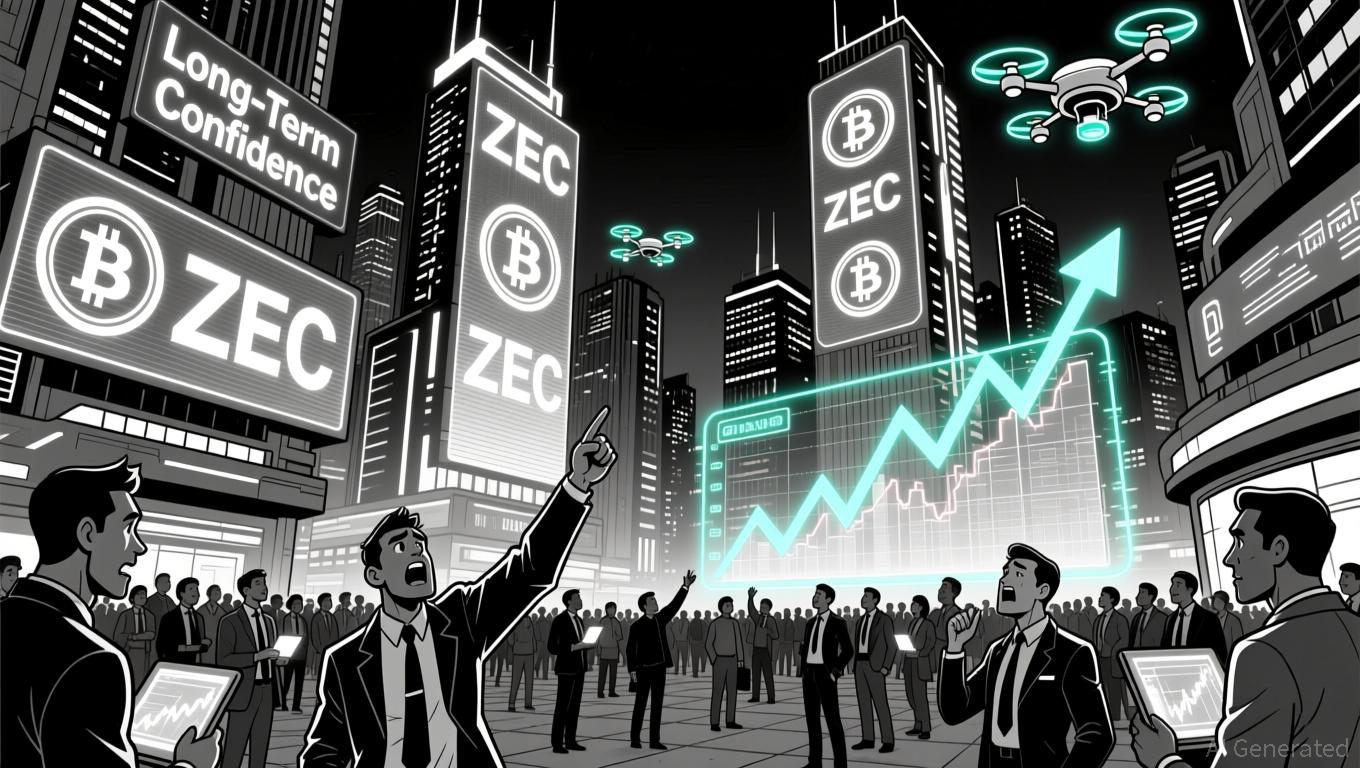
The latest price movement highlights the ongoing volatility in the cryptocurrency sector. ZEC’s daily gain contrasts with widespread losses among other leading digital assets. In the past 24 hours alone, over $650 million in crypto positions have been liquidated, reflecting the intensity of the current correction phase. Despite these fluctuations, Zcash’s year-long growth points to increasing interest from both institutional and individual investors, particularly due to its privacy-centric technology.
Market Context and Comparative Performance
Analysts note that ZEC’s price trends are heavily influenced by global economic conditions and shifts in investor confidence. While major cryptocurrencies such as Bitcoin and Ethereum have recently dipped—BTC falling below $86,000 and ETH sliding to $2,820—Zcash’s ability to post gains suggests that some investors continue to view it as a strategic asset, even amid widespread market pessimism.
Over the past year, ZEC has outperformed many of its peers, defying typical patterns of crypto market volatility. Its 520.14% annual increase ranks among the top returns for major tokens, especially notable given the regulatory and market challenges faced in 2025. Experts believe that Zcash could see further growth as privacy solutions based on zero-knowledge proofs gain traction, particularly in regions where data security and financial confidentiality are paramount.
Outlook and Investment Considerations
Although ZEC suffered a significant weekly decline, its core fundamentals remain strong. The growing narrative around privacy-focused cryptocurrencies and sustained institutional interest appear to be supporting its price. Nevertheless, market participants should exercise caution, as the broader crypto landscape remains vulnerable to abrupt changes driven by economic and regulatory developments.
Wider market turbulence has affected numerous digital assets, with Zcash among those experiencing sharp corrections in late 2025. The high volume of liquidations highlights the prevalence of leveraged trading and the rapid shifts in market sentiment. For long-term investors, these recent declines may offer a chance to acquire ZEC at more favorable prices, especially considering its robust use case and technological strengths.
Disclaimer: The content of this article solely reflects the author's opinion and does not represent the platform in any capacity. This article is not intended to serve as a reference for making investment decisions.
You may also like
The ChainOpera AI Token Collapse: A Cautionary Tale for AI-Powered Cryptocurrency Markets?
- ChainOpera AI (COAI) token's 96% collapse in late 2025 exposed systemic risks in AI-blockchain markets, mirroring 2008 crisis patterns through centralized governance and speculative hype. - COAI's extreme centralization (96% supply in top 10 wallets) and tokenomics (80% locked until 2026) created liquidity crises, undermining blockchain's decentralized ethos. - Regulatory actions intensified post-crash, with SEC/DOJ clarifying custody rules and targeting fraud, yet CLARITY/GENIUS Acts created compliance

The COAI Token Fraud: An Urgent Warning for Individual Investors in the Cryptocurrency Market
- COAI token's 88% devaluation in late 2025 erased $116.8M, exposing systemic risks in AI-integrated DeFi ecosystems. - Centralized control (87.9% tokens in 10 wallets) and algorithmic stablecoin failures enabled coordinated manipulation and liquidity collapse. - Regulatory gaps allowed cross-border operations in jurisdictions like Southeast Asia, highlighting urgent need for AI-powered oversight and standardized protocols. - Investors must prioritize smart contract audits, transparent governance, and on-c
Examining the Latest Decline in PENGU Value: Key Drivers and What It Means for Cryptocurrency Investors
- Pudgy Penguins (PENGU) plummeted 30% in late 2025 due to regulatory uncertainty, algorithmic trading triggers, and a $66.6M team activity event. - The collapse exposed systemic risks in crypto, including stablecoin liquidity crises and interconnectedness with traditional finance via ETFs and leverage. - Investors are urged to prioritize diversification, liquidity monitoring, and regulatory compliance to mitigate risks from opaque projects and volatile markets.
DOGE rises 5.58% over 24 hours following Japan’s introduction of a reform unit focused on efficiency
- Japan launched its Department of Government Efficiency (DOGE) on Dec 2, 2025, to audit and eliminate inefficient tax breaks and subsidies. - The initiative, modeled on but distinct from the U.S. DOGE , emphasizes data-driven reviews and public feedback to redirect funds to priority areas. - Finance Minister Taro Aso stressed alignment with Bank of Japan's monetary policy and fiscal transparency, aiming to restore public trust amid economic challenges. - Reforms targeting outdated subsidies will begin in
Trending news
MoreCrypto prices
More





