
Uniswap News Today: Uniswap's UNIfication Launches a New Era of DeFi Leadership for the Next Decade
- Uniswap's UNIfication proposal introduces protocol fees, token burns, and buybacks to transform UNI into a deflationary asset. - The plan drives UNI's 63% weekly price surge and allocates 0.3% trading volume to liquidity providers and buybacks. - Whale accumulation and $38M/month buyback projections signal strong market confidence in Uniswap's governance overhaul. - The proposal unifies Uniswap's ecosystem, introduces fee discounts, and launches CCA for institutional-grade liquidity infrastructure. - DeF
Uniswap (UNI) is on the verge of a major governance breakthrough as its "UNIfication" fee switch proposal is set to enter the snapshot voting stage tomorrow, sparking excitement throughout the decentralized finance (DeFi) community. The initiative, introduced by founder Hayden Adams, proposes the addition of protocol fees, a token burn worth $842 million, and a targeted buyback strategy aimed at reshaping
According to the proposal, 0.3% of all trading volume will be distributed, with 0.25% going to liquidity providers and 0.05% allocated to a UNI buyback fund, ensuring ongoing demand for the token. With annualized trading volumes surpassing $1 trillion,
Beyond its impact on token economics, the UNIfication proposal brings together
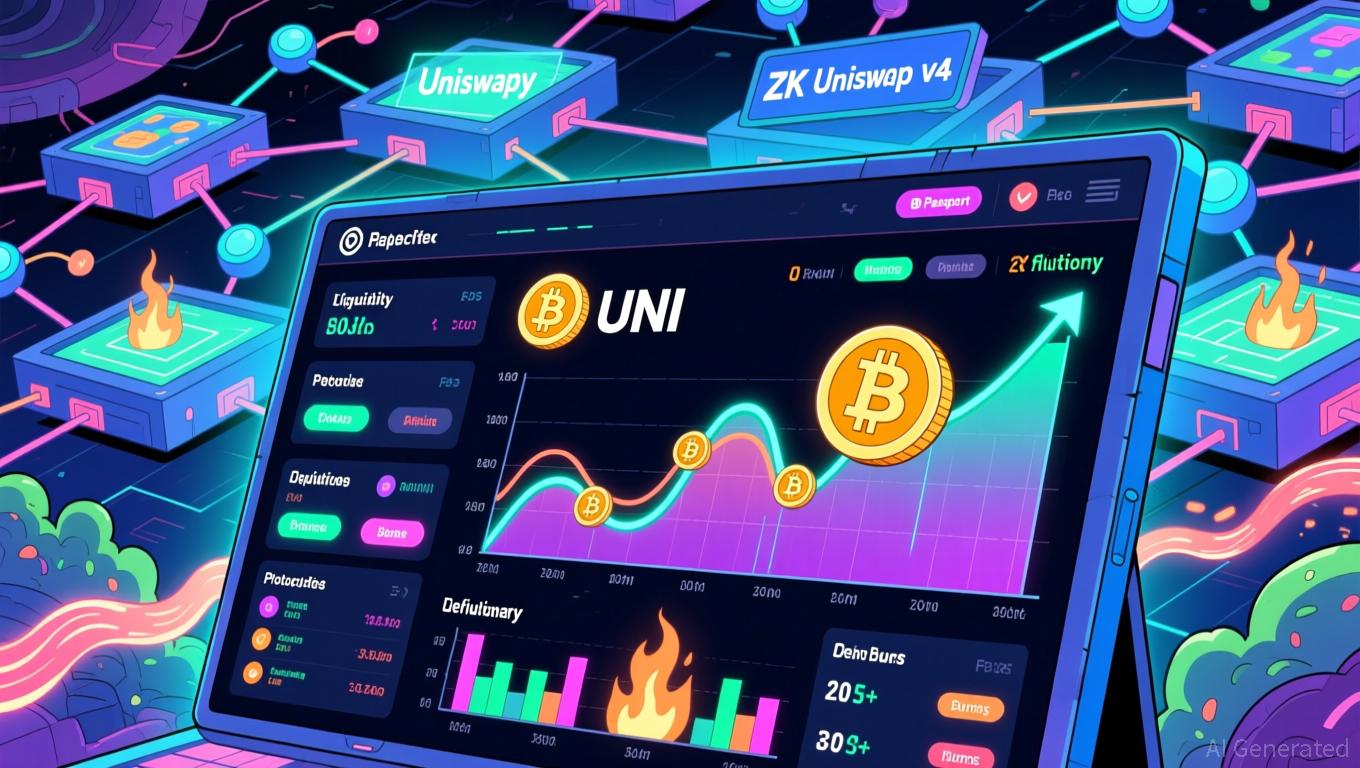
With UNI gaining over 66% this week and the community awaiting a governance decision, Uniswap is well-positioned to reclaim its status as the leading decentralized exchange in the crypto space. The UNIfication proposal, together with the CCA rollout, signals a decisive move toward more robust governance and liquidity solutions, setting the stage for Uniswap to lead the next phase of DeFi innovation.
Disclaimer: The content of this article solely reflects the author's opinion and does not represent the platform in any capacity. This article is not intended to serve as a reference for making investment decisions.
You may also like
BNB Latest Updates: YZi Labs Confronts BNC's Board Regarding Mismanagement of BNB Treasury Governance
- YZi Labs, linked to Binance's CZ, seeks to overhaul BNC's board amid a 92% stock price drop and governance disputes. - The firm accuses the current board of operational lapses, delayed filings, and conflicts of interest with 10X Capital. - BNC holds $412M in BNB but trades at a discount as the token's price decline exacerbates shareholder concerns. - YZi's consent solicitation aims to install new directors without a shareholder meeting, potentially reshaping governance. - The outcome could signal broader
Blockchain’s “irreversible” scams can now be tracked: Success in fund recovery is rising
- Crypto fraud victims now recover stolen assets at 58–72% rates within 90 days, driven by blockchain forensics and law enforcement collaboration. - A 2025 U.S. seizure of 127,271 BTC ($11B) marked a turning point, proving irreversible blockchain transactions can be traced and frozen at regulated exchanges. - Advanced tools and cross-agency efforts enable tracing through mixers and cross-chain bridges, but challenges persist: 66% of victims fail to report thefts, and privacy coins limit recovery to <10%. -
C3.ai Shares Rise Despite AI Industry Slump Thanks to Key Partnerships
- C3.ai reported a 25.3% Q3 revenue drop to $70.26M but saw a 35% stock surge after expanding Microsoft partnerships and alliances with Capgemini, Google Cloud, and AWS. - Analysts project 20.5% YoY revenue decline for Q4 2025, with full-year forecasts at $370M-$395M, highlighting challenges converting AI pilots into long-term contracts. - Strategic consumption-based pricing and Azure/Capgemini collaborations aim to boost customer acquisition, though profitability hurdles persist amid competitive pressures
Astar 2.0 and What Lies Ahead for DeFi Advancements
- Astar Network's 2.0 upgrade introduces a capped ASTR supply and deflationary model, aligning with Bitcoin's scarcity to attract institutional investors. - Enhanced cross-chain interoperability via Plaza and partnerships with LayerZero/Chainlink reduces operational complexity for institutions. - Governance reforms and ESG alignment with Japanese firms aim to address regulatory concerns and expand real-world use cases. - Despite progress, legal uncertainties and smart contract risks persist, limiting large
Trending news
MoreCrypto prices
More





