
DEXs Compete with CEXs as DeFi Trading Volume Reaches $613 Billion in October 2025
- DEXs hit $613.3B in October 2025 volume, up 22.7% from September, driven by liquidity mining and airdrops. - Uniswap led with $170.9B (60.4% rise), while CEXs hit $2.17T, led by Binance's $810.4B. - DeFi growth coincided with crypto volatility; Bitcoin's drop spurred trading as investors repositioned. - Risks include regulatory scrutiny and competition, but DEXs' 19.84% market share highlights growing preference. - Market resilience suggests continued interest in decentralized finance as projects refine
Data from DefiLlama shows that decentralized exchanges (DEXs) saw trading volumes soar to a record $613.3 billion in October 2025, representing a 22.7% rise from September’s $500 billion. This growth, fueled by incentives like liquidity mining and airdrop events, points to increasing interest in transparent, self-custodial crypto trading.

The surge in decentralized finance (DeFi) activity coincided with heightened volatility across the crypto market. On October 10, Bitcoin’s price plunged from $121,500 to $104,600, prompting a wave of trading as investors adjusted their holdings. Kronos Research CIO Vincent Liu observed that traders are increasingly attracted to DEXs for their “liquidity mining and airdrop-driven engagement,” indicating a move toward on-chain participation, the TradingView report noted.
Centralized exchanges (CEXs) also performed strongly, with total trading volume in October reaching $2.17 trillion, up 28% from September. Binance continued to lead with $810.4 billion, while Gate and Bybit posted $175.6 billion and $156.9 billion, respectively. The ratio of DEX to CEX volume rose to 19.84% from 18.83% in September, highlighting a growing shift toward decentralized trading, according to TradingView.
The uptick in DEX usage mirrors broader advances in fintech. For example, SoFi Technologies is making a return to crypto through blockchain-based international transfers and a new ETF focused on AI, according to
T. Rowe Price Group, a traditional asset manager, reported $1.77 trillion in assets under management for the third quarter of 2025, signaling investor trust in diversified offerings, per
Despite the positive momentum, challenges remain. Regulatory oversight, competition from established interoperability providers like
For now, the crypto sector’s resilience—evidenced by the October volume spike—demonstrates sustained enthusiasm for decentralized alternatives to conventional finance. As Mono Protocol and platforms like Uniswap enhance their features, the evolving relationship between DeFi and fintech may reshape the global financial landscape.
Disclaimer: The content of this article solely reflects the author's opinion and does not represent the platform in any capacity. This article is not intended to serve as a reference for making investment decisions.
You may also like
The ZK Atlas Upgrade: Transforming the Landscape of Web3 Infrastructure?
- ZKsync's 2025 Atlas Upgrade tackles blockchain's scalability trilemma via modular architecture, ZK proofs, and institutional-grade infrastructure. - Technical breakthroughs include 15,000-43,000 TPS speeds, $0.0001/tx costs, and EVM compatibility, attracting Deutsche Bank , Sony , and $300M daily trading volumes. - ZK token surged 50% post-upgrade, with analysts projecting $5.13 valuation due to deflationary tokenomics and 230% developer participation growth. - Institutional adoption spans $1.7B tokenize

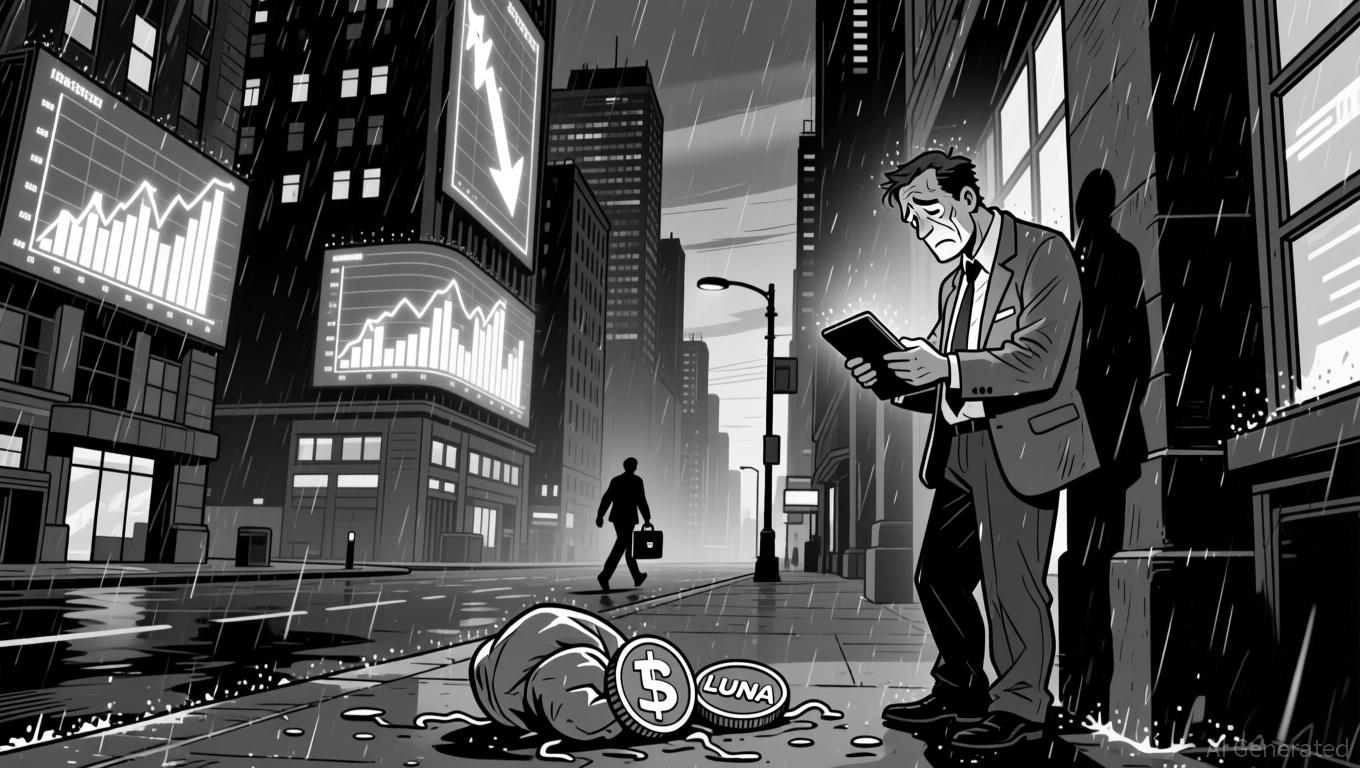
LUNA Value Drops 83.63% Since the Start of the Year as Market Fluctuates
- LUNA fell 83.63% year-to-date as of Dec 2, 2025, with no direct project-related news explaining the decline. - Broader crypto market bearishness and liquidity constraints, not LUNA-specific events, drive its sustained downward trend. - Analysts project continued pressure unless macroeconomic conditions improve or demand fundamentals shift structurally.
Bitcoin Updates Today: Bitcoin Drops Sharply as Structural Issues Meet Macro Challenges
- Bitcoin fell 32% from October's peak due to macroeconomic shifts, liquidity strains, and structural crypto challenges. - Japan's BoJ rate hike ended 30-year yen carry trade, raising arbitrage costs and triggering global market volatility. - Bitcoin ETFs saw $4.35B cumulative outflows, with BlackRock's IBIT facing $113.7M daily withdrawals amid retail caution. - Corporate holders like Strategy risk forced BTC sales if mNAV drops below 1.0, while macroeconomic uncertainty threatens $88k support levels.
BOJ's Era of Prolonged Ultra-Loose Policy Approaches Conclusion, Sparking Worldwide Rise in Yields
- Japan's BOJ signals potential rate hike, driving global yield surge as 10-year JGBs hit 1.845% (17-year high). - Yen strengthens 0.4% against dollar, threatening yen carry trade unwind and pressuring U.S. equities/crypto markets. - Markets price 76% chance of December BOJ hike, first since 2008, signaling global monetary policy normalization. - Political alignment with government eases policy divergence fears as inflation targeting gains urgency over reflation.

Trending news
MoreCrypto prices
More





