
Bitcoin News Update: Powell's Ambiguity Triggers Market Drop, Bitcoin Dips Under $110K
- Fed’s 25-basis-point rate cut and Powell’s uncertainty over a December cut triggered Bitcoin’s 5% drop below $110,000. - Markets reacted sharply, with the Dow falling 200 points and $261M in Bitcoin futures liquidations. - Analysts highlight macroeconomic risks and U.S.-China trade talks as key factors influencing Bitcoin’s range-bound action.
On Wednesday, Bitcoin slipped below $110,000 after Federal Reserve Chair Jerome Powell expressed uncertainty regarding a potential rate cut in December, surprising investors and sparking a widespread selloff. The digital asset tumbled 5% in a single day to $109,600, wiping out its recent gains following Powell’s unexpectedly hawkish tone at the post-FOMC press conference, a
stated.The Federal Reserve, as most had predicted, lowered its main interest rate by 25 basis points to a range of 3.75%-4.00%,
, marking the second rate cut this year. Yet, Powell’s assertion that a December reduction “is not a given” unsettled traders who had been expecting a 90% chance of further easing, according to a . “No decision has been made for December,” Powell remarked, stressing that future moves would depend on economic data. His comments drove Treasury yields higher and strengthened the dollar, while both equities and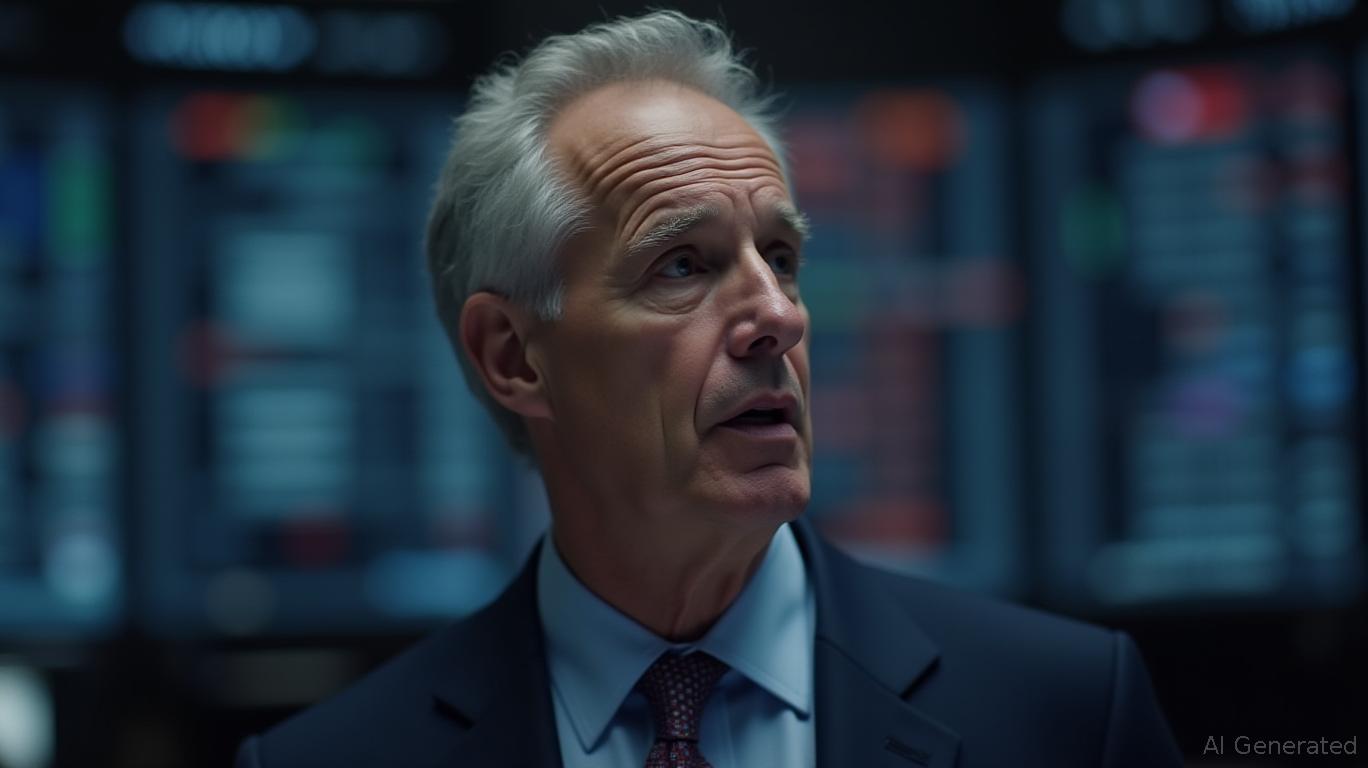
Bitcoin’s losses deepened after the Fed’s dot plot indicated an expectation of three rate cuts in 2025, but gave no guidance for 2026, according to a
. Goldman Sachs analysts had previously forecast two additional cuts in early 2026, but Powell’s comments introduced new market turbulence. Contrary to predictions, Bitcoin dropped 6% from its recent high of $116,400 despite the rate cut. Hyblock analysts pointed out that while Bitcoin often rebounds after FOMC-driven selloffs, ongoing macroeconomic challenges—like a softening job market and persistent inflation—could keep downward pressure on prices.The downturn also affected traditional markets, with the Dow Jones Industrial Average falling by nearly 200 points after the announcement. Short-term Bitcoin futures saw $261 million in liquidations, with 82% of the losses coming from long positions. Meanwhile, spot ETFs proved resilient, attracting $260 million over three sessions as retail investors continued to “buy the dip,” a
noted.Powell’s statements reignited discussions about the Fed’s future policy direction. Although the central bank has already cut rates twice this year, the latest dot plot points to a more cautious stance, with officials signaling they will wait for further data. This uncertainty stands in contrast to bullish projections from figures such as Michael Saylor, who forecasted Bitcoin could hit $150,000 by year-end in a
. However, analysts at The Kobeissi Letter cautioned that Bitcoin’s current trading range between $110,000 and $116,000 indicates market hesitation until major developments—like U.S.-China trade negotiations—bring more direction.International trade news added further complexity. After Trump’s initial tariffs led to a market downturn in October, a softer tone and a planned meeting with China’s President Xi Jinping raised hopes for a resolution. U.S. Treasury Secretary Scott Bessent’s support for stablecoins also boosted sentiment, though crypto investors remained wary ahead of the Fed’s upcoming decisions.
Disclaimer: The content of this article solely reflects the author's opinion and does not represent the platform in any capacity. This article is not intended to serve as a reference for making investment decisions.
You may also like
The Growing Enthusiasm for Zcash (ZEC) and What It Means for Privacy-Focused Cryptocurrencies: Navigating Strategic Opportunities Amid Regulatory Ambiguity
- Zcash (ZEC) emerged as a leading privacy-centric cryptocurrency in 2025, balancing financial confidentiality with compliance-ready features amid regulatory scrutiny. - Its 248% October price surge and 18% December crash highlighted volatility driven by macroeconomic shifts and privacy coin demand outpacing Bitcoin . - Institutional adoption grew as firms like Reliance Global Group and Grayscale leveraged Zcash's optional privacy model to meet regulatory reporting requirements. - Strategic initiatives foc

ICP Network Expansion: A Comprehensive Review of Blockchain Integration and Infrastructure Scalability
- ICP's 2025 strategic upgrades (Flux, Magnetosphere, Vertex) enhanced scalability, AI integration, and cross-chain interoperability through Chain Fusion technology. - Institutional partnerships with Copper and UNDP, plus $237B TVL growth, demonstrate ICP's enterprise-grade security and real-world utility in digital credentialing and DeFi. - Caffeine AI platform and chain-of-chains architecture enable natural language app development, attracting businesses seeking decentralized cloud alternatives. - Despit

AWS and Cloudflare Failure Show the Real Risk of Centralized Cloud
The Federal Reserve's Change in Policy and Its Growing Influence on Blockchain-Based Innovation
- The Fed's 2025 GENIUS Act and FedNow infrastructure catalyzed blockchain growth, boosting Solana's capital inflows and institutional adoption. - Regulatory clarity for stablecoins (1:1 reserves, AML safeguards) drove $315B market cap and $9T annual transactions, reshaping digital finance. - Solana's 5,000 TPS and partnerships with Visa/Stripe/BlackRock positioned it as a FedNow alternative for cross-border settlements and tokenized assets. - Hybrid infrastructure models (FedNow + permissionless chains) m

Trending news
MoreCrypto prices
More






