
Balancing Duties and Heritage: U.S.-South Korea Agreement Reinforces Partnership as Trade Dynamics Evolve
- South Korea and Trump secured a trade deal cutting auto tariffs to 15% and a $350B investment pact during APEC, resolving a dispute threatening Seoul's export-driven economy. - The agreement includes $200B annual cash infusions and $150B U.S. shipbuilding cooperation, addressing Seoul's foreign exchange concerns while linking U.S. energy/defense sector commitments. - Symbolic gifts like the Silla crown and Mugunghwa medal highlighted historical diplomacy, with Lee framing the deal as strengthening U.S.-S
South Korea’s diplomatic gestures toward President Donald Trump—including presenting a gold-plated replica of a Silla Dynasty crown and bestowing the country’s highest national honor—helped spark a breakthrough in previously stalled trade talks. During Trump’s official visit to Gyeongju for the APEC summit, both countries agreed to reduce auto tariffs from 25% to 15% and finalized a $350 billion investment deal, settling a dispute that had threatened South Korea’s export-reliant economy, according to a
The investment plan includes $200 billion in annual cash investments, limited to $20 billion per year, and $150 billion dedicated to collaboration in U.S. shipbuilding, addressing Seoul’s earlier worries about draining its foreign currency reserves, according to
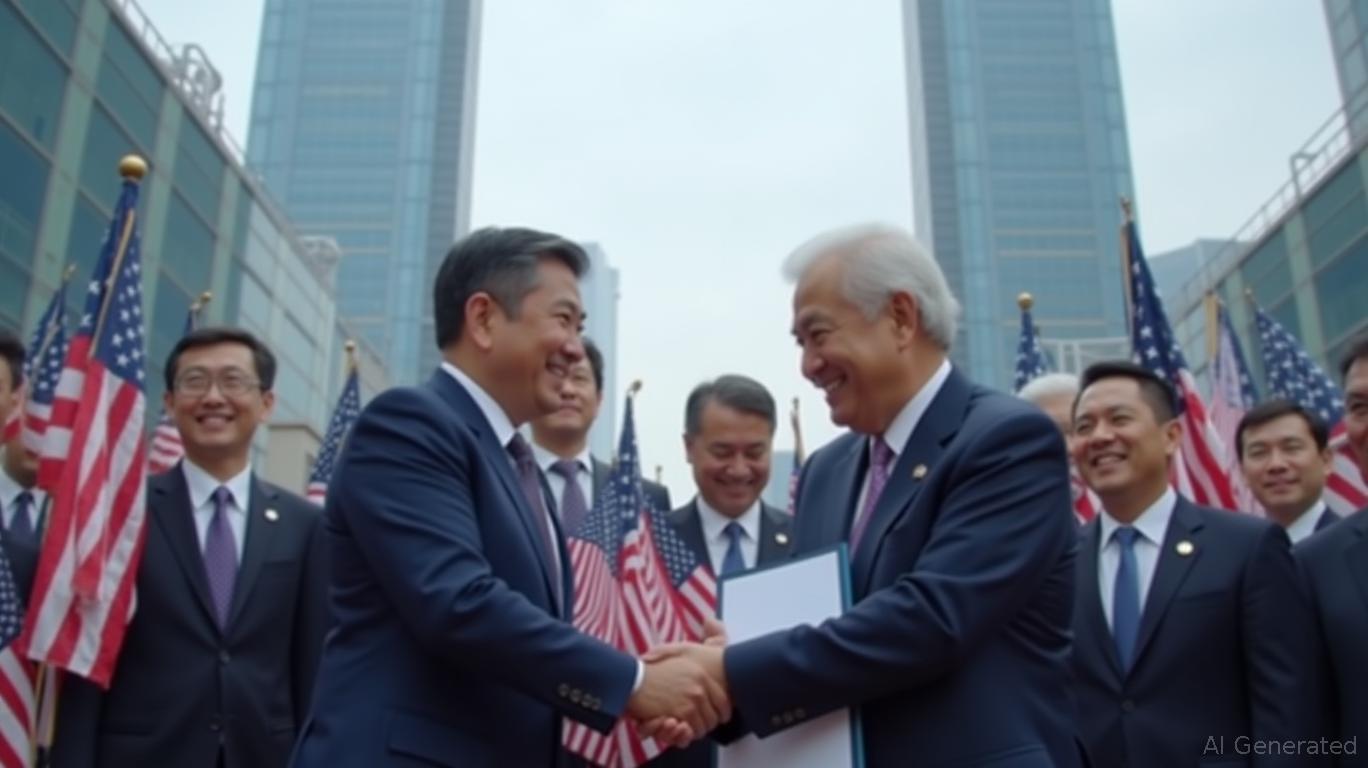
The symbolic acts during the negotiations—such as awarding the Grand Order of Mugunghwa and gifting the Cheonmachong crown—highlighted South Korea’s strategy of blending historical diplomacy with economic interests. Lee gave Trump the crown, a reproduction of a 9th-century Silla relic representing “peace and leadership,” during a museum tour in Gyeongju, presenting it as a gesture toward shared goals for regional peace, as a
This pact also relieves some of the competitive pressure South Korea faces from Japan and Europe, which had already secured lower U.S. tariffs. By matching the 15% auto tariff, South Korea gains time to update its automotive sector while keeping its status as the third-largest Asian trading partner of the U.S., a
Nonetheless, some critics argue that the deal’s reliance on non-cash elements—like shipbuilding—may limit immediate economic benefits. Shin Se-don, an economics professor at Sookmyung University, questioned whether the investment plan would be enough to counterbalance the higher tariffs on steel and aluminum, which remain at 50%, as Firstpost reported. Despite these concerns, both governments expressed satisfaction: Trump called the deal a victory for “American workers,” while Lee highlighted its importance in solidifying the U.S.-South Korea partnership amid shifting regional dynamics, according to the South China Morning Post.
Disclaimer: The content of this article solely reflects the author's opinion and does not represent the platform in any capacity. This article is not intended to serve as a reference for making investment decisions.
You may also like
DASH Price Increases by 1.78% Following Significant Insider's Share Sale Filing
- DoorDash’s stock rose 1.78% on Dec 2, 2025, despite a 20.32% weekly drop, showing long-term investor confidence. - Officer Lee Gordon S filed to sell 2,159 shares via Rule 10b5-1 plan, part of routine insider trading strategy . - Director Alfred Lin bought $100M in DASH shares, contrasting with 90-day insider sales of $174.5M. - Institutional investors showed mixed activity, with Panagora buying and Spyglass, Arrowstreet reducing stakes. - Analysts maintain "Moderate Buy" rating, projecting growth amid v

What's Causing the Latest BTC Price Swings: Is It a Macro-Fueled Reevaluation?
- Bitcoin's late 2025 volatility reflects macroeconomic pressures, Fed policy shifts, and regulatory changes impacting institutional demand. - Sharp price swings from $126k to $87k highlight sensitivity to inflation, interest rates, and leveraged trading risks amid delayed economic data. - New U.S. crypto laws and ETF approvals boosted institutional participation, but geopolitical risks and token unlocks maintained uncertainty. - A potential Fed rate cut and stabilizing inflation could reignite risk appeti
The ChainOpera AI Token Collapse: A Cautionary Tale for AI-Powered Cryptocurrency Markets?
- ChainOpera AI (COAI) token's 96% collapse in late 2025 exposed systemic risks in AI-blockchain markets, mirroring 2008 crisis patterns through centralized governance and speculative hype. - COAI's extreme centralization (96% supply in top 10 wallets) and tokenomics (80% locked until 2026) created liquidity crises, undermining blockchain's decentralized ethos. - Regulatory actions intensified post-crash, with SEC/DOJ clarifying custody rules and targeting fraud, yet CLARITY/GENIUS Acts created compliance
The COAI Token Fraud: An Urgent Warning for Individual Investors in the Cryptocurrency Market
- COAI token's 88% devaluation in late 2025 erased $116.8M, exposing systemic risks in AI-integrated DeFi ecosystems. - Centralized control (87.9% tokens in 10 wallets) and algorithmic stablecoin failures enabled coordinated manipulation and liquidity collapse. - Regulatory gaps allowed cross-border operations in jurisdictions like Southeast Asia, highlighting urgent need for AI-powered oversight and standardized protocols. - Investors must prioritize smart contract audits, transparent governance, and on-c
Trending news
MoreCrypto prices
More






