
Don’t Waste Every Loss: The “Sisyphus Revelation” of the Crypto Market

Author: thiccy
Translated by: Tim, PANews
The crypto market in 2025 once again played out a dramatic script of volatility, yet many suffered heavy losses in trading.
This article is not written for those traders who are always losing money, but for those who are highly profitable yet have seen a significant drawdown in profits this quarter.
One of the greatest pains in life is witnessing months or even years of hard work vanish overnight.
In Greek mythology, Sisyphus was condemned to endlessly push a boulder up a mountain, only to watch it roll back down every time he reached the summit. The cruelty of this punishment lies in how it precisely strikes at the core of the human experience—the absurdity of futility and repetition. However, Camus saw another possibility in Sisyphus: when he accepts the absurd, stops hoping for ultimate salvation, and instead devotes himself fully to the act of pushing the stone, he changes his fate in the process. True victory may not lie in the stone staying atop the mountain, but in the clear awareness and unyielding calm each time he bends to push the stone.
Crypto trading requires this same quality. Unlike most professions, there is no "progress bar" in this field. A single wrong decision can destroy an entire career, and this has already led many to ruin.
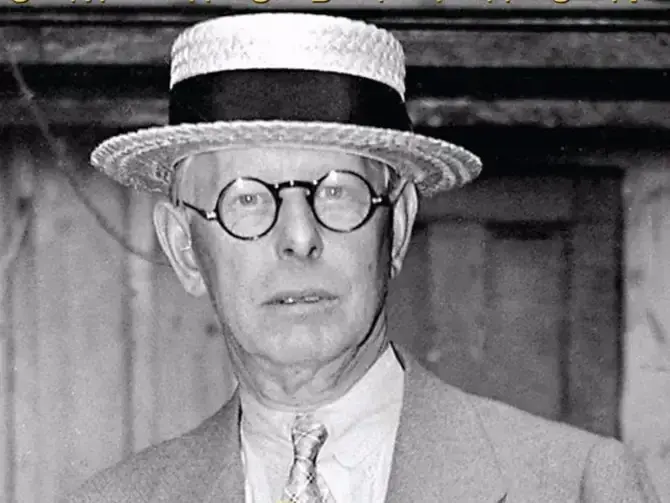
When the boulder really does roll down, people respond in two ways.
Some will increase their bets, trying to recover losses. They adopt more aggressive trading strategies, essentially using the Martingale strategy (doubling down after losses) to try to make a comeback. If they can quickly recoup their funds, they can avoid emotionally facing the reality of their losses. This method often works in the short term, but it is an extremely dangerous strategy because it reinforces a trading habit that mathematically guarantees total ruin.
Others become exhausted and choose to leave the market entirely. They usually already have enough funds for a comfortable life and believe that the risk and reward of the market are no longer aligned. They comfort themselves, telling themselves that there is no longer any edge in the market, or that their edge is about to disappear. Their choice to exit is essentially a death sentence for the market, never to return.
While both reactions are understandable, they are only superficial solutions that fail to address the core issue. The real problem lies in flaws within your risk management system. Most people tend to overestimate their actual level of risk management.
Risk management itself is not an unsolvable problem; the mathematical principles involved have long been proven. The real challenge is not knowing what to do, but sticking to your strategy in the face of emotion, ego, pressure, and fatigue. Aligning action with cognition is one of the hardest disciplines for humans, and the market will always ruthlessly expose the gap between your beliefs and reality.
How do you recover after a loss?
First, you must accept this: you are not just unlucky, nor are you a victim of injustice. This loss is the inevitable result of your human weaknesses. If you do not find and solve the root of this problem, the loss will happen again.
Second, you need to fully accept your current net worth; you cannot always anchor yourself to past highs. "Making it back" is one of the most dangerous impulses in the market. Step away from the screen for a while, and be grateful for what you have already achieved. You are still alive, you are still in the game, and you are no longer trying to recover losses, but simply focusing on achieving new profits.
See this loss as tuition paid for your own shortcomings—a lesson you would have had to learn sooner or later. Fortunately, you paid for it now, rather than at a higher cost in the future. If you handle it correctly, you will look back on this moment with gratitude. Character is often forged in adversity.
Pinpoint the exact reason for your failure. For most people, the problem usually lies in a combination of the following: oversized positions, entering trades without preset stop-losses, or failing to execute stop-losses when triggered. Establishing ironclad rules for risk control and stop-losses can prevent most catastrophic losses.
Remind yourself that the only way to prevent the boulder from rolling all the way to the bottom again is to strictly follow those rules. They are your only safeguard against the torment you are experiencing now. Without rules, you are nothing.
Allow yourself to vent your frustration over the loss—scream, break things. Let the emotions out, rather than bottling them up inside.
Most importantly, you must turn pain into a lesson. Otherwise, it will inevitably repeat itself.
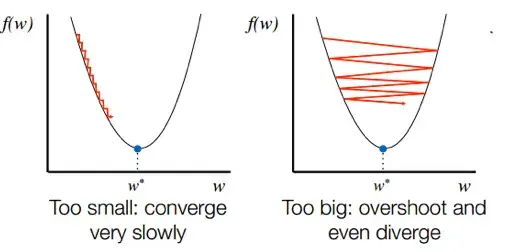
This insight into dealing with pain applies not only to trading losses, but also broadly to life. The common coping mechanisms mentioned earlier are blunt instruments because, while they solve one problem, they often introduce just as many new ones. If you cannot recover from losses in a precise and nuanced way, you will end up like a gradient descent algorithm with steps that are too large—oscillating around the optimal solution, constantly overshooting, and never converging to the right place.
When Napoleon lost a battle, he would immediately begin rebuilding his army and preparing for the next move. A single failure is not fatal—unless it robs you of the ability to keep fighting. The first priority after a setback is to ensure that this weakness is never exploited again and to restore yourself to peak performance as quickly as possible.
You should not seek redemption, nor should you seek revenge. You should not react passively, nor should you accumulate anger. You must become a cold machine. You must repair yourself, then rebuild your system to ensure that the same mistake is never made again. Every failure you survive becomes a moat in your system—a moat that everyone else must pay the price to learn for themselves.
Such losses are what make a person—be grateful for them, for they appear to teach you something. This loss did not happen for no reason. Allow yourself to feel the pain, but turn it into motivation, and make sure you never make the same mistake again.
The reason these things are difficult is that once you find the right direction, sustained wealth growth becomes a natural outcome.
Good luck.
Disclaimer: The content of this article solely reflects the author's opinion and does not represent the platform in any capacity. This article is not intended to serve as a reference for making investment decisions.
You may also like
Hong Kong SFC lists "Sheng • Sauce-flavored Original Liquor RWA Token" as a suspicious investment product
Shanghai Adds 9 New Registered Generative AI Services

Hyper Foundation: The HYPE held by the Aid Fund has been officially recognized as burned
Hyper Foundation: HYPE in the aid fund address has been officially burned





